Commercial Pilates Equipment Selection Standards: Essential Reference for Studio Owners
Opening a Pilates studio means making equipment your single largest investment — one that directly impacts client experience and business returns. Commercial Pilates equipment differs fundamentally from home-use devices: it must withstand hours of continuous daily use, meeting multiple standards for durability, safety, and client experience. This article systematically outlines commercial Pilates equipment selection standards across four dimensions: equipment quality, configuration strategy, space planning, and supplier evaluation.
I. The Fundamental Difference Between Commercial and Home Equipment
Before selecting equipment, it's essential to understand the fundamental difference between commercial and home-use devices. Home equipment is designed to be "adequate" and "economical" for occasional use — typically 2-3 times per week. Commercial equipment is designed to be "durable" and "reliable," potentially used dozens or even hundreds of times daily, accommodating different body types and skill levels.
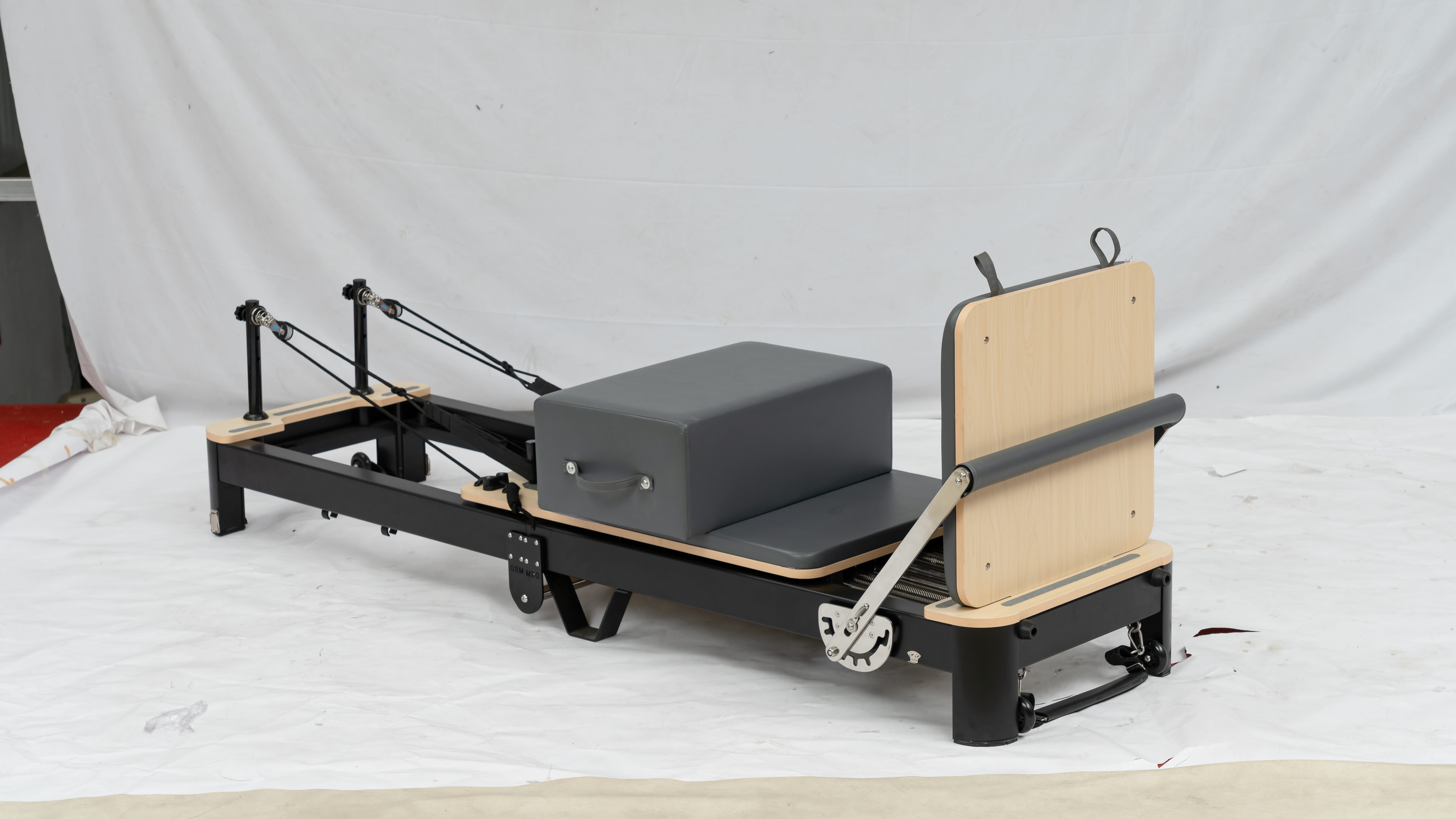
This difference manifests across multiple dimensions: commercial frames are thicker — typically 2mm+ steel tubing or aviation-grade aluminum; spring systems undergo stricter fatigue testing with higher longevity requirements; rails and pulleys use higher-precision components maintaining smooth, quiet operation after extensive use; upholstery uses higher-grade materials with superior wear resistance. When selecting, prioritize commercial-grade products and ensure reformer durability and quality consistency.
II. Five Core Standards for Commercial Pilates Equipment Selection
Standard 1: Frame Material and Structural Stability
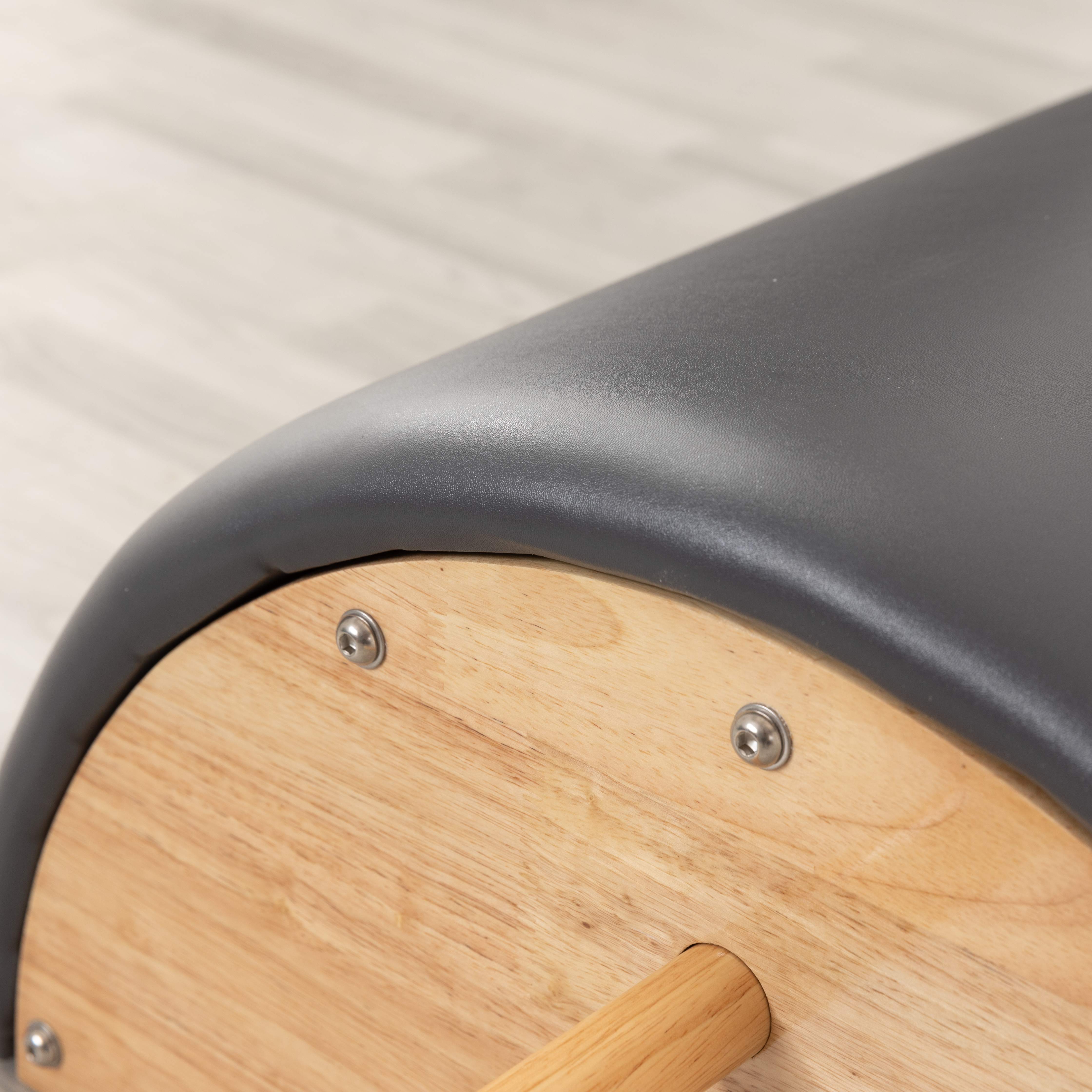
The frame is the equipment's "skeleton," determining service life and safety. Commercial frames should use thickened steel (2mm+) or aviation-grade aluminum with rigorous welding and surface treatment. Structural stability is the primary consideration — equipment should remain rock-solid during lateral force application without noticeable wobble or squeaking. One procurement specialist advises: "Examine weld points — uniform fish-scale welds indicate quality workmanship; rough welds suggest poor quality control."
Standard 2: Spring System Quality
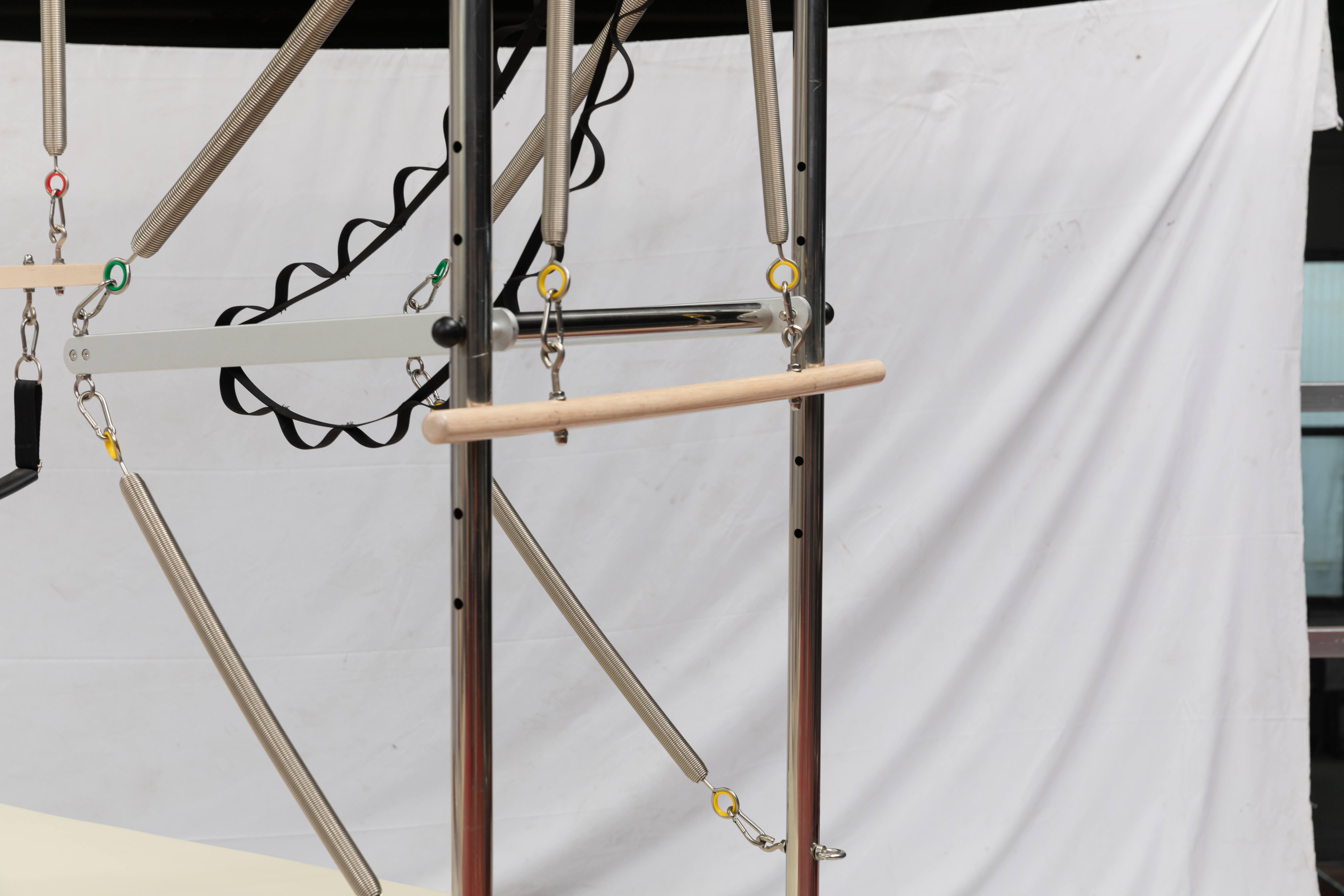
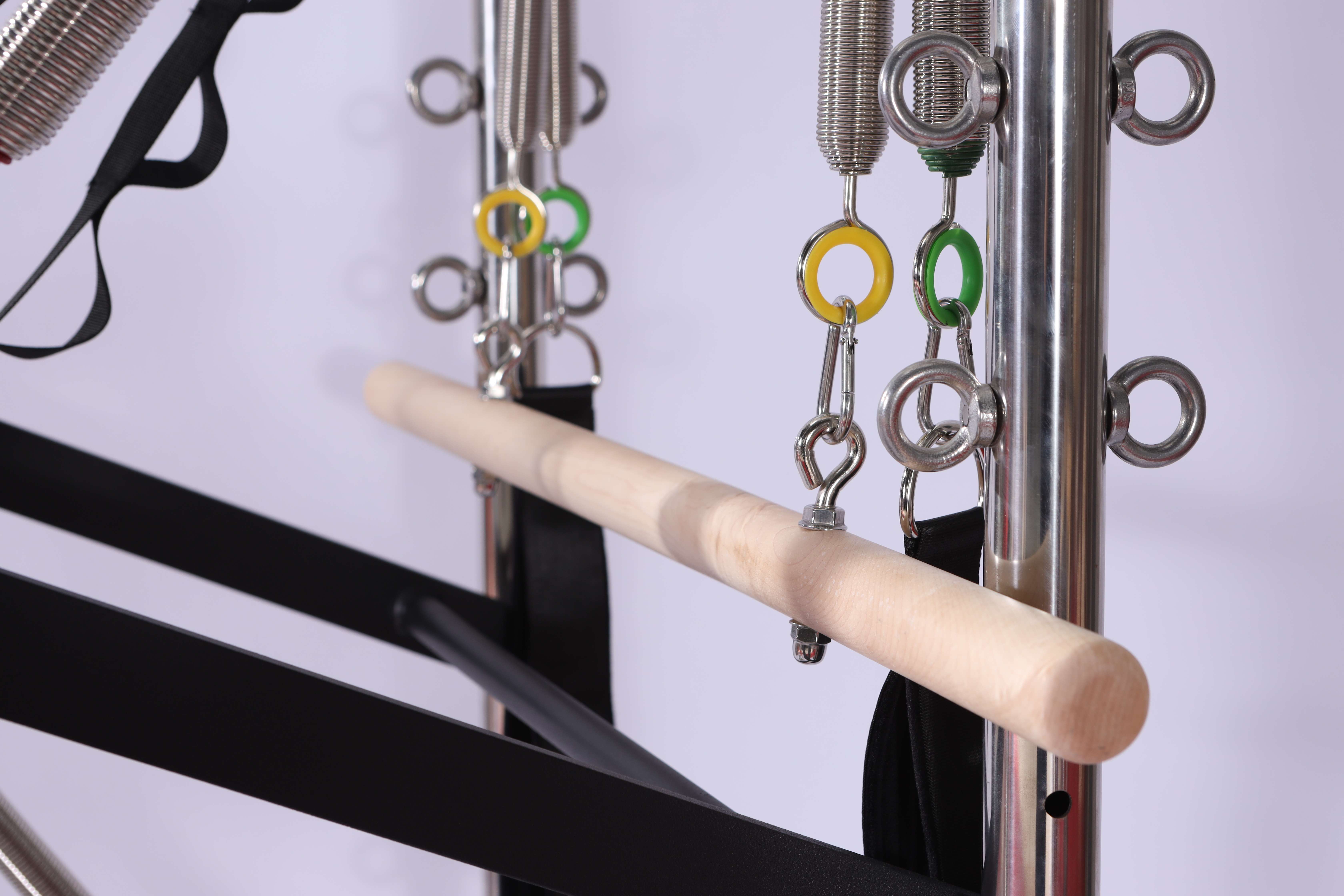
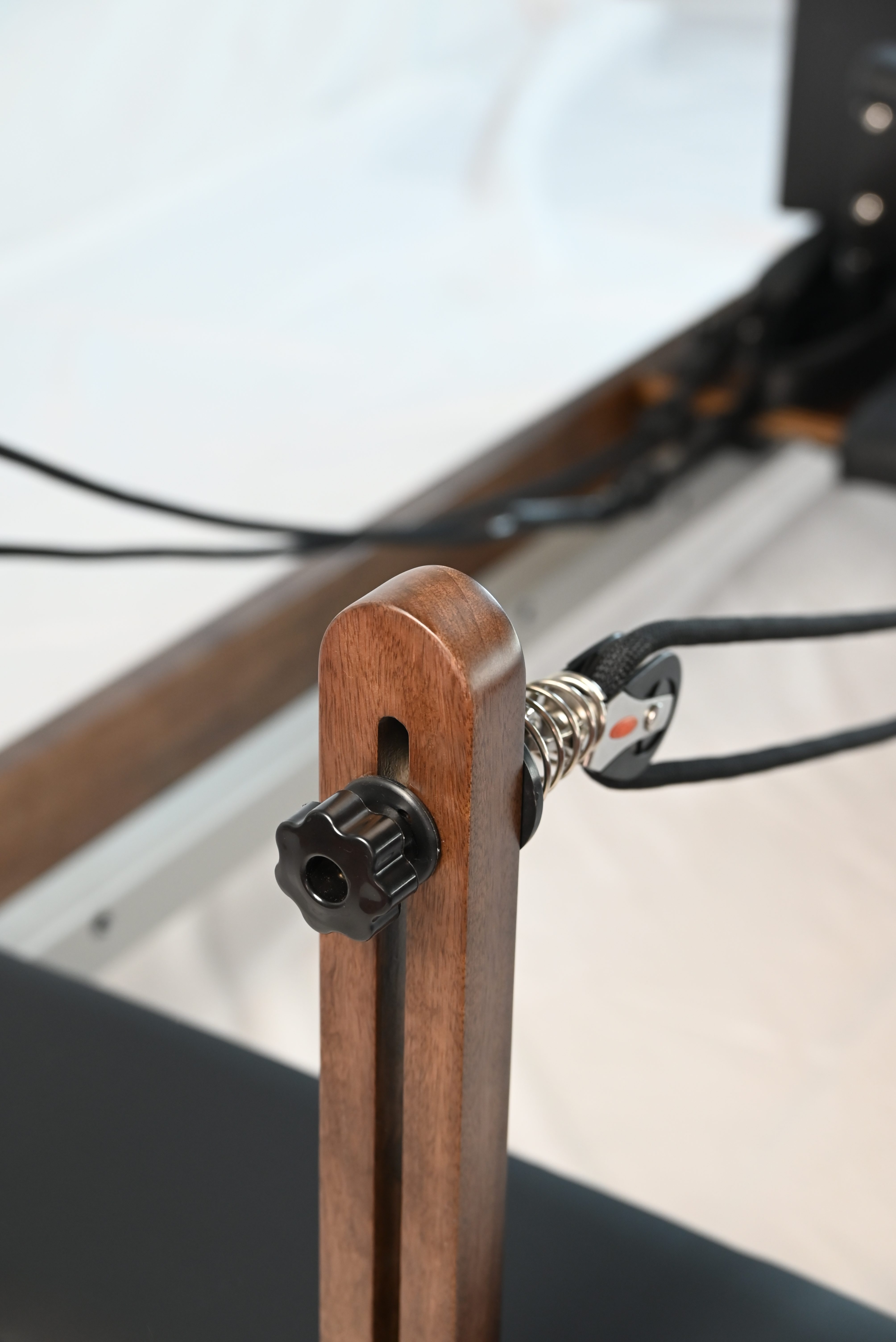
Springs are the "power heart" of Pilates equipment. Commercial equipment should use high-carbon steel or imported music wire springs, heat-treated and force-tested. Quality springs maintain force tolerance within ±5% and achieve 500,000+ cycle life. When purchasing, ask directly about spring material, origin, and expected lifespan — vendors who are vague often compromise on spring quality. Also verify whether backup spring suppliers are available for long-term parts support.
Standard 3: Rail and Pulley Smoothness and Quietness
The glide experience is the client's most direct impression of your equipment. Commercial rails should use precision-machined aluminum or chrome-plated steel rails with smooth, wear-resistant surfaces. Pulleys should incorporate sealed bearings, maintaining quiet, smooth operation after extensive use. Conduct an on-site glide test before purchasing — test carriage operation under both empty and loaded conditions, checking for sticking or abnormal noise.
Standard 4: Upholstery and Foam Abrasion Resistance
Commercial equipment is used repeatedly daily — upholstery and foam abrasion resistance directly affects appearance lifespan and client experience. Leather should be high-wear PU leather (Martindale 50,000+ cycles) with sweat resistance and easy-cleaning properties. Foam density should be no less than 45kg/m³, maintaining good rebound and support after long-term use.
Standard 5: After-Sales Service and Parts Availability
After-sales service is an essential part of the procurement decision. Studios operate daily — equipment downtime means lost revenue. Prioritize brands offering lifetime frame warranties and 2-3 year spring warranties. Confirm that wear parts (springs, straps, pulleys) can be purchased individually, and understand vendor parts inventory and response times. One dealer principal notes: "Suppliers who provide a robust parts network and training support are far more than equipment sellers."
III. Equipment Configuration Strategy
Commercial Pilates studio equipment configuration should follow the principle of "core first, expand as needed."
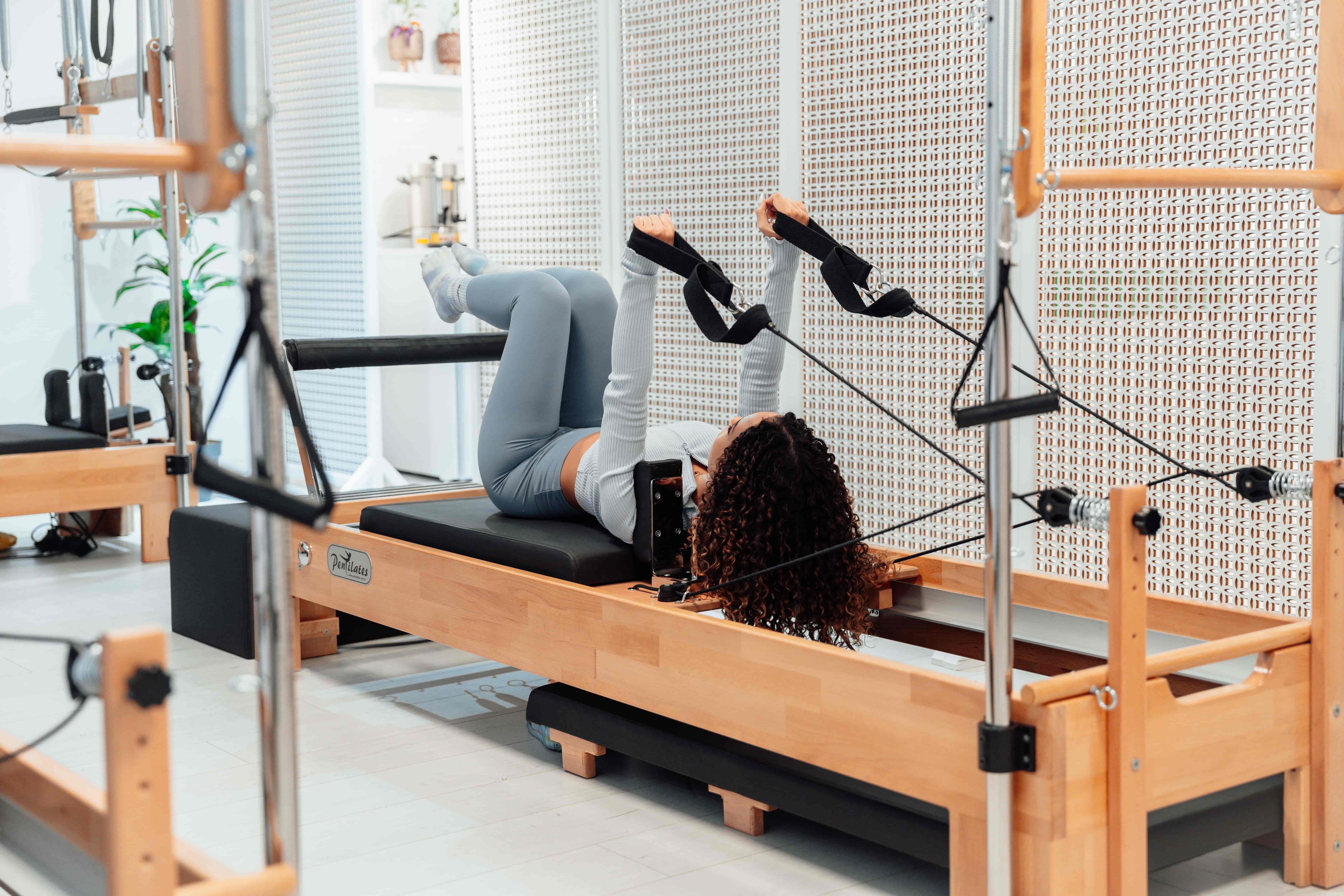
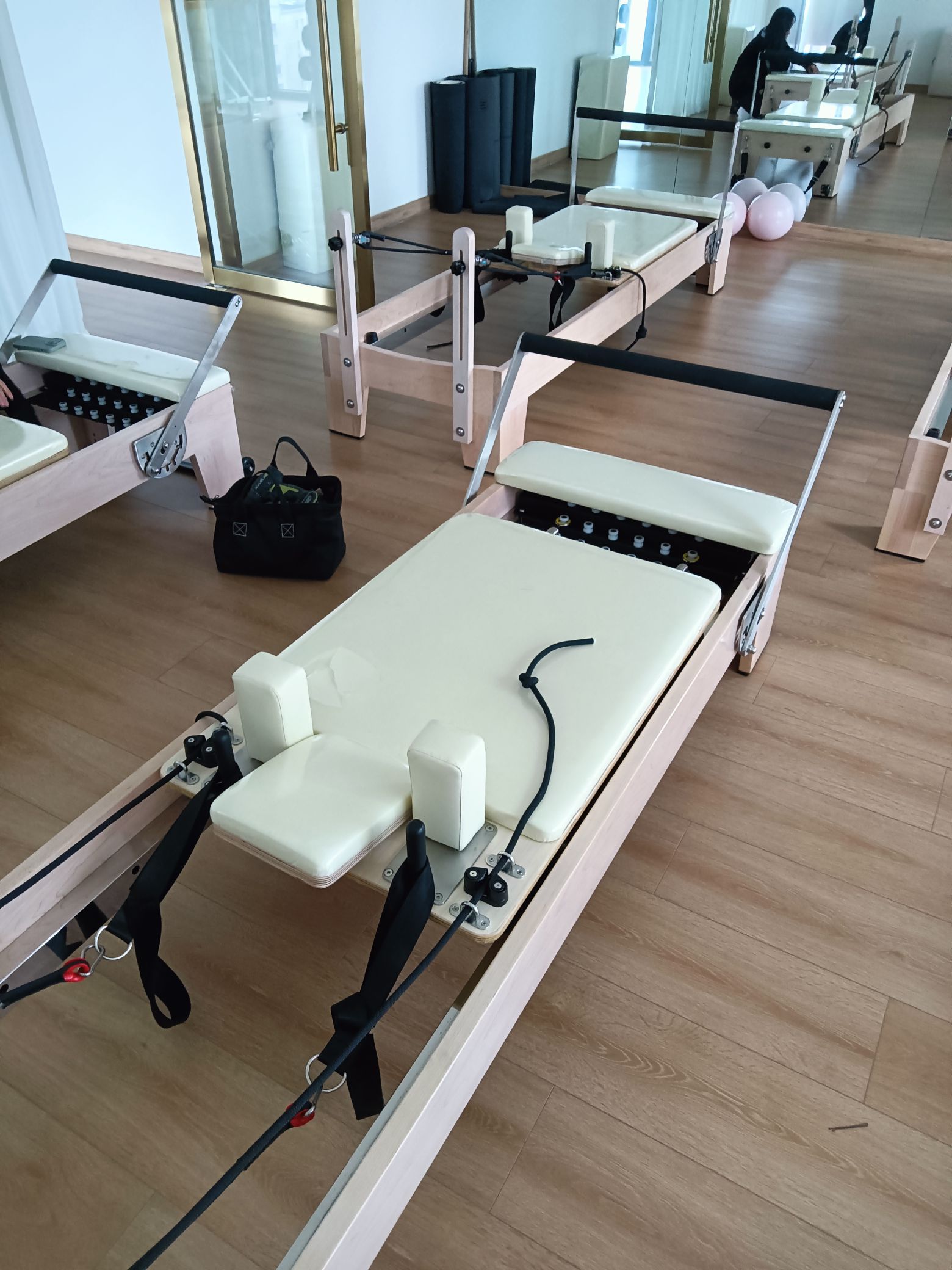
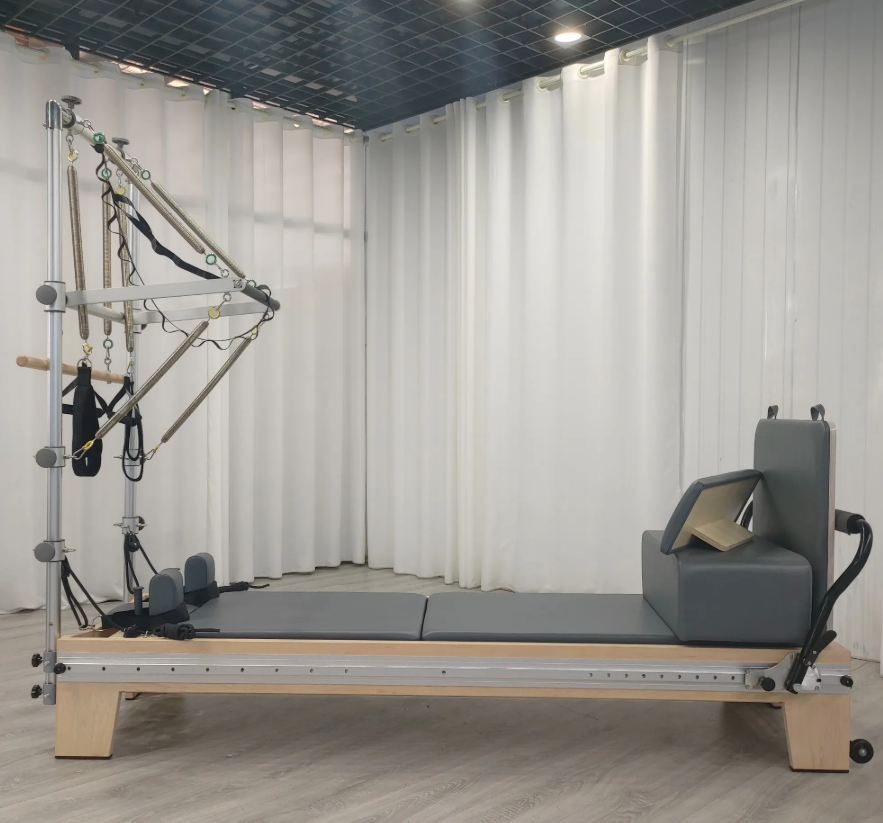
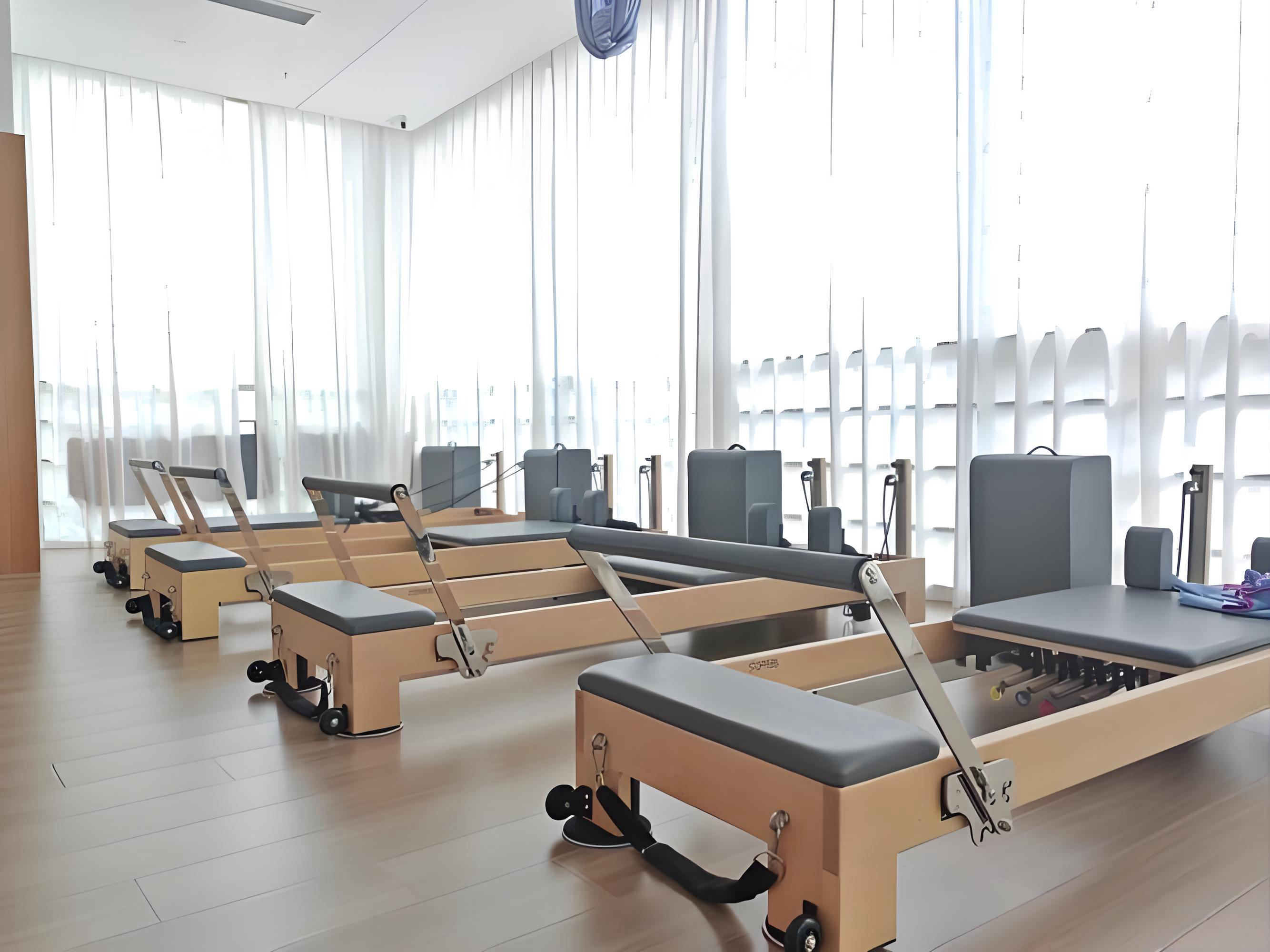
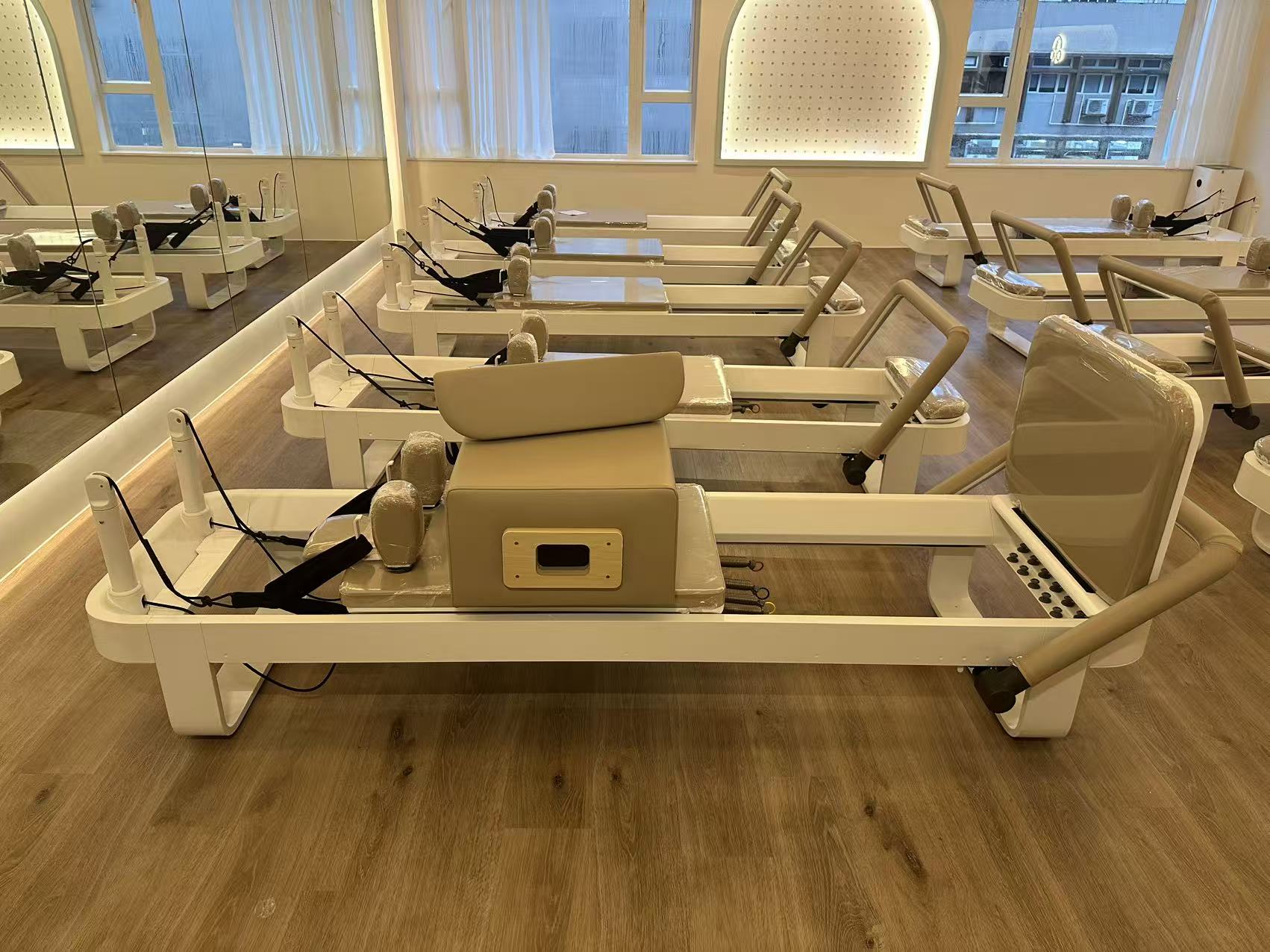
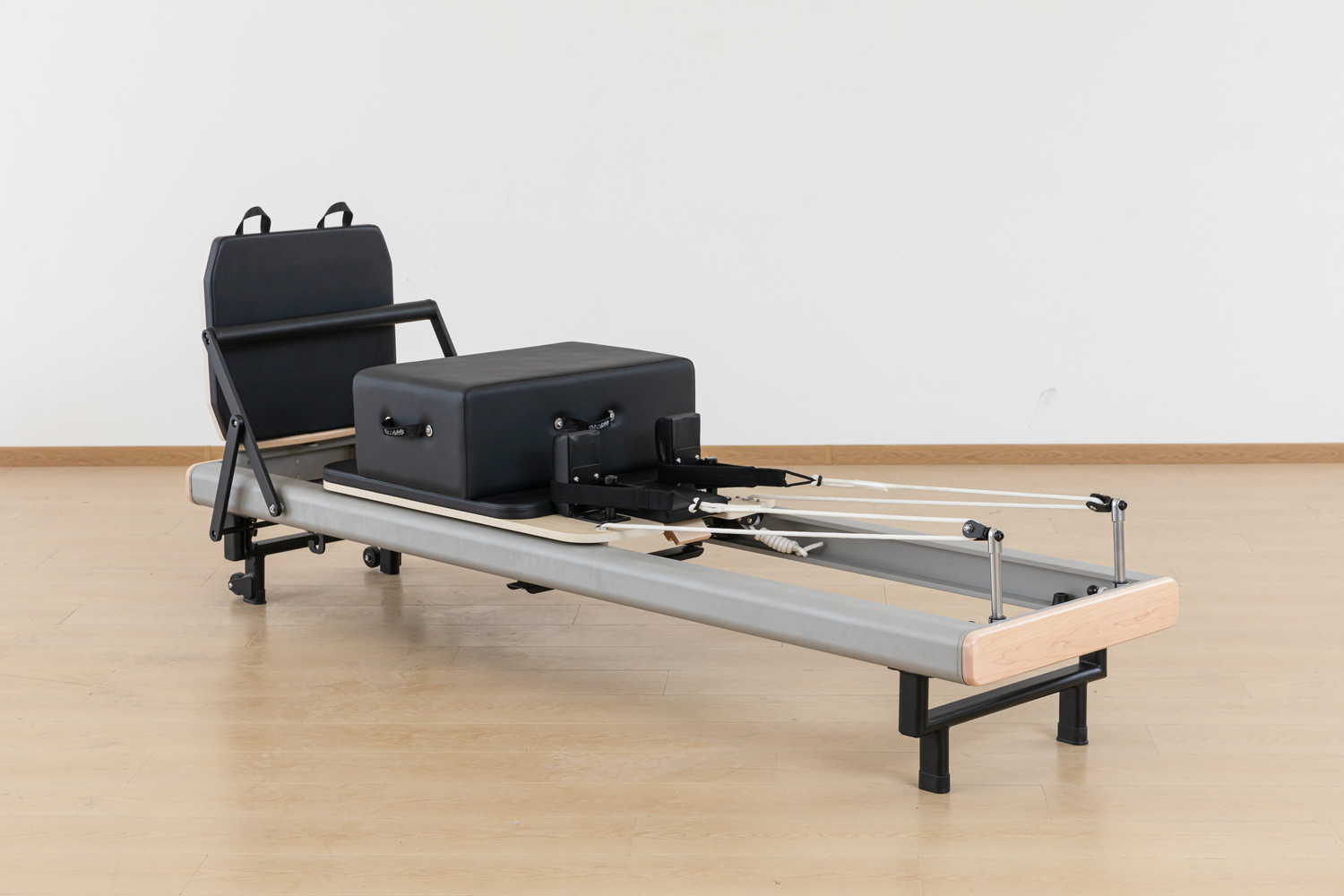
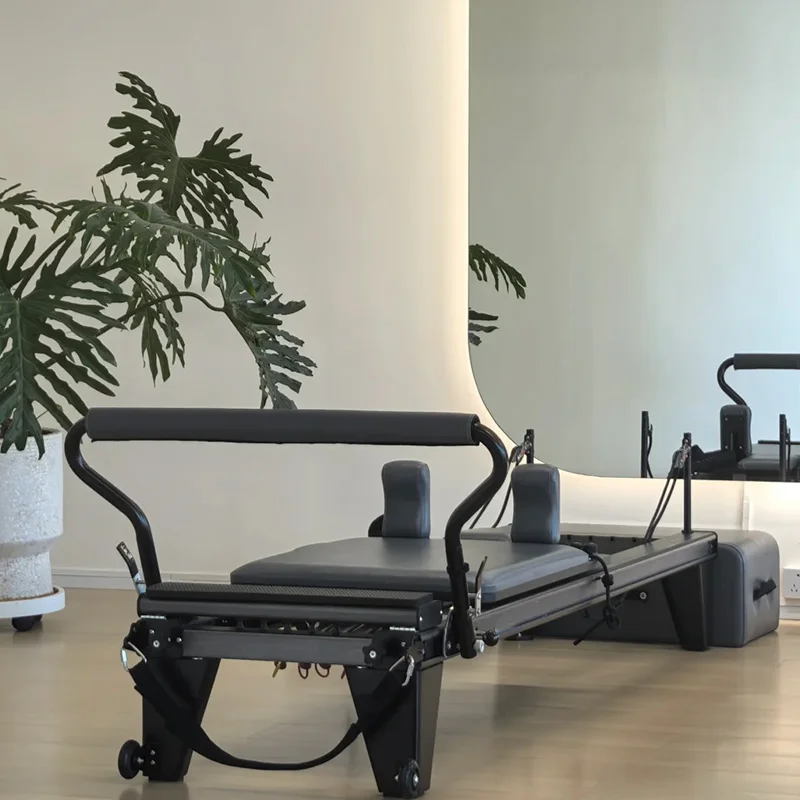
Core Equipment: Pilates Reformer. Reformers are the studio's absolute centerpiece — industry recommendations suggest 3 to 6 reformers as a starting point. 3 units suit boutique small-group classes; 4 to 6 units can support regular small-group programming. Commercial-grade durability and quality consistency should be prioritized, with Balanced Body and Merrithew being the most frequently cited brands.
Second Tier: Cadillac and Stability Chair. Typically 1 to 2 Cadillacs suffice for private and rehabilitation sessions. Stability chairs are suitable for 1-on-1 private sessions and 2-3 person small groups, with 2 to 4 units recommended. Both are key additions during studio expansion.
Third Tier: Ladder Barrel, Spine Corrector, and Accessories. Ladder barrels and spine correctors are used for classical Pilates and postural correction programs. Jumpboards and cardio-tramp accessories integrate cardiovascular elements into Pilates programming.
IV. Space Planning and Traffic Flow Design
Space planning directly affects equipment layout and user experience. Each reformer requires approximately 40 to 50 square feet (3.7 to 4.6 square meters), including operation and circulation space. A 6-reformer studio's reformer area requires approximately 30 to 40 square meters. Additional independent mat practice area, reception, and changing rooms should also be allocated. Consider equipment spacing and traffic flow — can instructors move freely without touching other equipment, ensuring safety and teaching convenience?
V. Supplier Evaluation and Procurement Process
Before confirming a supplier, consider the following three dimensions.
Factory Qualification and Manufacturing Capability: Does the supplier own production facilities and quality control systems? Does it have export experience? Is it ISO 9001 certified?
Product Quality and Sample Verification: Before bulk purchasing, request physical samples for testing — including glide feel, spring feel, frame stability, and other aspects.
Long-Term Partnership Potential: Can the supplier provide ongoing after-sales support, parts availability, and training resources? Can it offer flexible expansion solutions based on studio development needs?
Summary: Commercial Pilates equipment procurement is not about finding "the cheapest equipment" — it's about "selecting equipment that matches your studio positioning." Core selection criteria can be summarized as "five checks" — check frame, check springs, check rails, check upholstery, check after-sales. Based on this foundation, plan equipment configuration according to your curriculum, design layout according to space conditions, and implement phased procurement according to budget priorities. For entrepreneurs planning to open a studio, start with core equipment to validate the market, then gradually expand your apparatus collection — a measured pace often proves more sustainable than a one-time, all-in configuration.