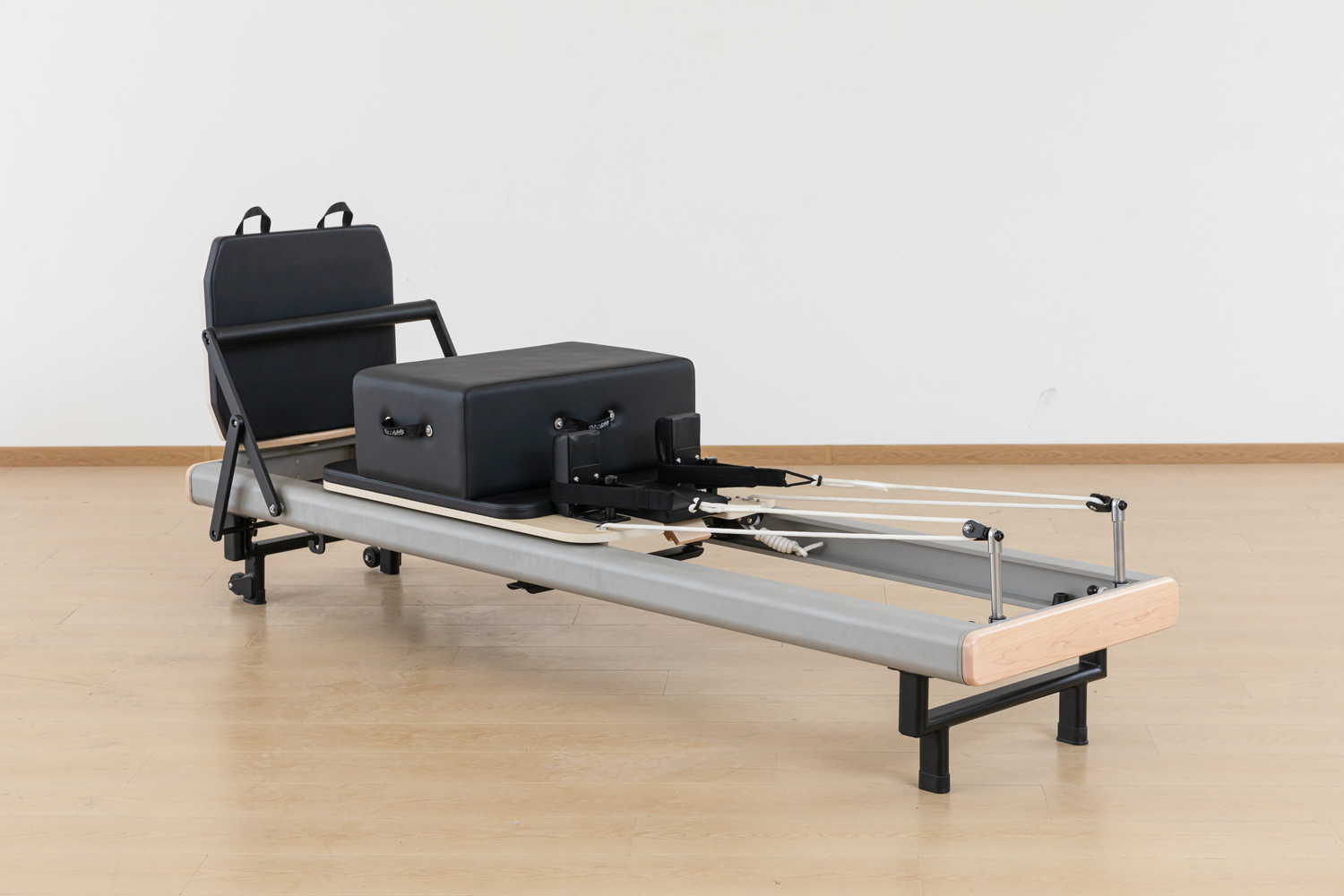
Suffering from Back Pain from Sitting? Pilates Equipment Can Strengthen Your Core and Lower Back
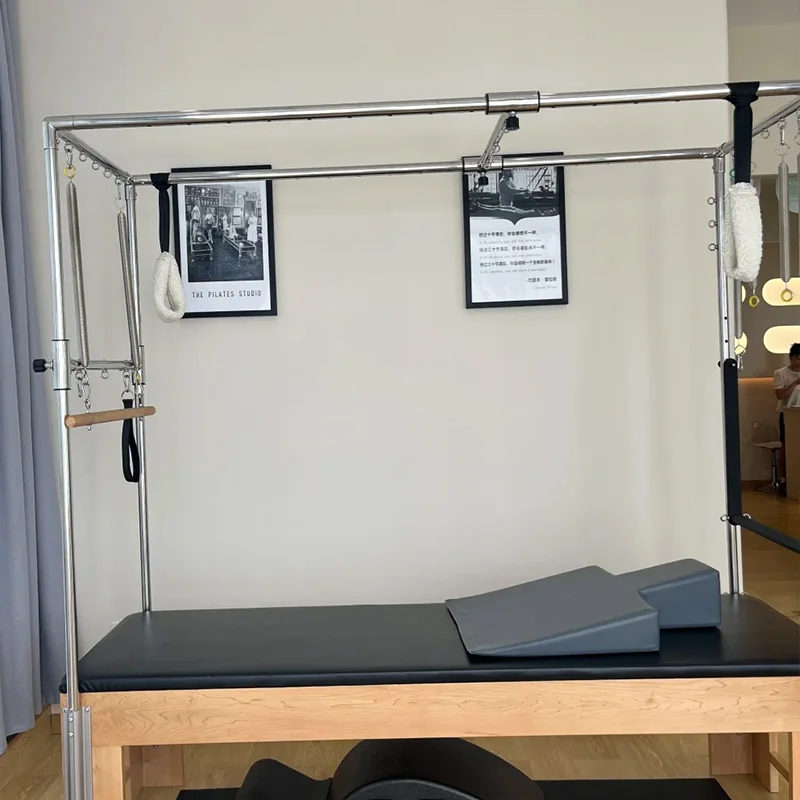
Modern life is built around sitting — at work, in transit, at home — and these habits are slowly molding a specific posture pattern: anterior pelvic tilt, thoracic kyphosis, forward head, accompanied by persistent lower back pain. Fixing this problem doesn't require complex medical intervention. Pilates equipment offers a root-cause solution that helps the body return to a more natural, more balanced state.
I. Where Does Lower Back Pain Come From?
The core problem with prolonged sitting is this: glutes stay in a prolonged "inactive" state, hip flexors remain constantly shortened, the transverse abdominis — the body's natural "back support belt" — goes unused, while the erectors overwork to hold the torso upright. The result is a vicious cycle — the more you sit, the more exhausted you feel, the more you sit, the more it hurts.
Lower back pain is rarely about the back itself — it's about glutes and the abdomen "forgetting how to work." To improve back pain, the key is to activate the coordinated function of the transverse abdominis, multifidus, and glutes. And this is exactly what Pilates equipment does best.
II. Why Pilates Equipment is More Effective Than "Lying Flat"?
Many people's first response to back pain is to lie flat and rest or apply a patch. These methods may temporarily relieve symptoms, but they don't address the root cause — muscle imbalance. The advantage of Pilates equipment is that it precisely guides the body to find "forgotten" muscles, rebuilding correct movement patterns through feedback and resistance.
Pilates equipment addresses lower back pain through a core logic: from passive relief to active rebuilding — engaging deep core muscles in movement to reestablish spinal stability and control.
III. Reformer Exercises for Lower Back Strength
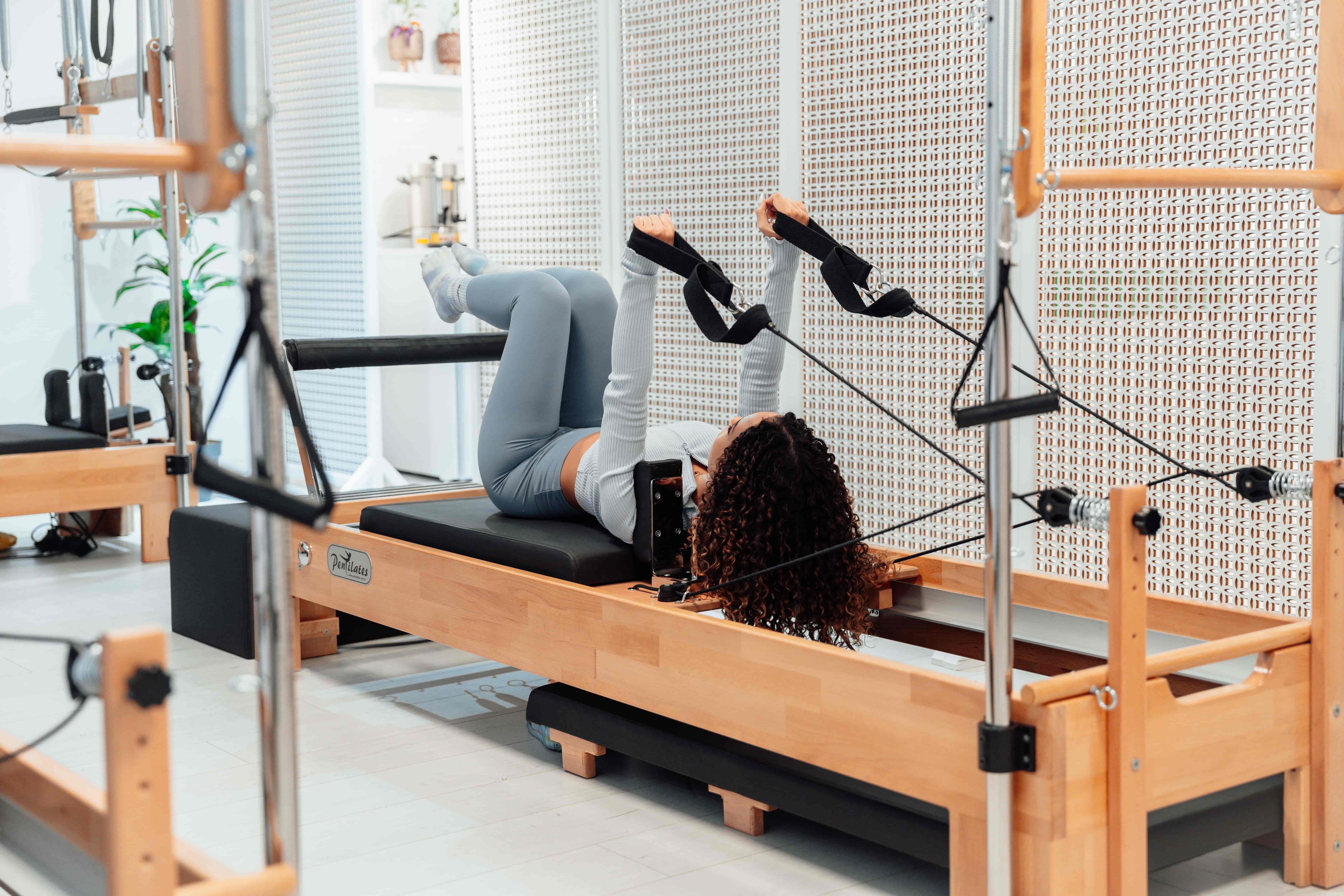
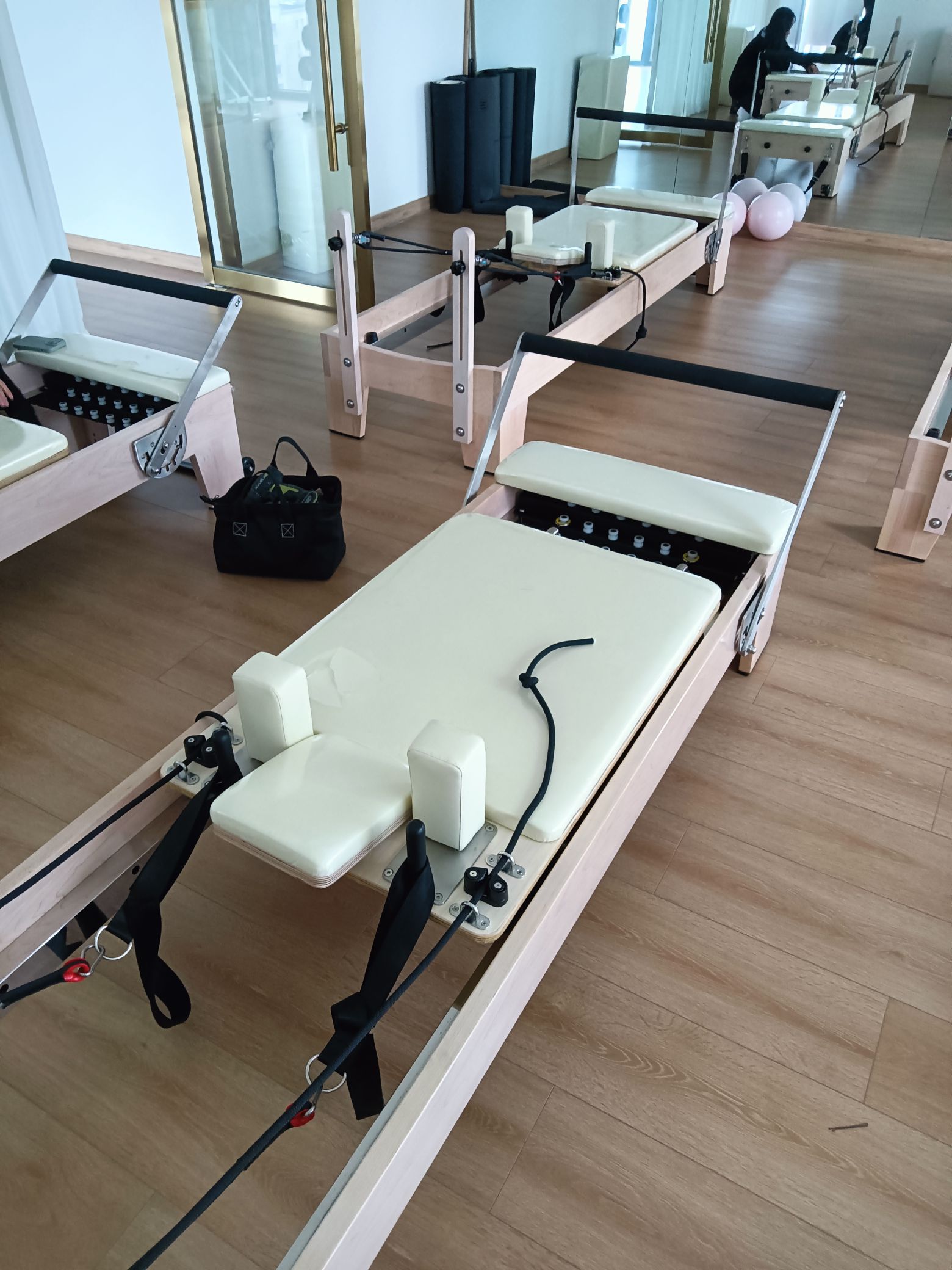
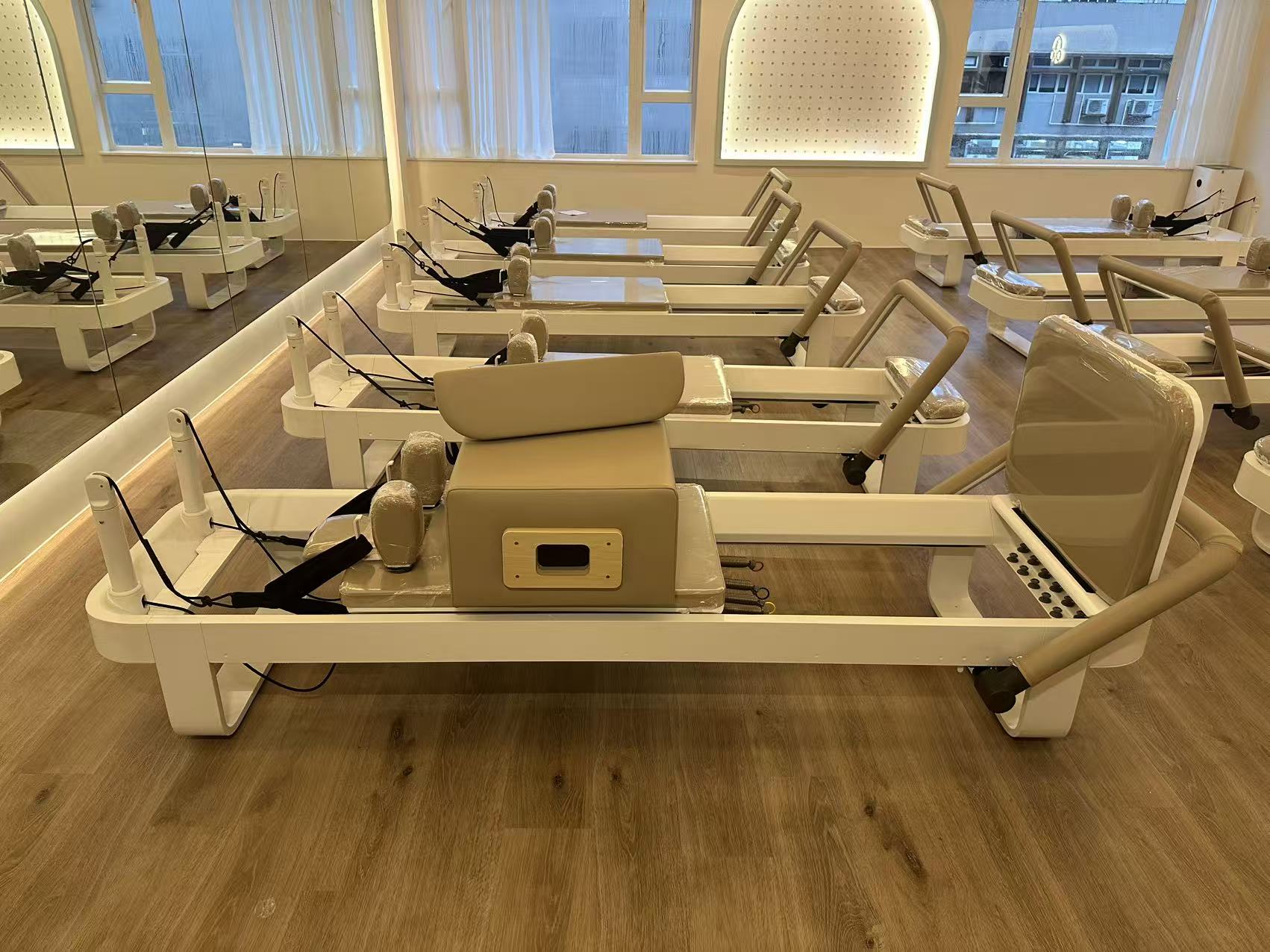
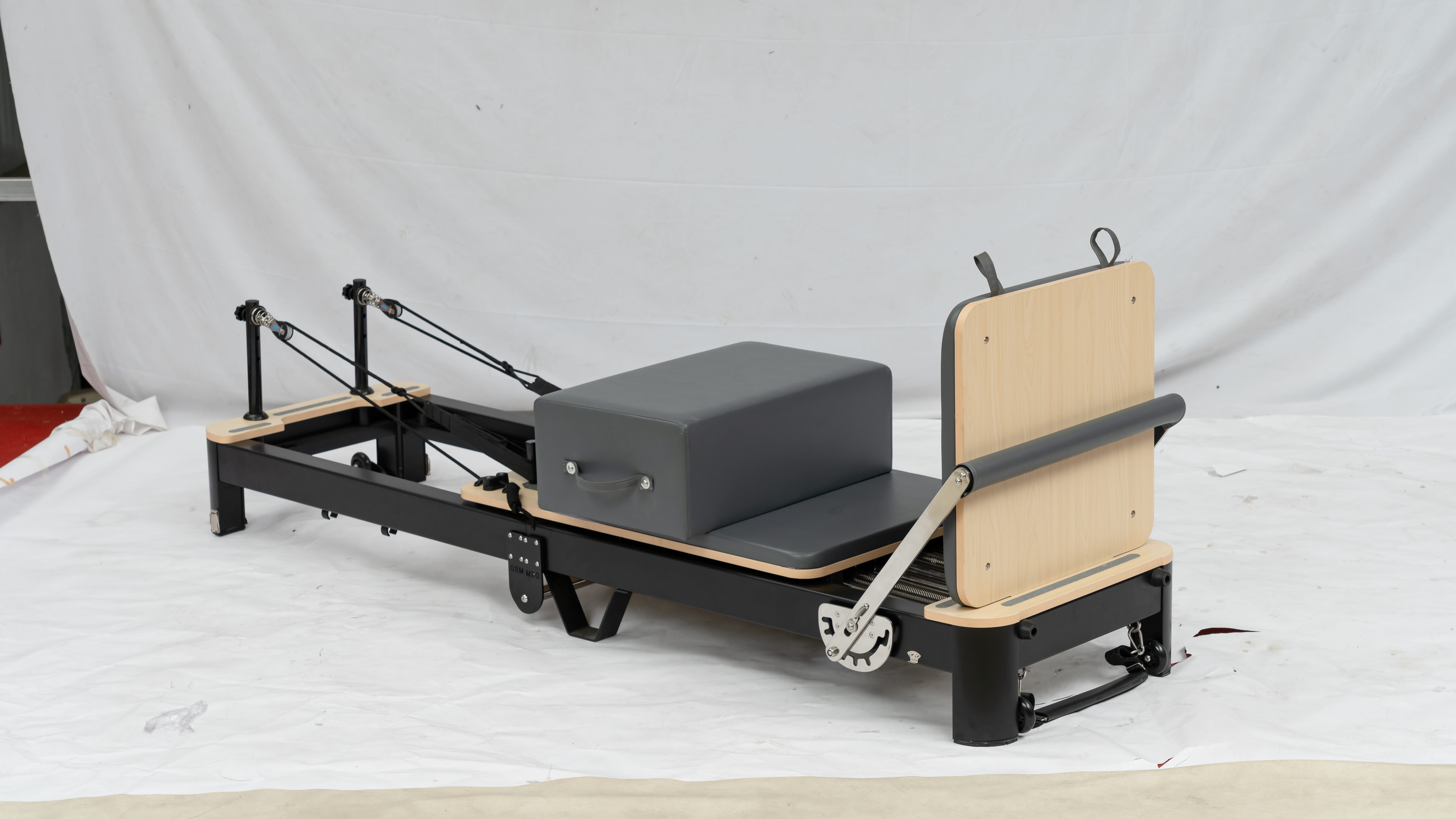
The following four Reformer exercises are especially effective for desk-bound individuals to improve posture and build back strength. With a solid grasp of foundational movement patterns, try these exercises with light spring resistance, gradually building your deep core endurance.
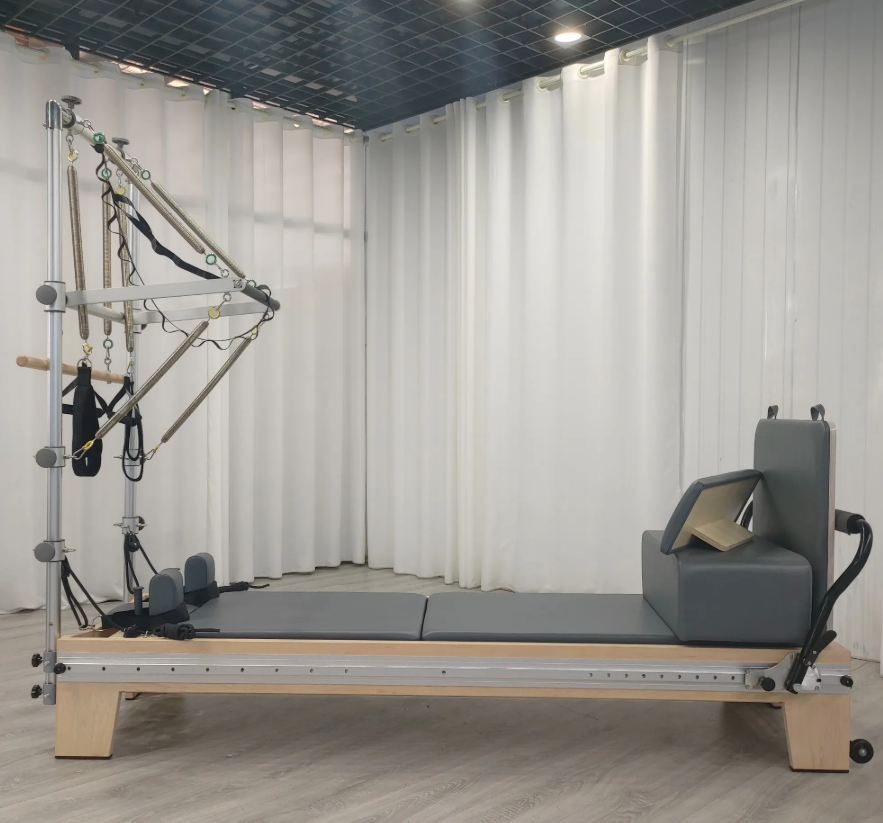
Pelvic Curl is an excellent starting point for beginners on the Reformer. Lie supine on the carriage with feet on the footbar, exhale and articulate the spine up one vertebra at a time from the tailbone, inhale at the top, exhale roll down. This exercise gently activates the multifidus and transverse abdominis, rebuilding segmental spinal movement awareness and visibly relieving lower back stiffness.
Mermaid (Side Flexion) is an exercise for spinal lateral mobility. Sit on the back of the carriage, legs crossed or together, reach one arm overhead and side-bend to the opposite side. This eases stiffness between the ribs and lumbar spine, improving thoracic rotation — especially beneficial for one-sided back pain.
Seated Row connects upper and lower back strength. Sit at the carriage front, feet on the crossbar, hold the straps, and pull the carriage toward you using back muscles with shoulder blades depressed. This builds endurance in the lower back muscles — for desk workers with a tendency to hunch, the "back burn" from rowing is a sign worth persisting through.
Prone Glide connects back and glutes. Lie prone on the carriage, hands on shoulder rests, legs extended behind. Exhale and push the carriage away using glute and back power — feeling the posterior chain work together.
IV. Small Prop "Substitutes" for Home Practice
If you don't have access to a Reformer, these three exercises with a resistance band and Magic Circle can produce equally noticeable improvements. They're ideal for home practice or daily back maintenance.
Band Pelvic Curl: Lie supine with a resistance band passing under your pelvis, holding the ends in each hand. Exhale and curl the pelvis up, feeling the band's resistance feedback.
Magic Circle Glute Bridge: Lie supine with knees bent, Magic Circle between your inner thighs. Exhale and lift your hips. The circle's pressure activates the adductors, indirectly stabilizing the pelvis.
Wall Angels: Stand against a wall, arms sliding up and down with elbows and wrists against the wall. No equipment needed — but this restores thoracic mobility and helps correct rounded shoulders and forward head.
V. How Long Does It Take to See Results?
How long does it take to build real back strength? The answer varies individually. Extensive research and clinical practice consistently show that Pilates training produces significant improvement in chronic non-specific low back pain.
From personal experience, a more realistic timeline is: after the first session, you may feel your lower back "somewhat eased"; after 2 weeks of consistent practice, the "heaviness" in your back begins to change — you find yourself able to sit for an hour without immediately needing to stand; after 6 weeks or more, when lifting heavy objects, you'll more actively feel your core muscles engage protectively. This timeline varies across individuals, but what remains consistent is the lasting, reliable body control you build through practice.
Summary: Lower back pain from prolonged sitting is not essentially an "overuse" problem — it's a "misuse" and "underuse" problem. Some muscles are chronically tight, while others remain perpetually dormant. Pilates equipment doesn't "fix" you — it helps you learn how to use your body more evenly, by building new movement patterns. If equipment isn't currently accessible, start with band pelvic curls and Magic Circle glute bridges to re-engage forgotten muscles. Building lower back and core strength is one of Pilates's most concrete and immediate physical returns.