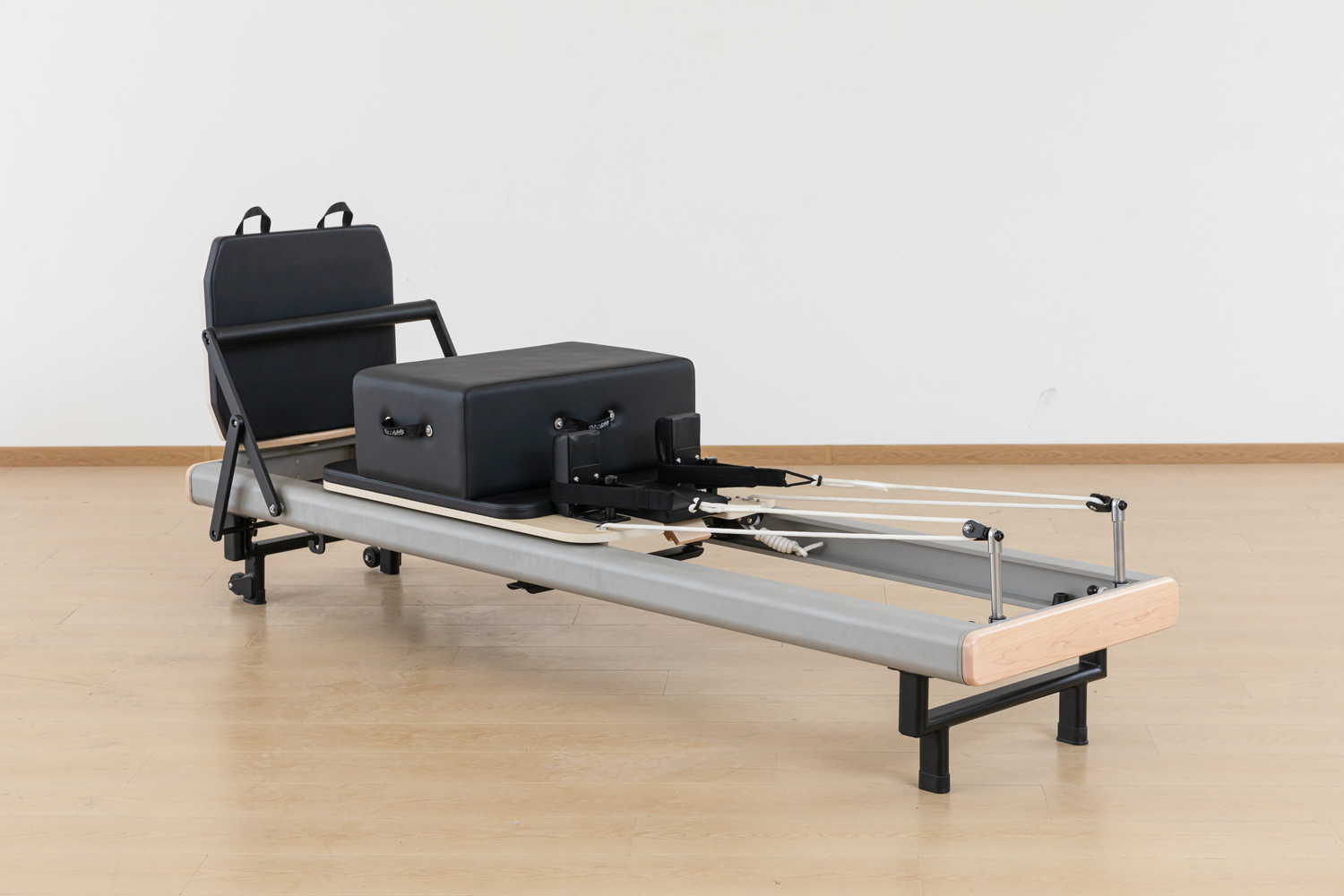
Premium Custom Pilates Equipment: Commercial-Grade Quality for Home Practice
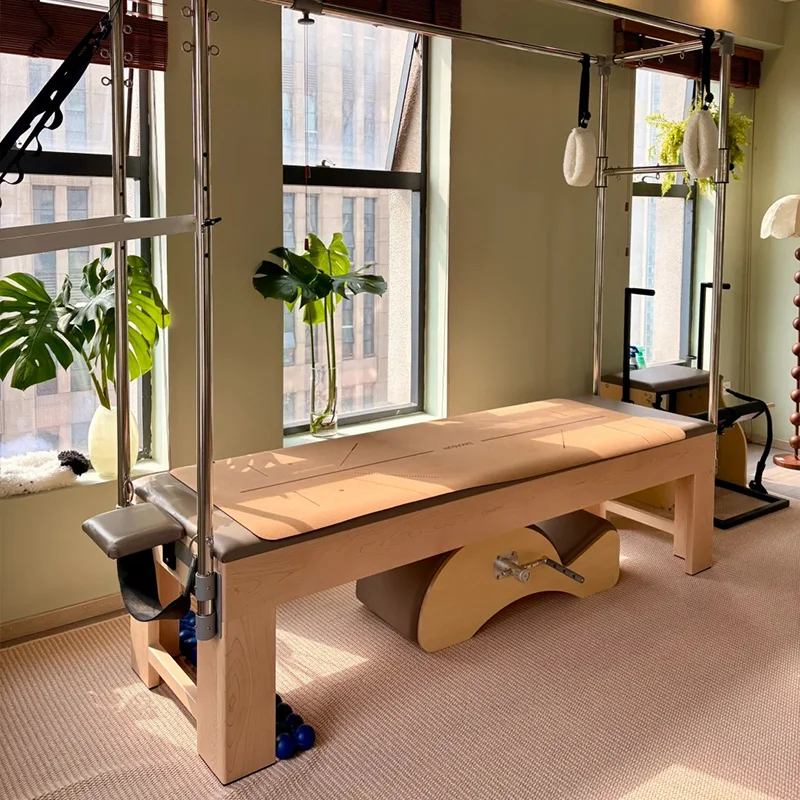
Pilates equipment is undergoing a notable "boundary blurring" trend — high-quality commercial-grade equipment is now entering home spaces with greater flexibility. The gap between a truly commercial-grade reformer and ordinary home equipment is not just price — it's a fundamental difference in materials, craftsmanship, and user experience. This article breaks down the core quality factors of premium custom Pilates equipment and how to bring commercial-grade quality home.
I. Core Standards of Commercial-Grade Quality
Whether a piece of equipment qualifies as "commercial-grade" can be judged from several dimensions.
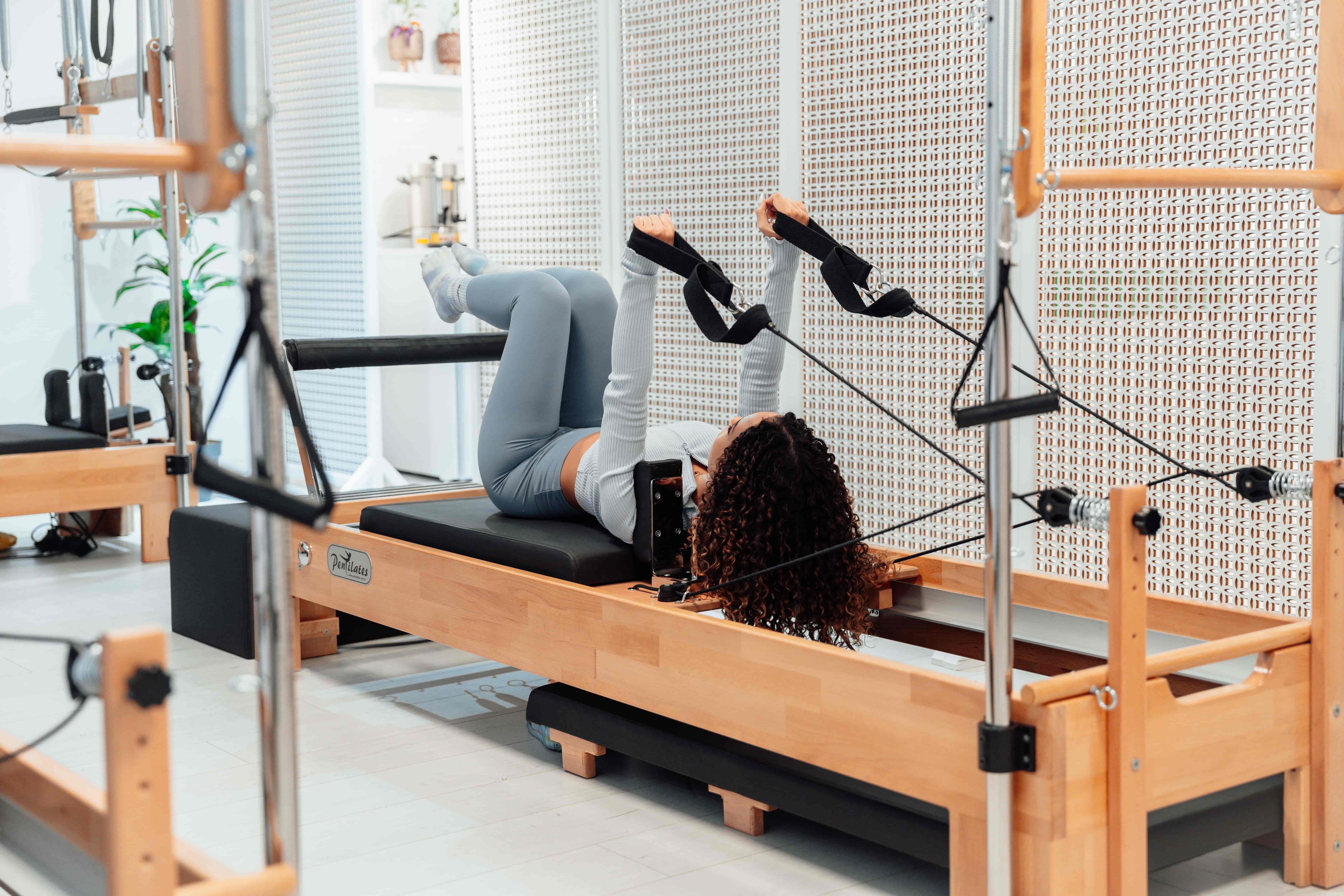
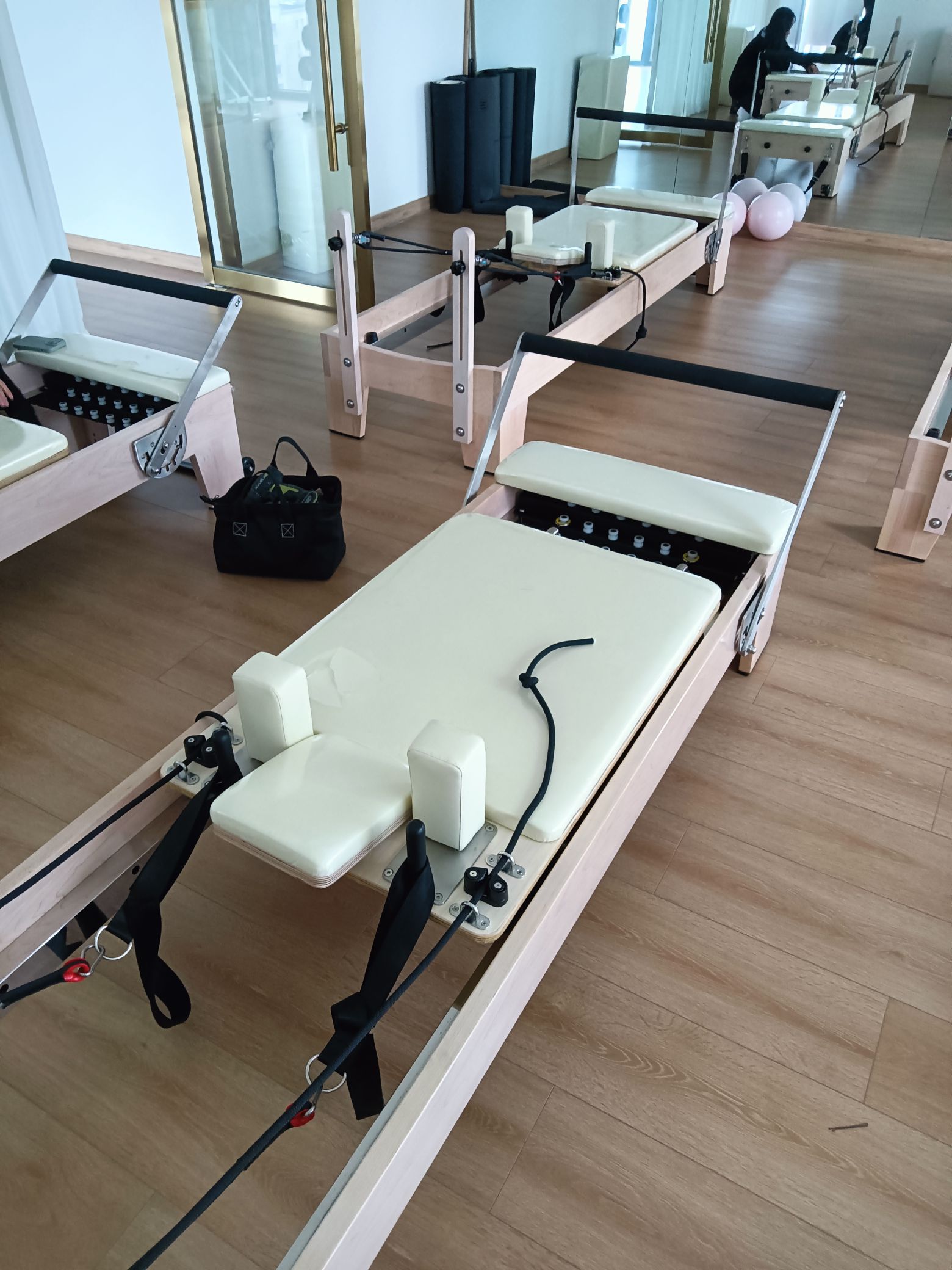
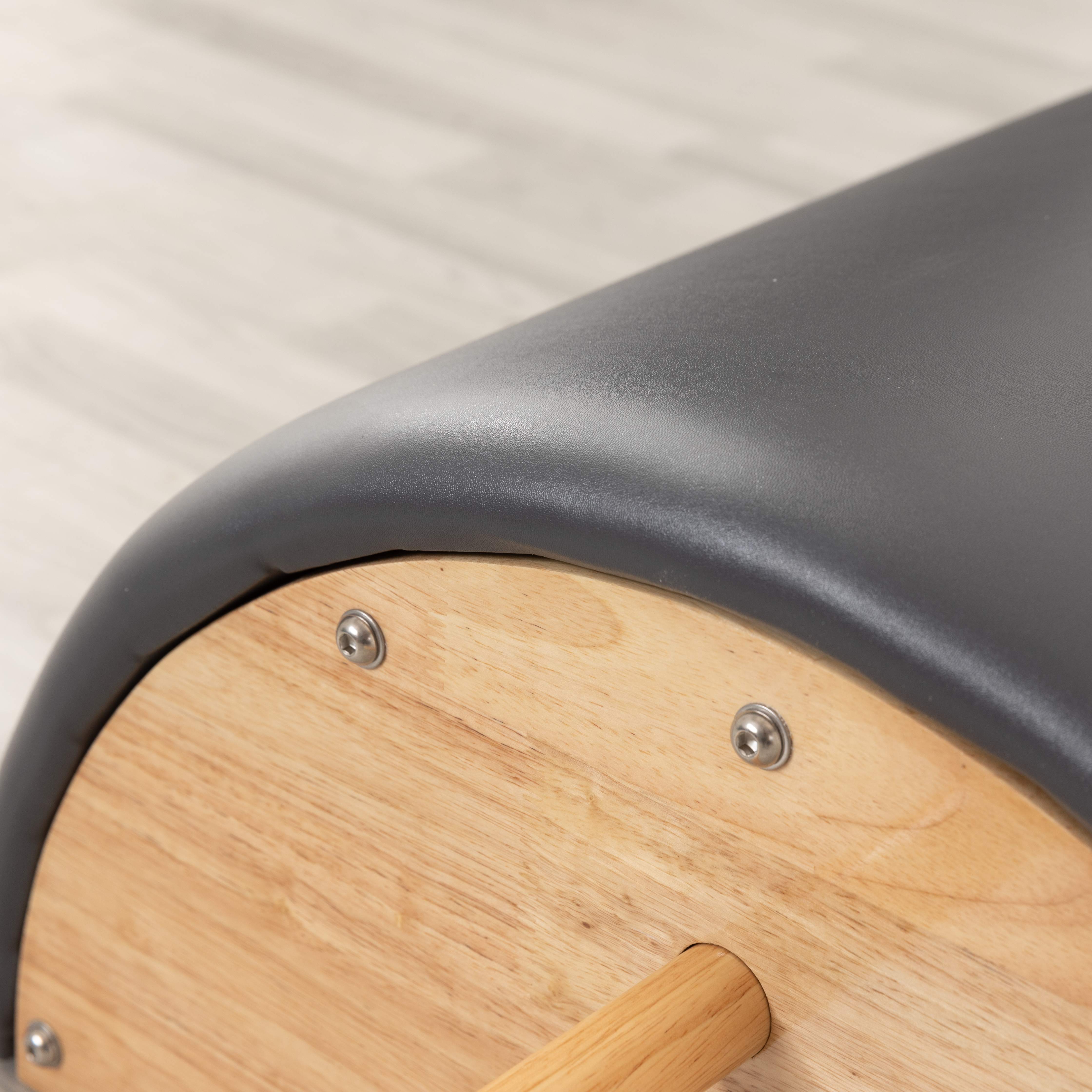
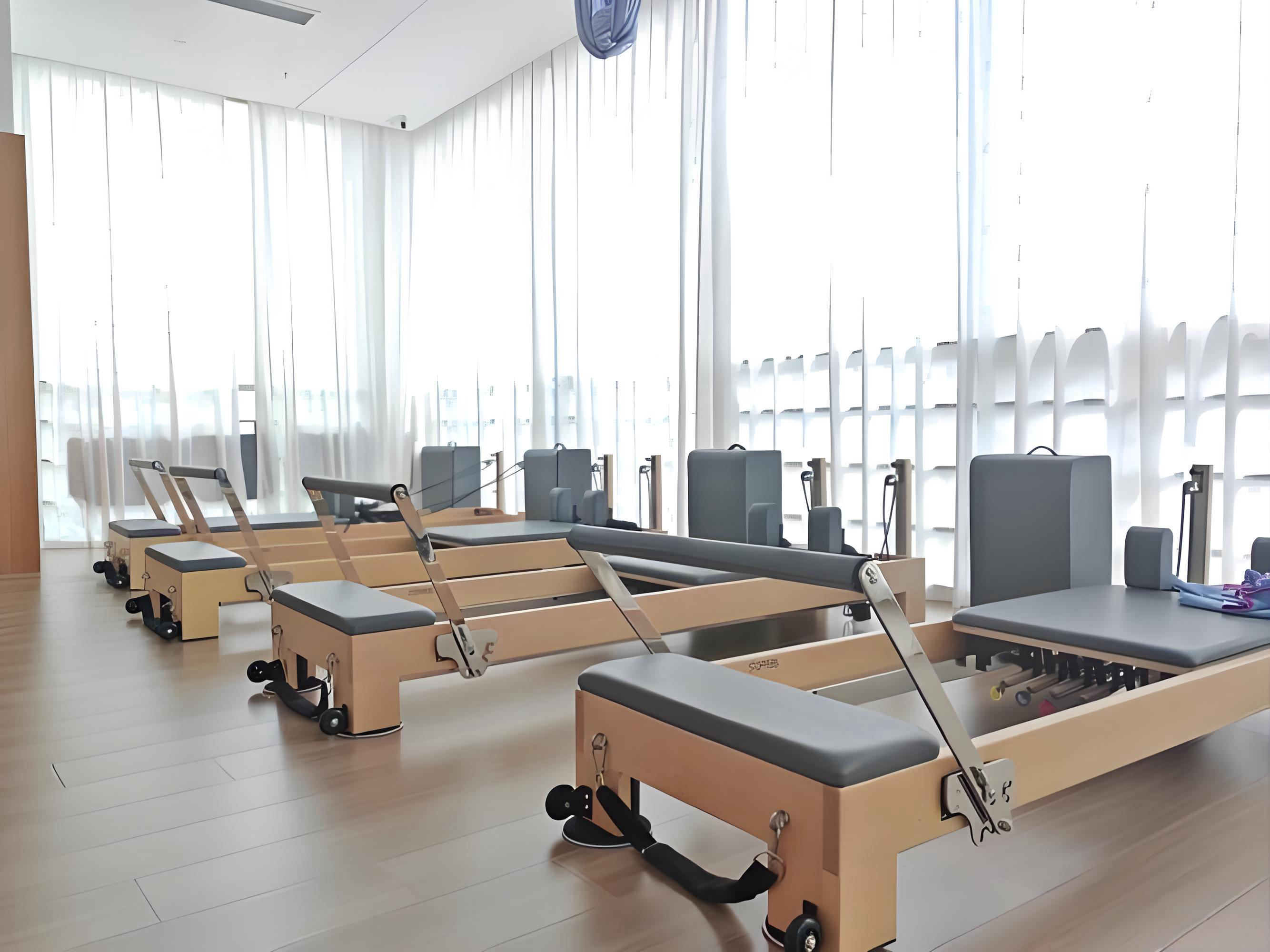
Frame material and construction are foundational. Commercial-grade equipment typically uses premium North American imported maple, aviation-grade aluminum alloy, or thickened carbon steel frames, with integrated cutting and precision welding to ensure no deformation or loosening under high-frequency use. The Merrithew SPX Max, for example, features an aluminum frame with precision ball-bearing carriage, capable of withstanding multiple classes daily.
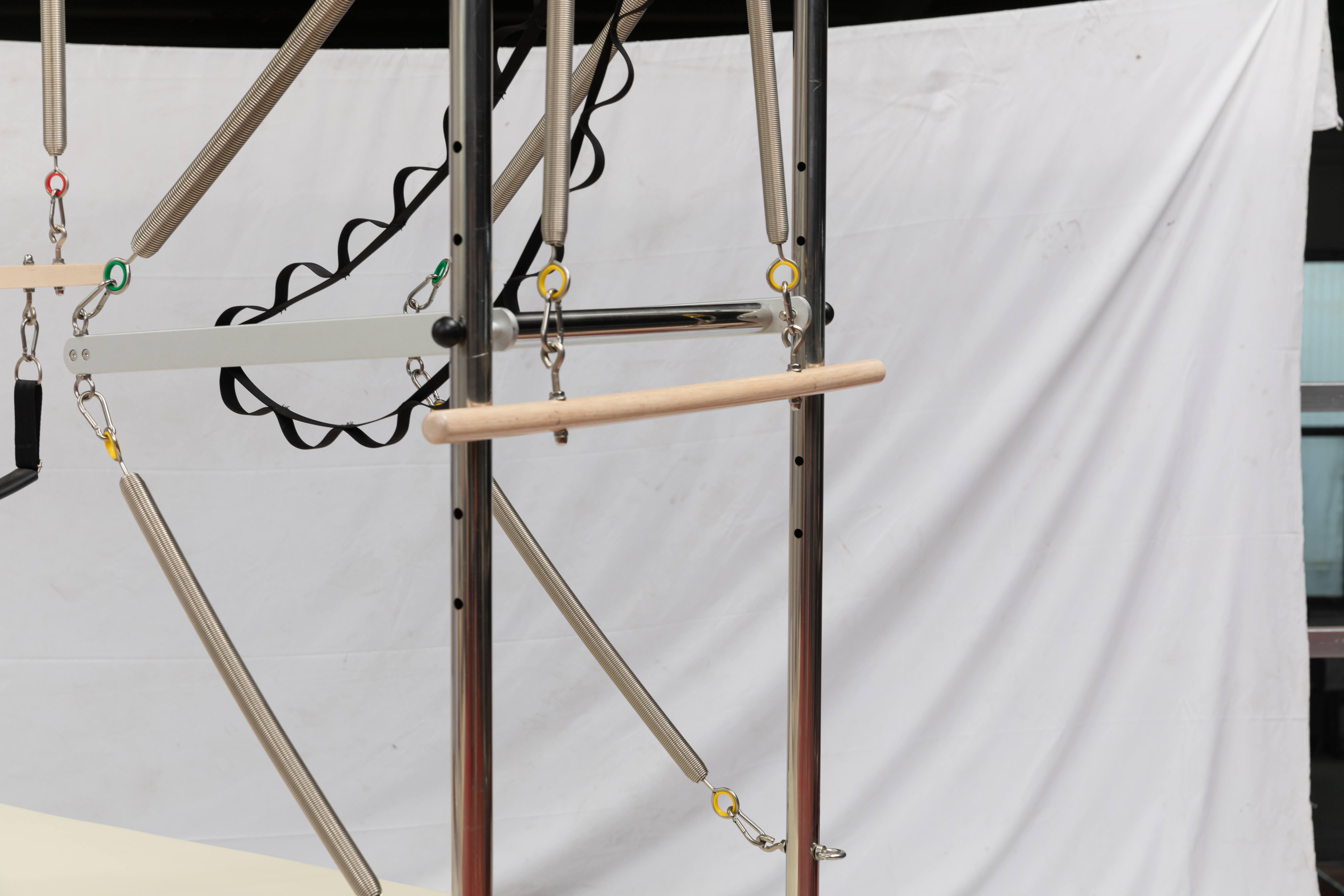
Spring system precision determines the "soul" of feel. Commercial-grade equipment uses German or Korean imported piano wire cold-coiled springs, stress-relief heat-treated, with consistent force output and 500,000+ cycle life. Budget springs may show force degradation or even breakage within months, while premium springs maintain consistent feel even after two years.
Carriage smoothness directly impacts practice experience. True commercial-grade glide comes from precision-machined aluminum rails paired with load-bearing wheel pulleys — nearly silent operation with no sticking or "clunking". Low-end equipment with nylon pulleys and rough rails will show amplified noise and wear under high-frequency use.
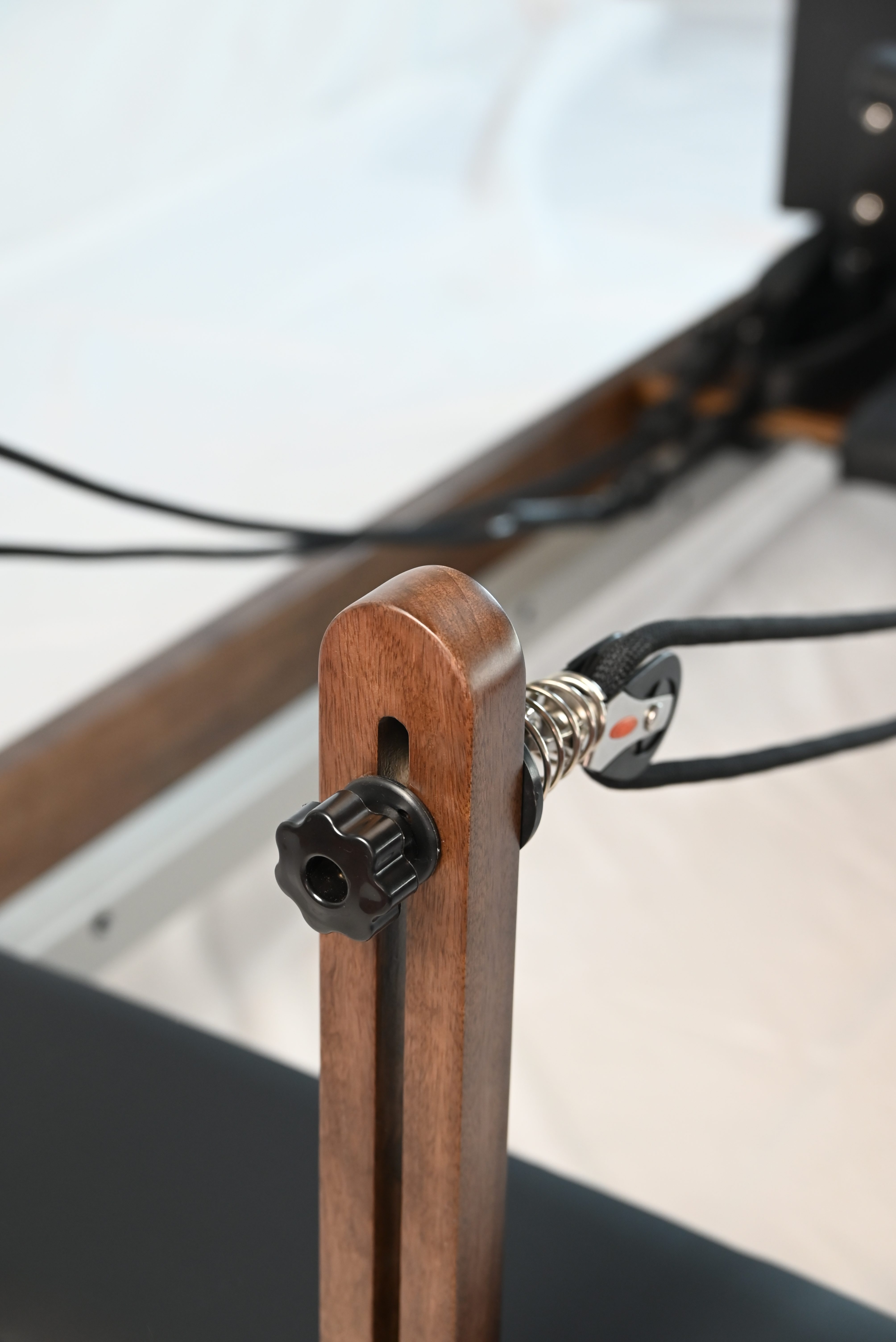
Adjustment system flexibility reflects professionalism. Commercial-grade equipment typically features multi-position adjustments — the Pioneer Pilates Clinical Full Track Reformer offers 22 horizontal footbar positions to precisely accommodate different heights and training needs. Locking reliability and smooth operation of adjustment mechanisms are also key distinctions.
II. Customization: From Mass Production to Bespoke Creation
"Customization" in premium Pilates equipment goes beyond color selection — it encompasses appearance, function, and branding.
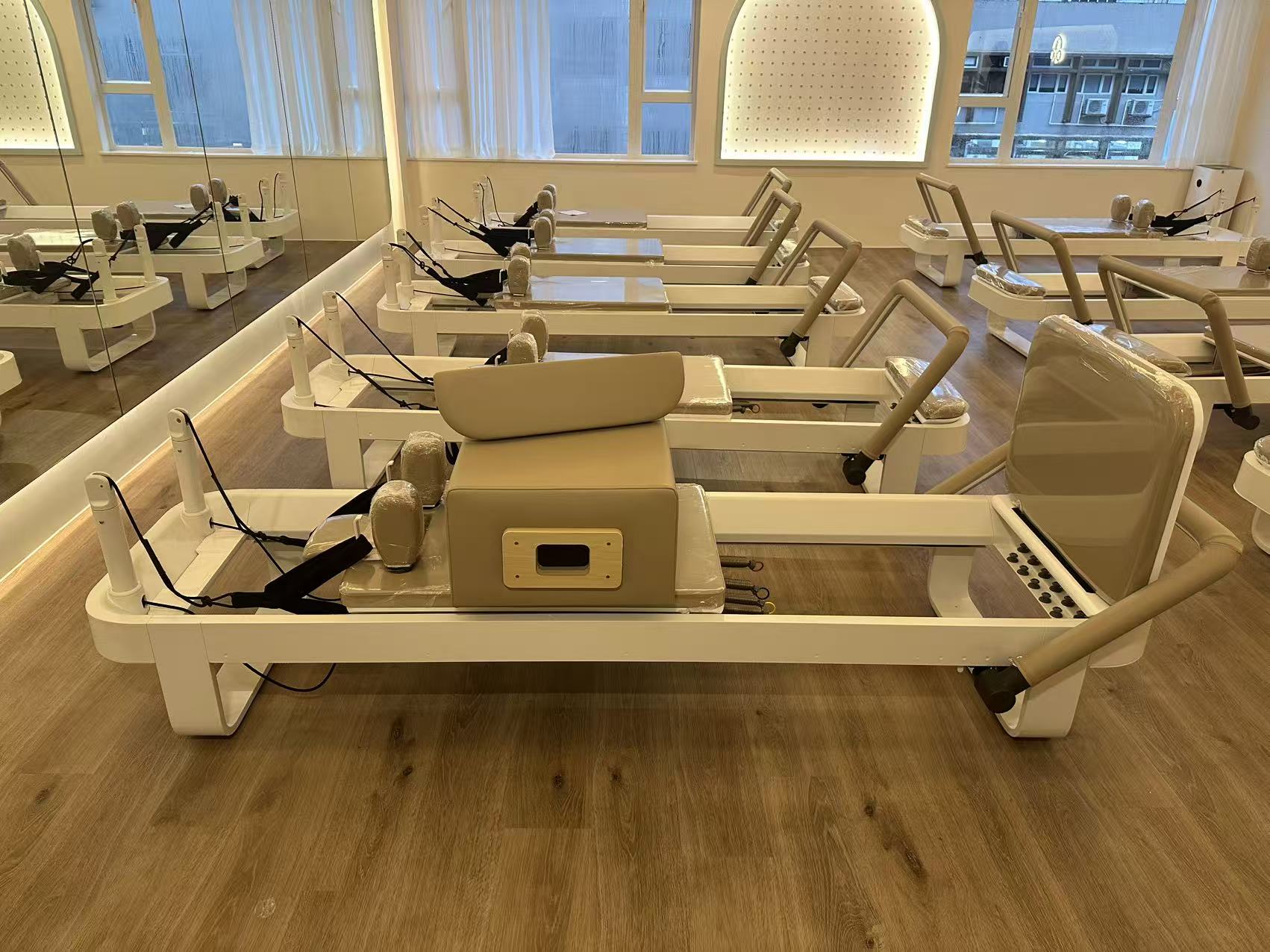
Aesthetic customization is the most common entry point. From 70+ upholstery color options, to anodized or baked-white coating finishes, to laser-engraved LOGOs, metal nameplates, or embroidery — every detail can become an extension of brand or personal style. Baked-white coating, as a specialized finish, results in a dense, uniform surface that resists fingerprints and moisture, lasting significantly longer than standard paint.
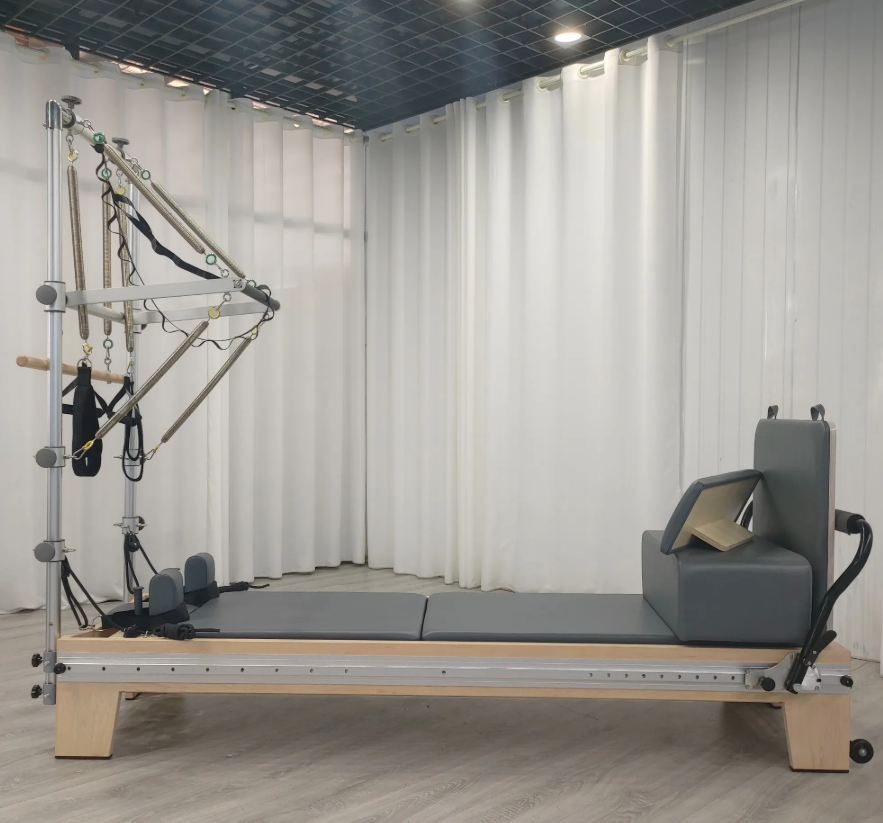
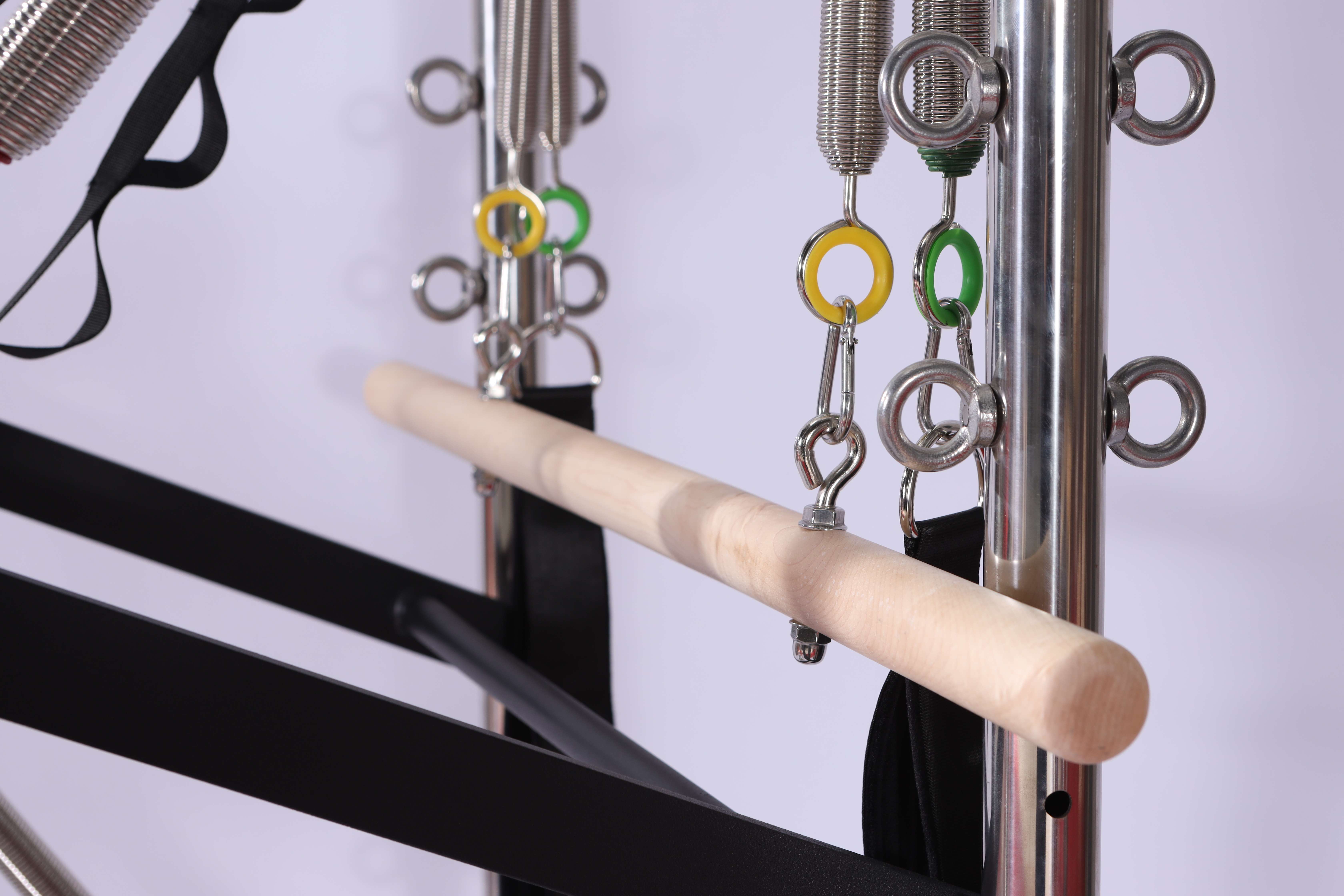
Functional customization goes deeper. This includes spring force configuration (e.g., 3 heavy + 1 medium + 1 light spring combination), accessory packages (jumpboard, tower, rope system options), and the number of adjustment positions. Some manufacturers like Bilinkpilates offer OEM/ODM services, executing production processes per client requirements from raw material selection onward.
Brand customization serves chain studios or distributors — including branded packaging, custom manuals, and marketing materials to establish a consistent product image.
III. Commercial-Grade for Home: Balancing Quality and Space
Bringing commercial-grade equipment home requires addressing two challenges: spatial fit and storage convenience.
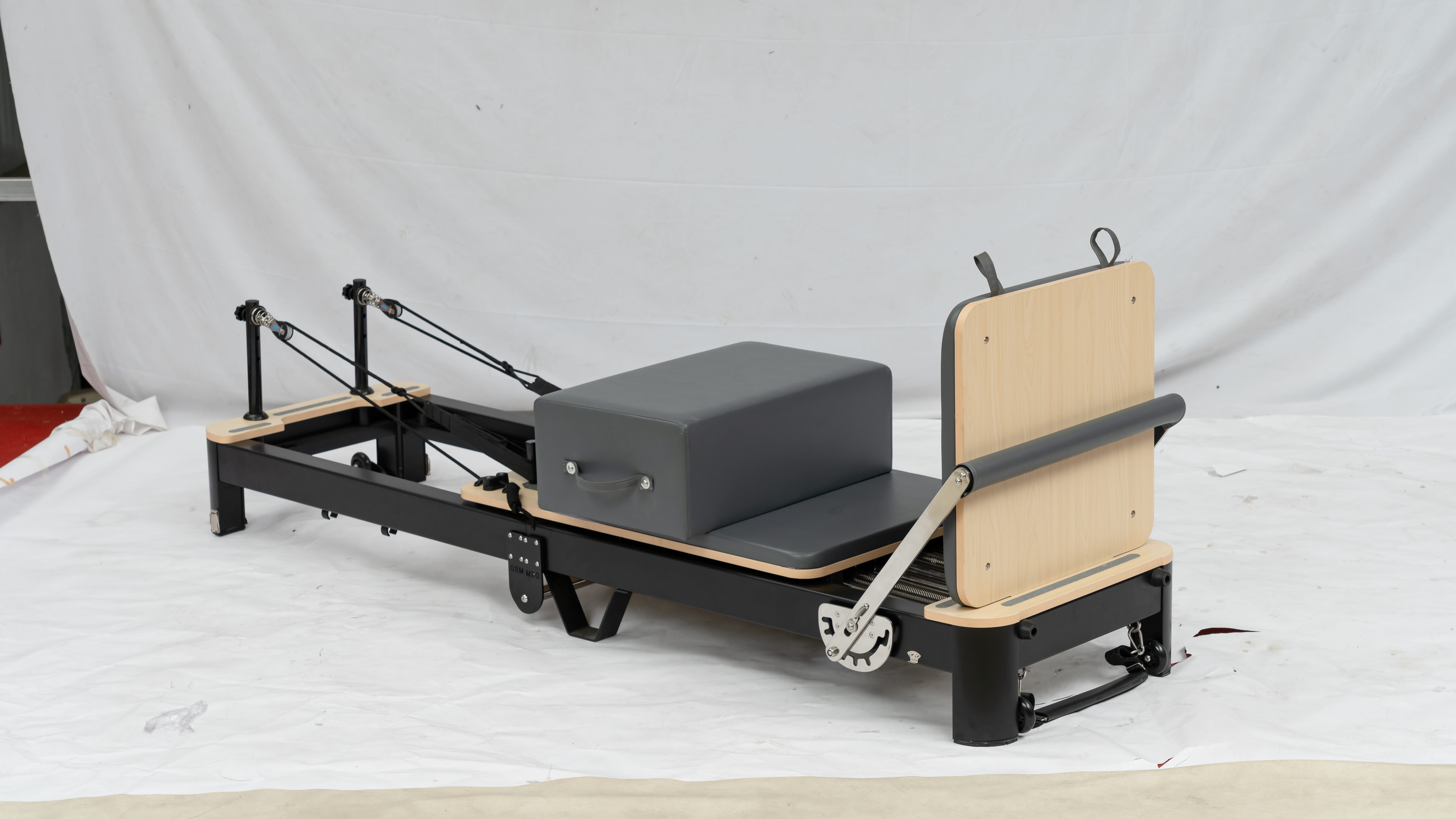
Compact design is the first solution. The Bilinkpilates VertiMotion Reformer, for example, features an aluminum frame with built-in wheels for easy home movement and storage, while retaining the same spring system and glide precision as commercial models. The Crossformer integrates five apparatus types (Reformer, Cadillac, Ladder Barrel, Wunda Chair, and Half-Trapeze) into one unit — occupying one footprint while enabling a full classical Pilates program.
Stackability and foldability further reduce spatial demands. The Merrithew SPX Max Reformer is stackable, with lightweight design enabling easy storage in corners when not in use. This is especially valuable for spaces requiring multi-function flexibility.
Load capacity and safety standards remain uncompromised. Even home-targeted commercial-grade models maintain 150kg+ load capacity, with frame welding and spring life standards consistent with studio equipment. Safety certifications (CE, ISO 20957) should be standard, not optional.
IV. Purchasing Essentials for Premium Custom Equipment
Define your usage scenario: Home daily practice or part-time private teaching? Usage frequency determines spring and upholstery replacement timelines.
Verify core component sources: Are springs imported (Germany/Korea)? Is rail material 304 stainless steel or anodized aluminum? Does leather meet Martindale abrasion ratings above 50,000 cycles? The answers determine long-term performance.
Understand the customization delivery process: Most custom equipment is made-to-order, with lead times typically 25 to 45 days. Sample approval, production scheduling, and logistics require advance planning.
Evaluate after-sales service: Custom equipment often involves personalized components — ensure the manufacturer can provide parts supply and technical support for long-term use.
Summary: The core value of premium custom Pilates equipment lies in delivering the same quality training tools as commercial studios, within a reasonable home footprint. From North American maple frames to German piano wire springs, from anodized aluminum rails to baked-white coatings — every detail defines "commercial-grade." Customization is not about luxury — it's about precisely matching your training needs. A machine truly built for you is worth a decade or more of practice.