How to Solve Noise Problems of Cheap Pilates Reformers
One of the biggest pain points of cheap Pilates reformers is noise. You bring a new machine home with high expectations, only to find that every glide is accompanied by creaks, clunks, or scraping sounds — the experience instantly feels cheap. It ruins your training immersion, and in a studio setting, it makes clients uncomfortable.
The good news is that most cheap reformer noise is not "hopeless." It's caused by a handful of common mechanical issues. With systematic troubleshooting and simple fixes, most noises can be significantly reduced or eliminated.
I. Noise Source Diagnosis: Listen First, Then Locate
Different sound types point to different root causes. Spend a few minutes "listening" before you start:
·Creaking / squeaking (friction sound) : Continuous sound during carriage movement, like metal scraping — usually from lack of rail lubrication or surface contamination.
·Clicking / clunking (impact sound) : Abrupt sound at specific carriage positions — could be bearing slop, uneven rail joints, or loose end-stops.
·Scratching / hissing (scraping sound) : Fine, continuous sound — often from burrs on the rail surface or particles trapped in rail grooves.
·Spring buzzing / vibration : Spring vibration during gliding — usually from misaligned spring hooks or adjacent springs rubbing against each other.
Key principle: The type of noise determines the solution — not "dismantle everything and coat everything."
II. Rail Issues: The Most Common Noise Source
Cheap reformers typically use chrome-plated carbon steel or standard aluminum rails, with limited machining precision and surface finish. Over time, scratches, burrs, and oxidation appear. This is the most common source of noise.
Inadequate lubrication or wrong lubricant: Many cheap reformers ship with only a thin layer of rust-preventive oil on rails, not real lubricant. After a few uses, it evaporates, and metal-on-metal friction creates creaking. Worse, some users apply WD-40 or regular oil — these attract dust and lint, forming an abrasive paste that makes rails rougher and louder.
Solution: Wipe rails thoroughly with a clean dry cloth. Apply silicone spray lubricant lightly, then slide the carriage several times for even distribution. If WD-40 was used, clean rails with a degreaser before re-lubricating.
Burrs or scratches on rail surface: Cheap extrusions may leave micro-burrs on the aluminum surface. As the carriage passes them, scraping sounds occur.
Solution: Use fine sandpaper (1000-2000 grit) to gently sand the burr area along the rail direction, then wipe clean. Never sand crosswise — it will create new scratches.
Uneven rail installation or misaligned joints: If noise occurs at a specific carriage position, it's likely due to inconsistent gaps at rail joints or loose mounting screws causing slight misalignment.
Solution: Check rail joint screws — tighten if loose. For stepped joints, add thin metal shims or Teflon washers under the rail joint for micro-adjustment.
III. Wheel Issues: The "Birth Defects" of Cheap Parts
Cheap reformers typically use nylon or standard plastic wheels with low-precision bearings and poor wear resistance. Abnormal wear or bearing damage produces periodic noise.
Bearing wear or dust ingress: Each carriage glide rotates the bearings multiple times. Cheap bearings lack seals, allowing dust and fibers to enter, increasing friction and noise.
Solution: Remove wheels and flush bearings with electronic cleaner, then add a small amount of food-grade silicone grease or light bearing oil. If noise persists, the bearing is already damaged — replace the wheel.
Incorrect wheel-to-rail clearance: Too much clearance causes carriage wobble and impact noise; too little increases friction and continuous friction noise.
Solution: Check wheel mounting screws for looseness. If eccentric bolts are present, adjust them to fine-tune clearance.
IV. Spring Issues: An Underestimated Noise Source
Spring noise is often mistaken for "rail problems" or "frame resonance." In fact, springs themselves can be the source.
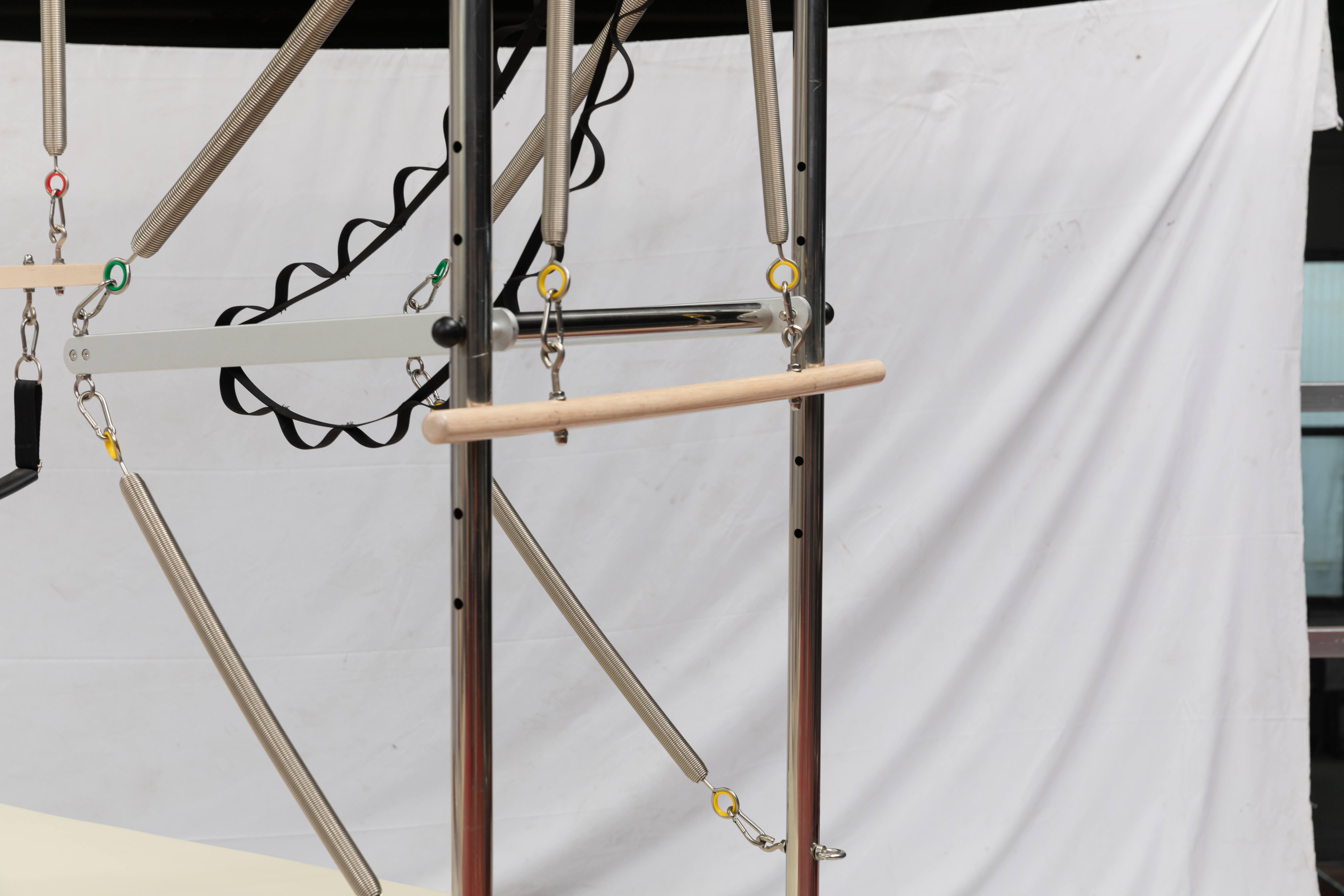
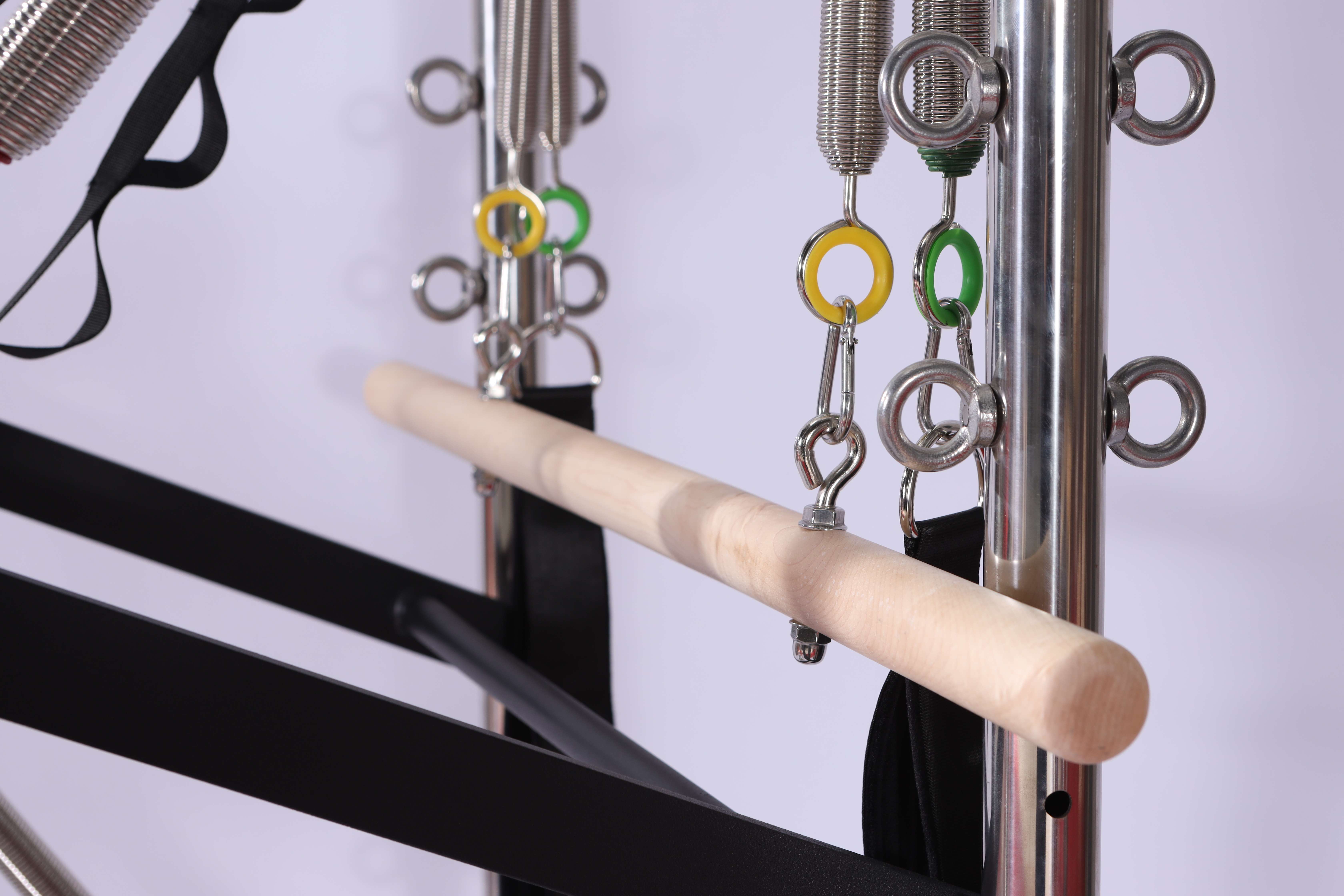
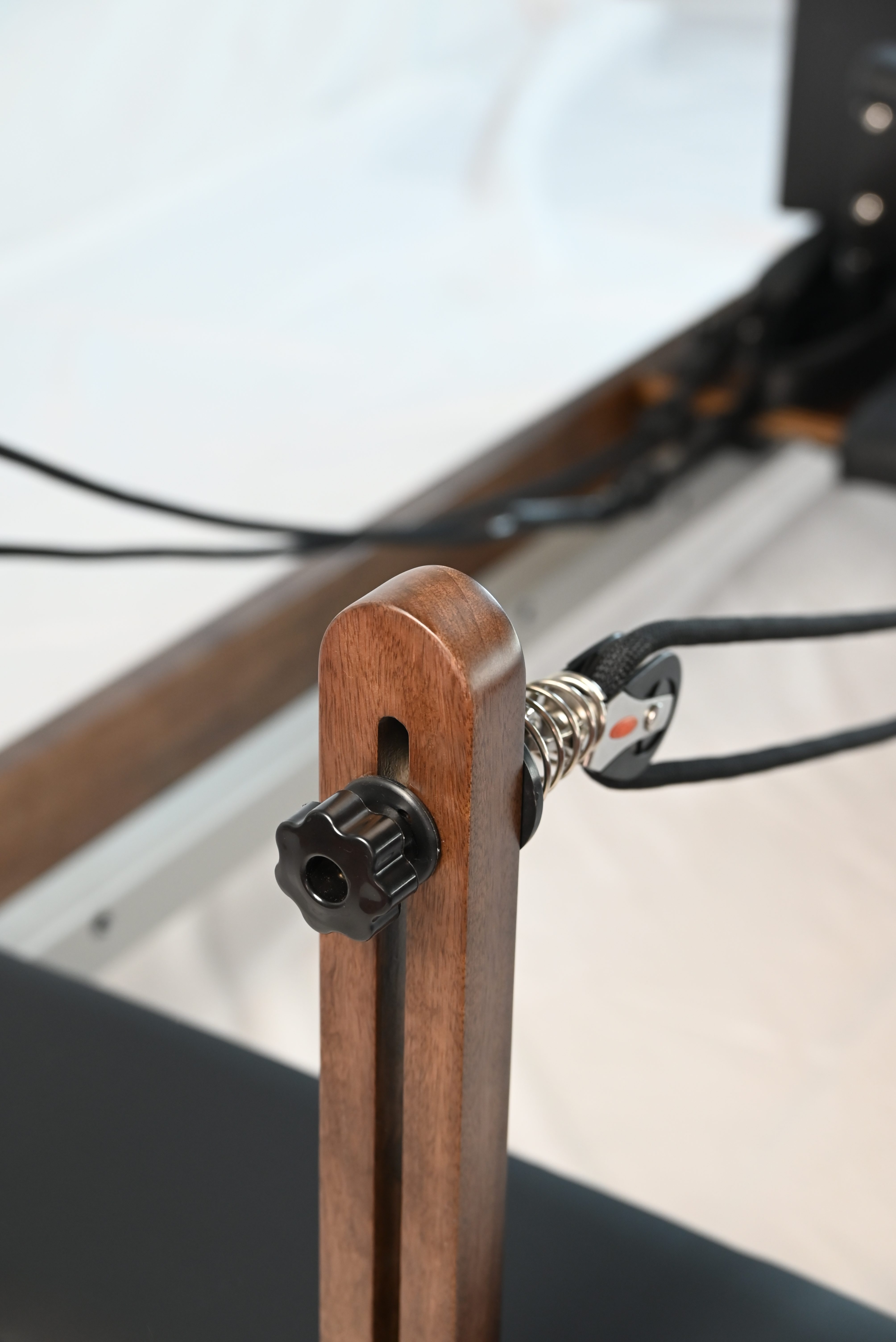
Spring hook friction: Lack of lubrication at the contact point between spring hooks and mounting brackets creates metal friction noise during extension and retraction.
Solution: Apply a small amount of grease (e.g., lithium grease) to the contact point between hook and bracket. Avoid getting grease on the spring coils.
Spring-to-spring contact: When multiple springs are installed side by side, adjacent springs may rub against each other during stretching, producing a hissing or high-frequency buzzing sound.
Solution: Insert thin rubber separators or plastic spacers between springs to prevent direct contact. Alternatively, wrap springs with thin heat-shrink tubing.
V. Other Noise Sources
Frame resonance: Cheap reformers use thin-walled tubing that may resonate at certain frequencies, producing "buzzing" sounds.
Solution: Fill hollow frame sections with sound-damping foam or spray foam to add damping.
Loose fasteners: Over time, frame fasteners loosen from vibration, causing rattling.
Solution: Check all visible bolts, nuts, and fasteners. Tighten evenly in a diagonal pattern.
VI. Maintenance Recommendations: Build a Noise Inspection Routine
Establishing a weekly noise inspection habit effectively prevents issue accumulation. Quick-glide test before each use, lubricate rails monthly, and check fasteners and wheel wear quarterly. Using the correct lubricant is the single most effective method against noise — always use silicone-based lubricants; stay away from WD-40 and regular oil.
Summary: Over 90% of cheap reformer noise problems stem from improper lubrication, wheel wear, rail contamination, or spring friction. Fixing them costs little — often just a bottle of silicone lubricant, a screwdriver, and some patience. Systematic troubleshooting can transform a cheap reformer into a "smooth and quiet" machine. However, if the problem involves severe rail deformation or frame weld cracking, it's beyond repair — in that case, consider replacing the equipment.