Foldable vs Stationary Pilates Reformer: Suitable Scenarios for Studio Investment
When investing in Pilates equipment, studio owners and fitness distributors often face a critical decision: choosing between foldable Pilates reformers and traditional stationary fixed-frame models. Both types deliver core Pilates training functions, yet they differ drastically in structural stability, durability, space adaptability, maintenance needs, and long-term commercial performance.
Many new studios make investment mistakes by purchasing unsuitable machine types, resulting in unstable training experience, frequent equipment faults, or wasted floor space. To help you make cost-effective, scenario-based purchasing decisions, this article comprehensively compares foldable and stationary Pilates reformers and clarifies their ideal studio application scenarios for sustainable business growth.
Core Structural Differences
The fundamental gap between the two reformer types lies in frame construction and mechanical design, which determines their commercial usability and service lifespan.
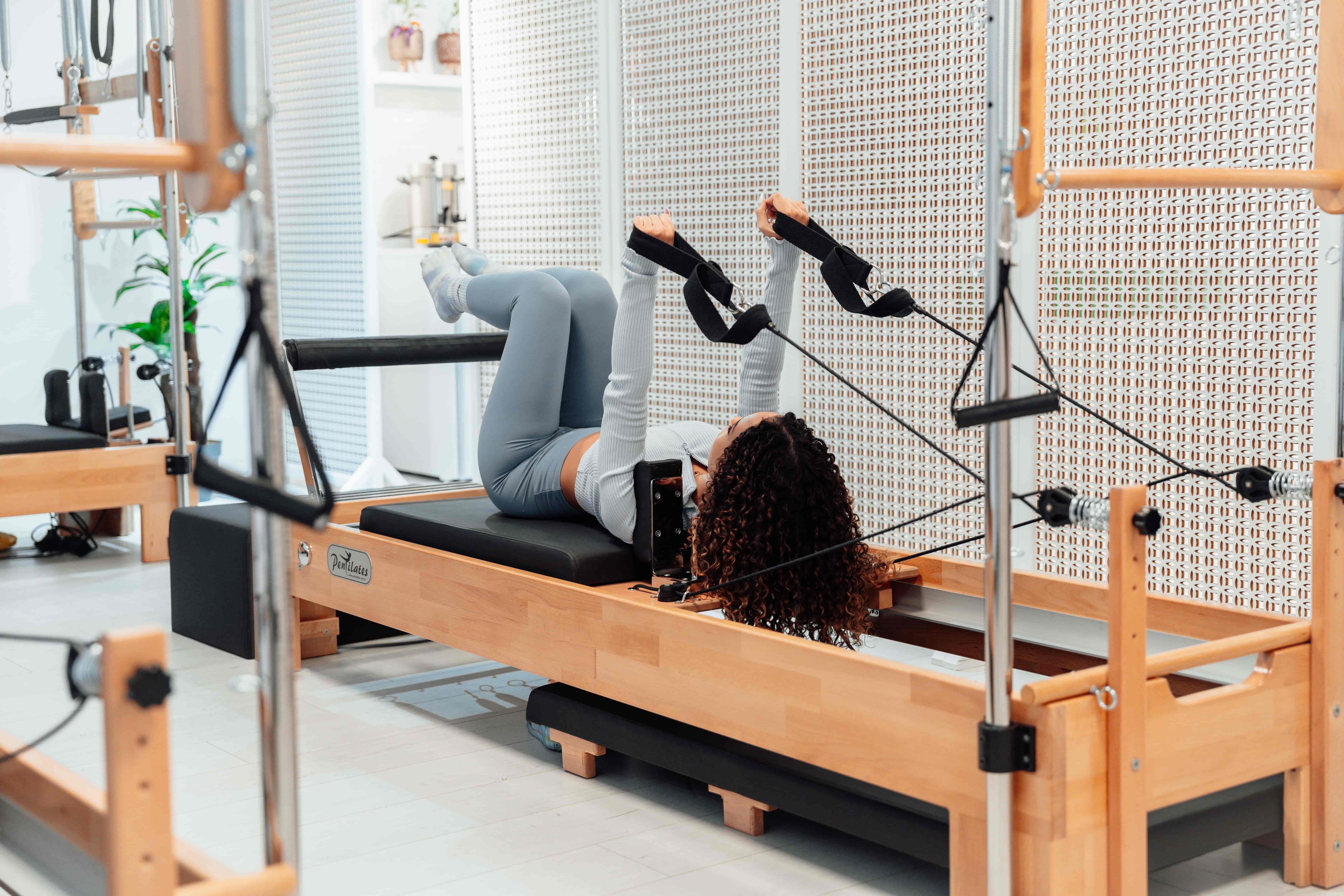
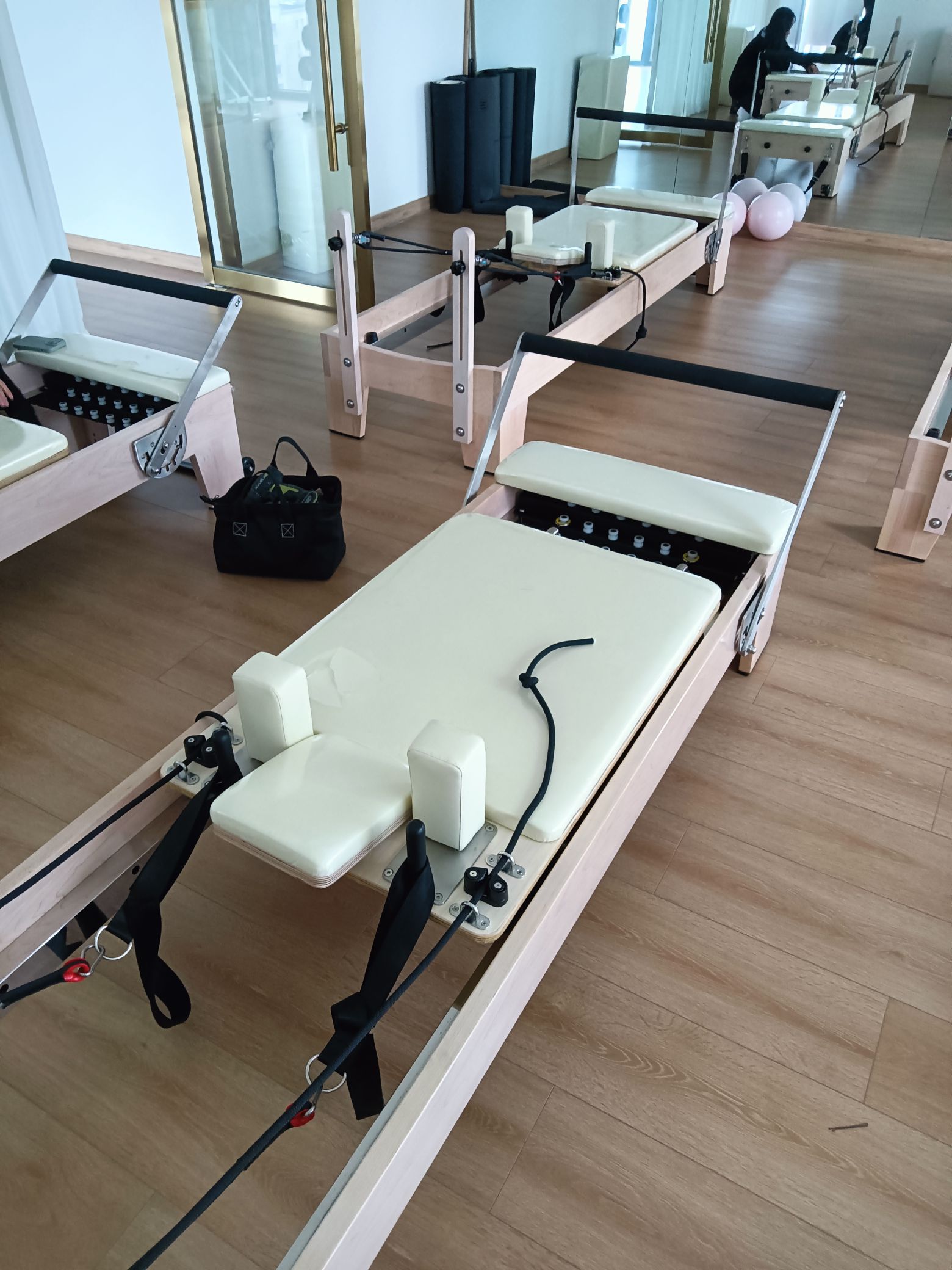
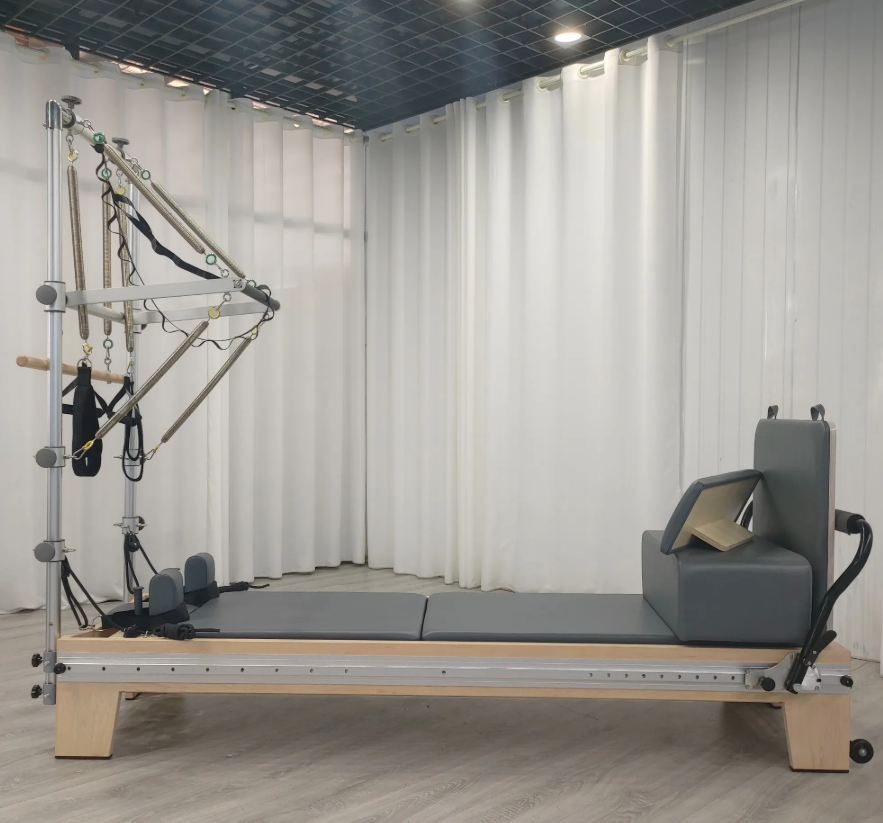
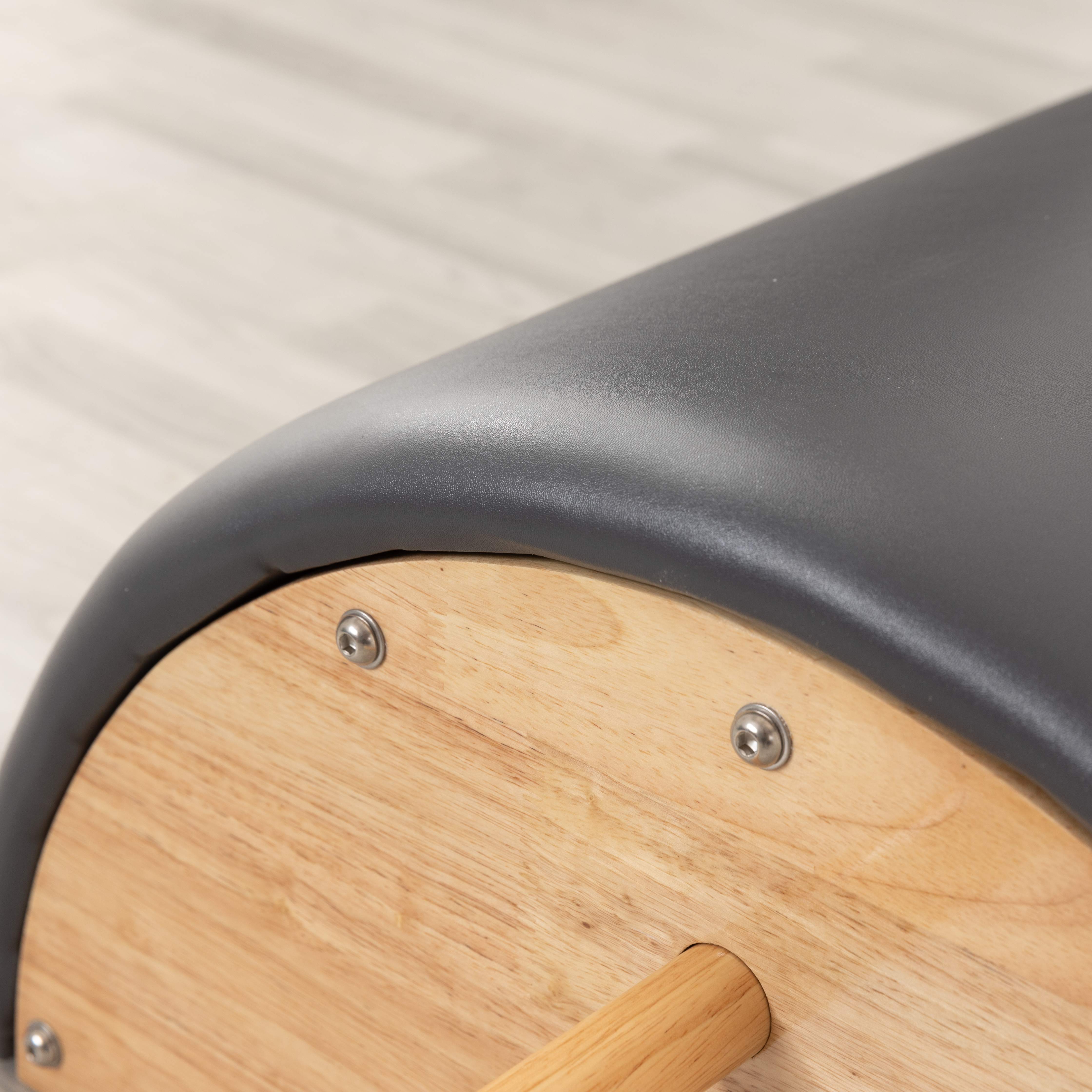
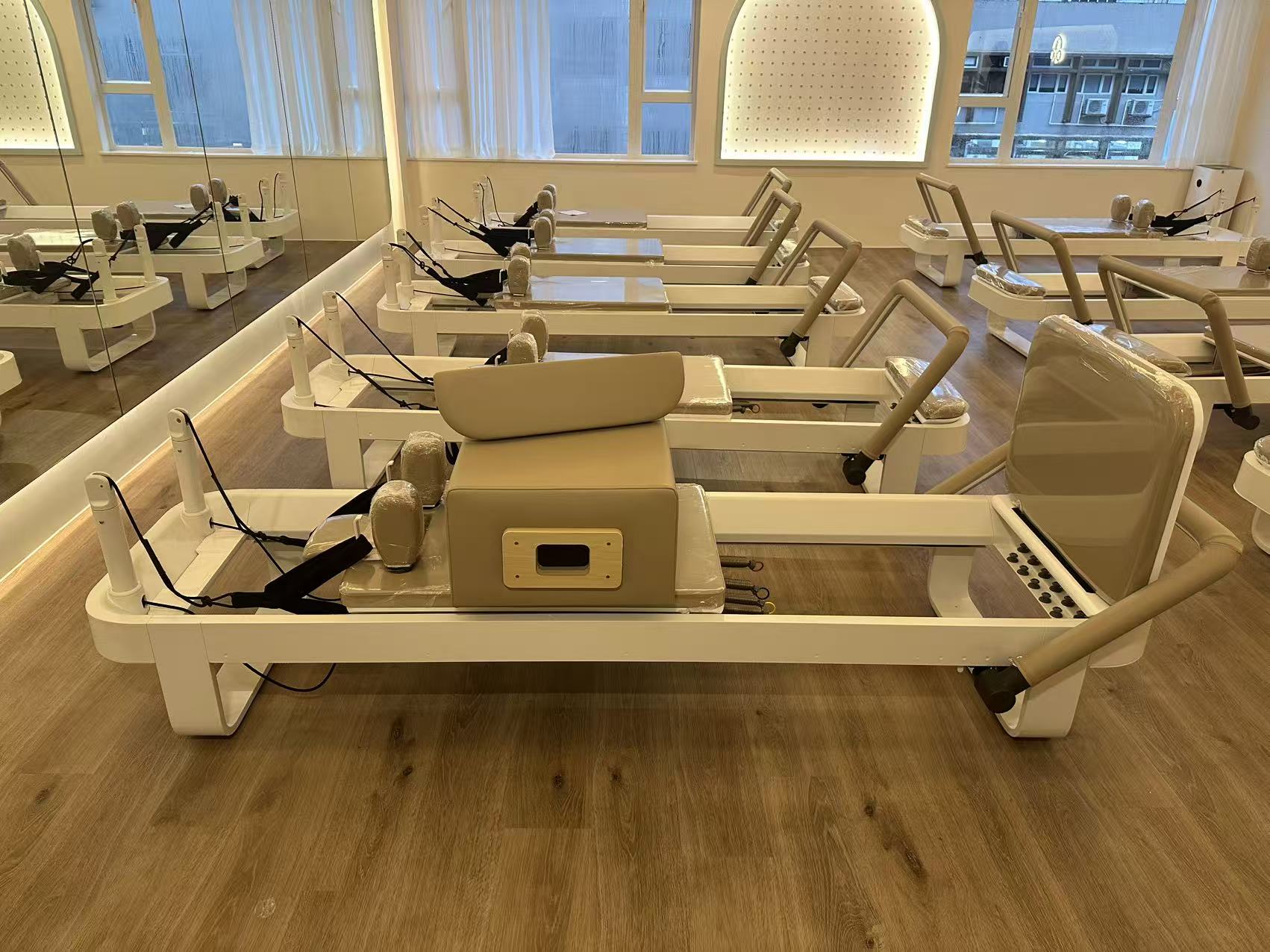
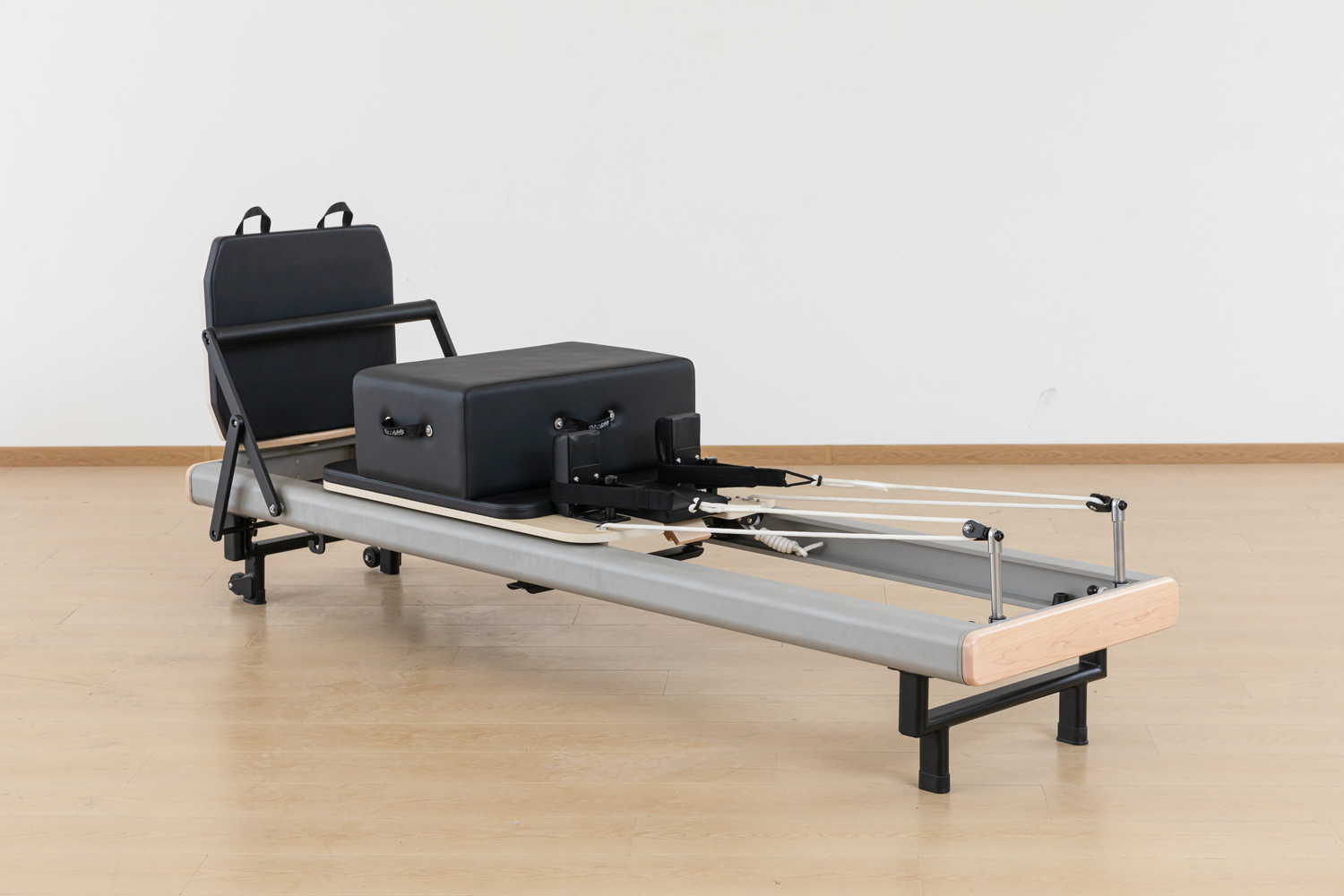
Stationary Pilates Reformers feature integrated one-piece welded frames with no folding hinges or movable connection joints. The entire structure is rigid, stable, and free of deformation risks, specially engineered for long-term, high-frequency commercial use. All sliding rails, wheel bases, and frame supports are fixed and synchronized to maintain consistent tension and glide feedback.
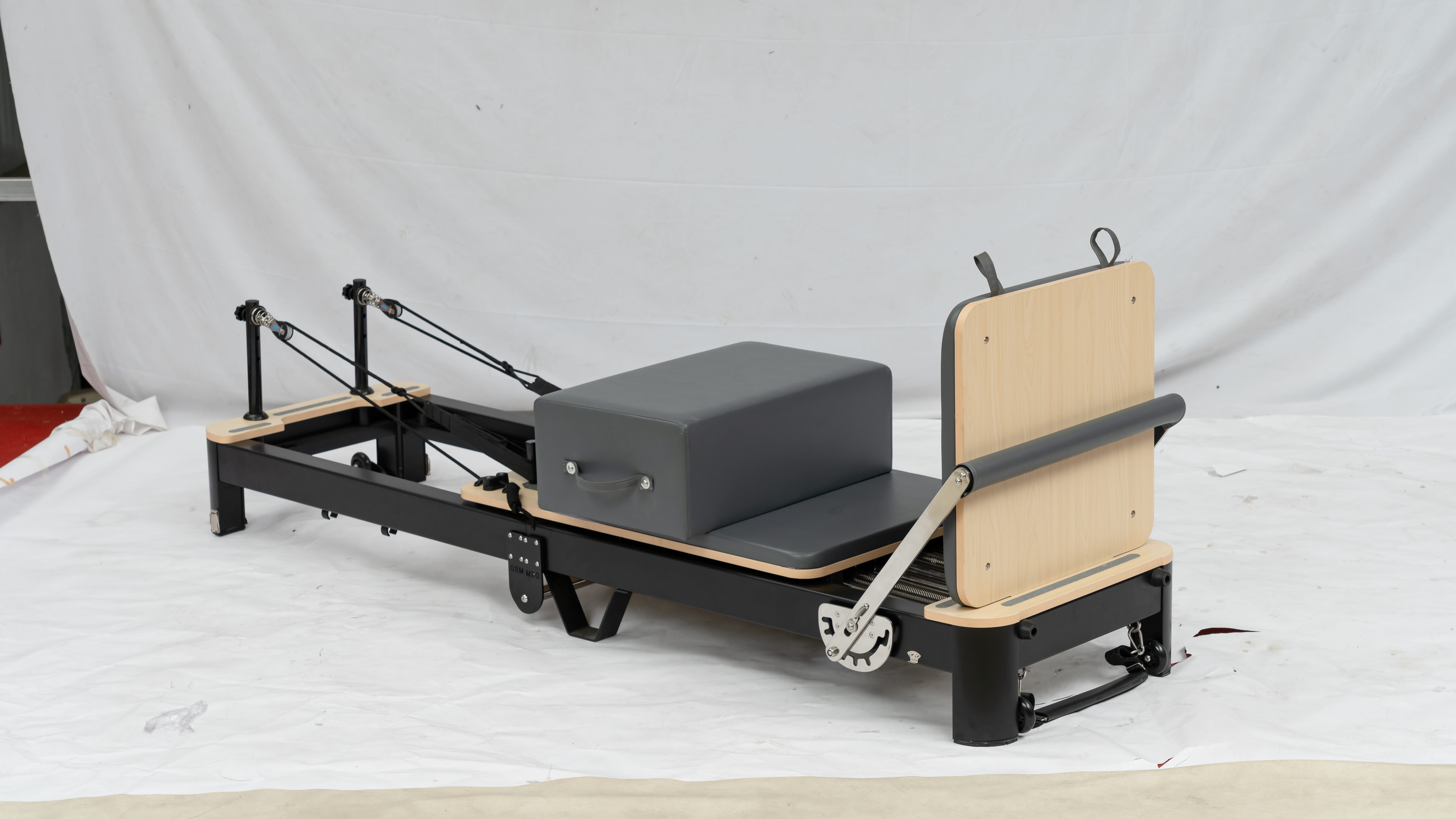
Foldable Pilates Reformers adopt a segmented frame with professional hinge folding systems. The machine can be collapsed vertically or horizontally to reduce occupied space, enabling convenient storage and mobile placement. Modern commercial-grade foldable models optimize hinge stability, balancing portability and daily training performance.
Key Advantages & Limitations of Stationary Reformers
Advantages
- Ultra-high structural stability: No loose joints or frame shaking during dynamic stretching, jumping board exercises, or high-resistance training, ensuring precise body alignment and safe movement.
- Excellent durability: Fewer mechanical movable parts mean lower wear rates, supporting 6–10 hours of daily high-traffic studio use with a service life of over 8–10 years.
- Consistent training feedback: Unified tension output and smooth gliding experience standardizes class quality, suitable for standardized group courses and professional rehabilitation teaching.
- Lower long-term maintenance: No hinge loosening or abnormal friction noise, greatly reducing post-investment maintenance and replacement costs.
Limitations
Stationary reformers occupy fixed floor space and cannot be folded or stored. They require dedicated training areas and are not suitable for multi-functional venues that need flexible space conversion.
Key Advantages & Limitations of Foldable Reformers
Advantages
- Space-saving flexibility: Foldable design reduces storage volume by 40%–60%, allowing studios to fold and store machines after classes to free up space for yoga, mat training, or functional fitness courses.
- Light mobility: Easy to move and deploy, supporting temporary teaching, outdoor courses, and multi-room venue switching.
- Flexible budget threshold: Ideal for small-batch trial investment and startup studios, lowering initial equipment procurement pressure.
- Wide scenario adaptability: Perfect for multi-functional fitness spaces, hotel gyms, and part-time training venues with limited fixed areas.
Limitations
Foldable reformers have inevitable structural limitations. Long-term high-intensity commercial use may cause slight hinge wear, resulting in subtle frame shaking. Their load resistance and extreme stability are slightly lower than integrated stationary models, making them unsuitable for long-term high-frequency intensive group classes.
Best Suitable Studio Scenarios for Stationary Reformers
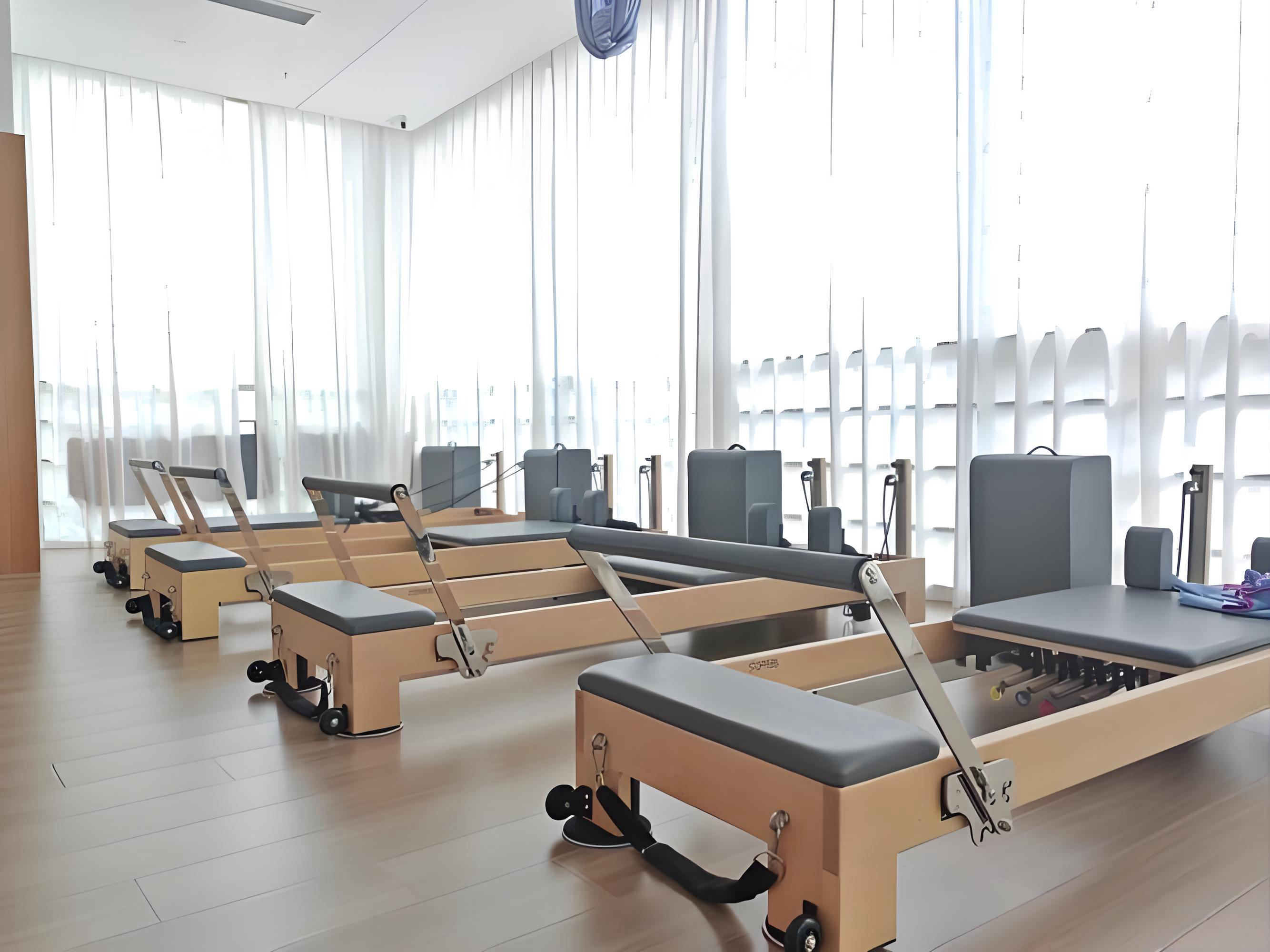
Stationary fixed-frame reformers are the first choice for professional commercial studios, perfectly matching the following scenarios:
- Specialized Pilates boutique studios focusing on long-term group reformer classes and private rehabilitation training
- Chain fitness studios and standardized training institutions requiring unified teaching standards and stable equipment performance
- Physical therapy and rehabilitation clinics that demand high structural stability and precise movement control
- High-traffic studios with 5+ hours of daily continuous equipment use
- Premium positioning studios pursuing long-term equipment durability and low maintenance costs
For these professional scenarios, stationary reformers deliver higher return on investment, stable customer experience, and stronger brand professionalism.
Best Suitable Studio Scenarios for Foldable Reformers
Foldable reformers excel in flexible, space-limited, and multi-functional business scenarios, ideal for the following studio types:
- Small startup studios with limited floor space and mixed course arrangements (Pilates + yoga + functional training)
- Mobile coaches and freelance instructors who need portable equipment for off-site courses and home visits
- Hotel gyms, community fitness rooms, and residential wellness spaces requiring flexible space conversion
- New studio trial operations with limited initial budgets and uncertain customer flow
- Multi-functional training venues that need to switch between different fitness projects frequently
In these scenarios, the space-saving and portable advantages of foldable reformers completely offset their minor structural limitations, achieving the highest space utilization and investment flexibility.
Professional Studio Investment Suggestions
For long-term studio operation, match equipment type according to business positioning instead of blindly pursuing low prices or full-portable designs. Professional dedicated Pilates studios are recommended to equip stationary reformers as core equipment to ensure teaching precision and equipment lifespan. Small multi-functional studios and startup teams can adopt a mixed configuration: stationary reformers for fixed group class areas and foldable reformers for flexible temporary training zones, balancing professionalism and space flexibility.
Final Conclusion
Foldable and stationary Pilates reformers serve completely different studio investment scenarios. Stationary reformers feature superior stability, durability and low maintenance, making them the standard choice for professional commercial Pilates studios and high-frequency teaching scenarios. Foldable reformers stand out for space flexibility and portability, perfectly adapting to small studios, multi-functional venues and mobile training businesses.
As a professional Pilates equipment manufacturer, we provide both commercial-grade stationary reformers and optimized stable foldable reformers. We offer targeted equipment matching solutions according to your studio size, course types and operating frequency, helping global studio owners and distributors achieve the highest investment return.