Pilates Ladder Barrel and Spine Corrector: How to Match Them for Spinal Therapy
Spinal correction and rehabilitation are the highest-value service categories in professional Pilates studios. Chronic back stiffness, thoracic kyphosis, lumbar lordosis, scoliosis, and postural imbalances require targeted curved-surface apparatus training rather than simple mat workouts. Among all auxiliary Pilates equipment, Ladder Barrel and Spine Corrector are the two core devices for spinal therapy.
Many studio owners confuse their application scenarios or only equip one of them, resulting in incomplete rehabilitation systems and limited course diversity. Although both tools use curved ergonomic surfaces to restore spinal mobility, they target different spinal segments, muscle chains, and correction depths. This article explains their respective therapeutic functions, core differences, and scientific matching strategies to build a complete, layered spinal therapy system for commercial studios.
Basic Functional Positioning: What Each Device Solves
To achieve professional spinal rehabilitation effects, instructors must first clarify the unique therapeutic positioning of the Ladder Barrel and Spine Corrector. Their structural differences determine their irreplaceable roles in correction programs.
Pilates Spine Corrector: Fine Spinal Mobilization & Posture Reset
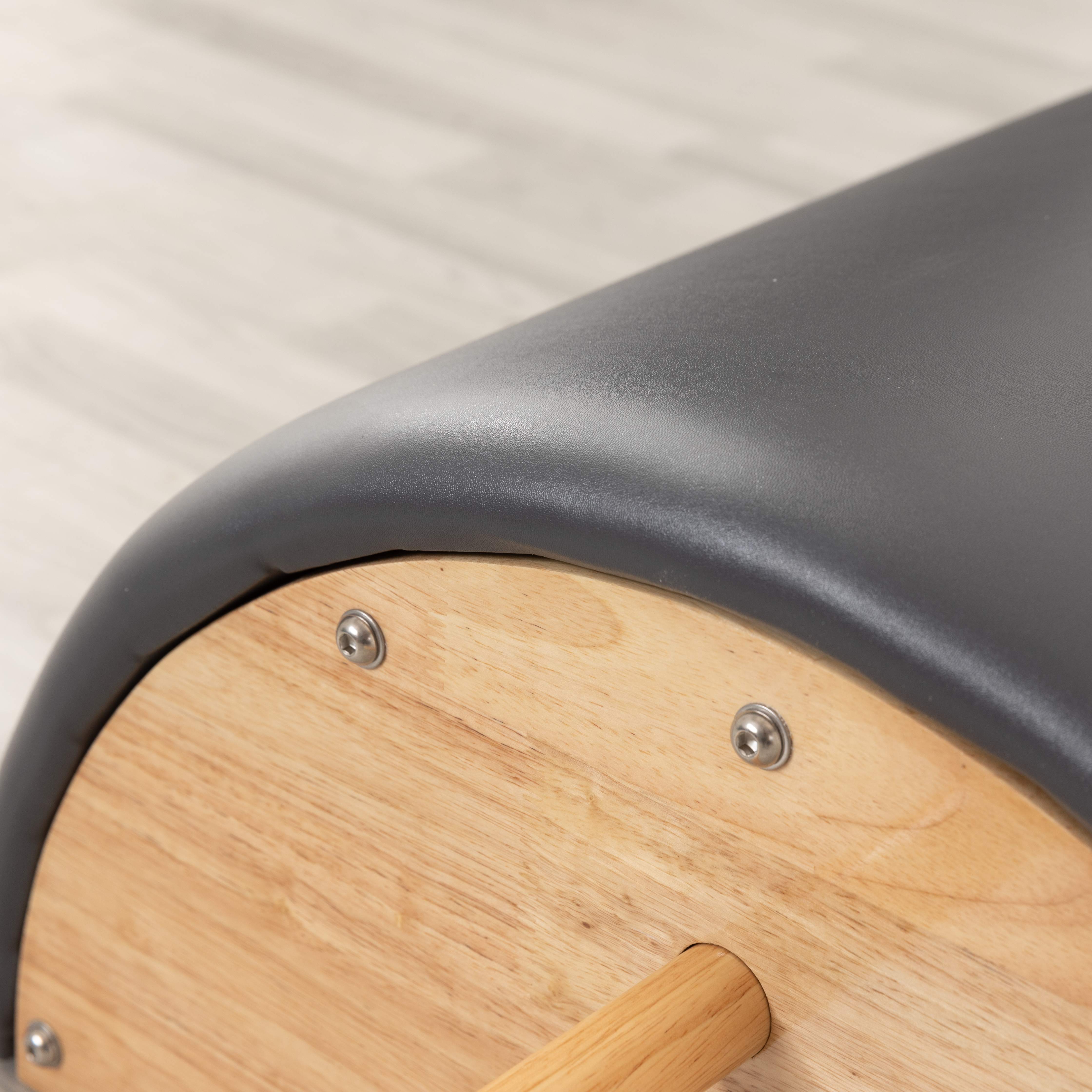
The Spine Corrector is a compact, low-profile curved apparatus designed for segmental spinal articulation, gentle thoracic opening, and superficial postural correction. Its streamlined arc fits the natural curvature of the human spine, allowing precise control over single spinal segment movement without excessive joint pressure.
It specializes in improving upper-body postural problems, including rounded shoulders, stiff thoracic spines, forward head posture, and mild spinal asymmetry. With its small contact surface and high flexibility, it is ideal for beginners, rehabilitation clients with limited mobility, and users recovering from minor spinal injuries. It effectively stretches tight paravertebral muscles, relieves daily back fatigue, and re-establishes basic spinal neutral alignment.
Pilates Ladder Barrel: Deep Spinal Decompression & Full-Body Chain Correction
The Ladder Barrel is a large, multi-functional commercial apparatus combining a thick curved barrel surface and adjustable ladder rungs. It focuses on full-spine decompression, deep core chain activation, and large-range spinal mobility training. The stable high-support structure allows passive hanging, lateral flexion, full extension, and multi-angle spine stretching that the Spine Corrector cannot achieve.
Beyond basic posture adjustment, the Ladder Barrel targets moderate to severe spinal issues, including lumbar stiffness, spinal hypomobility, pelvic-spinal chain imbalance, and asymmetric back muscle strength. The ladder rungs provide diverse grip and support points, enabling progressive resistance training for deep spinal stabilizers, making it suitable for advanced rehabilitation and sports posture adjustment.
Scientific Matching Strategy for Complete Spinal Therapy Programs
The greatest commercial value of these two devices lies in their complementary combination. A matched configuration forms a layered rehabilitation system from shallow relief to deep correction, covering all client groups and spinal problems. Below is the standard studio matching logic for professional spinal therapy courses.
- Spine Corrector First: Foundation Posture Correction & Pre-Training Activation
For all new clients and posture-improvement users, start with the Spine Corrector. Use its gentle curved support to release superficial muscle tension in the upper back, open the thoracic cavity, and awaken spinal proprioception. This step corrects basic forward head and rounded shoulder postures, eliminates daily muscular stiffness, and prepares the spine for deeper stretching and strength training.
It serves as the safest entry-level rehabilitation tool, effectively avoiding secondary strain caused by excessive spinal movement for untrained clients.
- Ladder Barrel Second: Deep Spine Reconstruction & Chain Balance
After clients build basic spinal awareness, upgrade to Ladder Barrel training. Utilize the barrel’s large-range curved support and multi-level ladder rungs to perform full-spine decompression, lumbar mobilization, and bilateral muscle balance training. For clients with chronic lumbar pain, mild scoliosis, and pelvic tilt problems, the Ladder Barrel’s three-dimensional movement range can adjust asymmetric muscle strength from the spine to the pelvis and legs, fundamentally improving spinal stability.
- Combined Circuit Training for Premium Private Sessions
High-value private rehabilitation sessions adopt dual-device circuit logic: Spine Corrector for local segmental adjustment + Ladder Barrel for overall chain stabilization. This combination solves both superficial posture problems and deep spinal structural imbalances, delivering faster correction effects and significantly improving client satisfaction and renewal rates.
Targeted Matching Solutions for Common Spinal Problems
- Upper cross syndrome & office stiffness: Priority Spine Corrector. Focus on thoracic extension, shoulder relaxation, and upper-back muscle release to relieve long-term sitting fatigue.
- Chronic lumbar tightness & lower back pain: Priority Ladder Barrel. Use hanging decompression and lumbar stretching to reduce vertebral pressure and activate deep lumbar stabilizers.
- Mild scoliosis & spinal asymmetry: Combined training. Spine Corrector fixes local segmental deviation; Ladder Barrel balances bilateral muscle tension and corrects overall spinal curvature.
- Postpartum spinal relaxation & pelvic correction: Spine Corrector for gentle spinal reset + low-intensity Ladder Barrel core chain repair, safe and effective for physical recovery.
Studio Equipment Allocation Suggestions
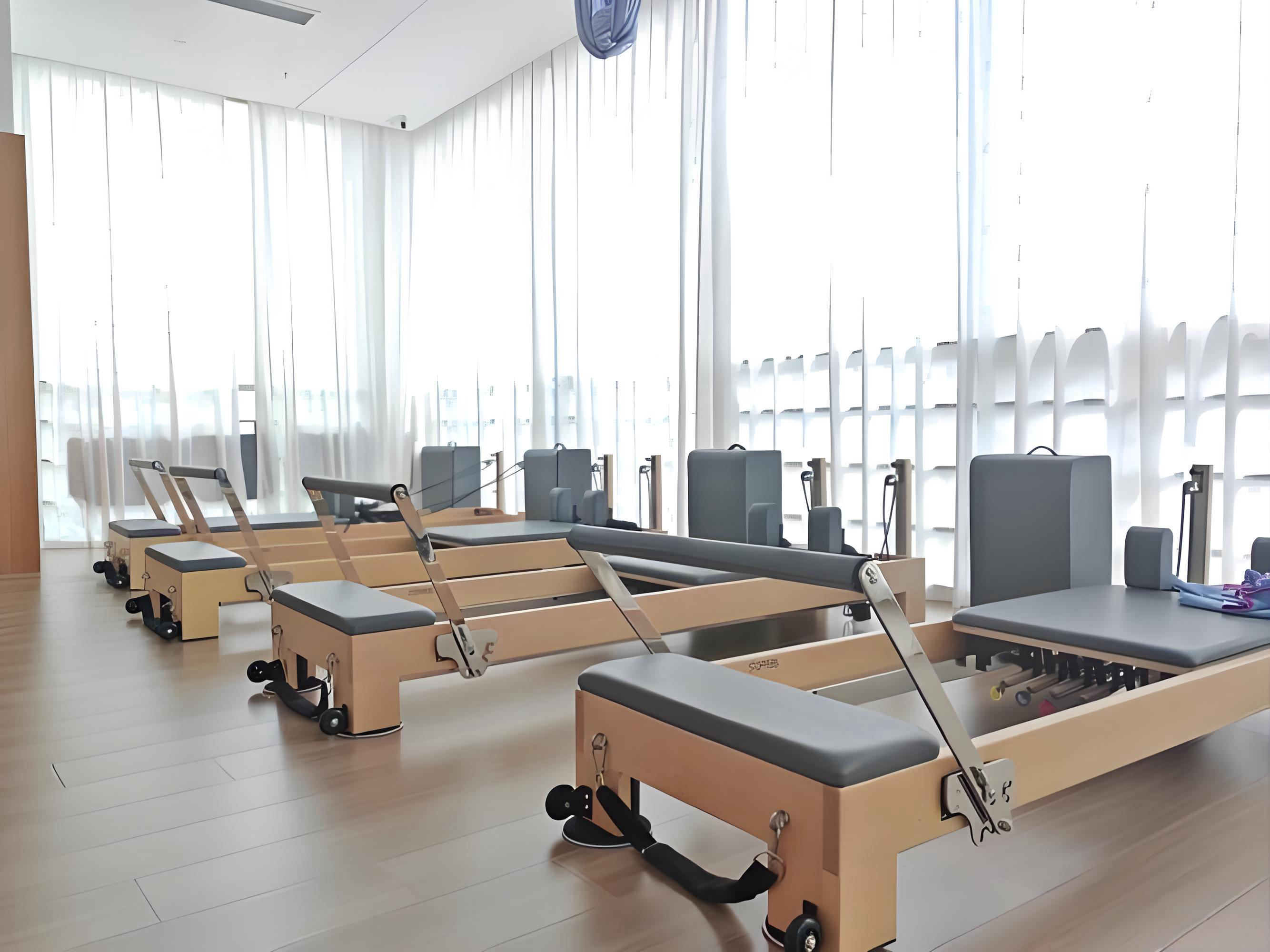
For professional rehabilitation-focused Pilates studios, the standard matching ratio is 1 Ladder Barrel paired with 1–2 Spine Correctors. Spine Correctors with compact size and flexible placement are suitable for multiple simultaneous private training groups, while the high-value Ladder Barrel serves as the core deep rehabilitation equipment to support high-end customized courses.
This collocation covers entry-level posture improvement, intermediate spinal mobility training, and advanced injury rehabilitation, forming a complete closed-loop spinal therapy course system that distinguishes professional studios from ordinary basic training studios.
Final Conclusion
Pilates Ladder Barrel and Spine Corrector have distinct but mutually complementary values in spinal therapy. The Spine Corrector excels at gentle segmental spinal mobilization, upper-body posture reset, and beginner-level rehabilitation, while the Ladder Barrel dominates deep spinal decompression, full-body muscle chain balance, and chronic spinal problem correction. Reasonable matching of the two devices enables studios to provide layered, precise, and professional spinal therapy programs for all client groups.
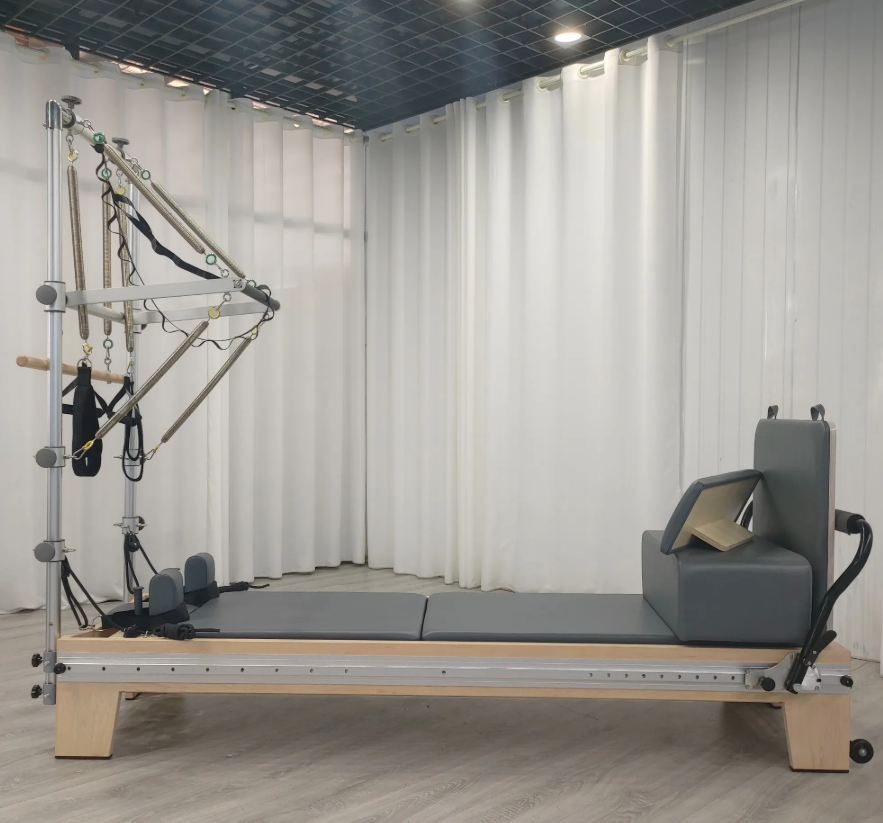
Equipped with commercial-grade ergonomic curvature and stable structural design, our Ladder Barrels and Spine Correctors fully meet high-frequency studio rehabilitation teaching needs. We support one-stop studio equipment matching and customized configuration services for global distributors and studio owners.