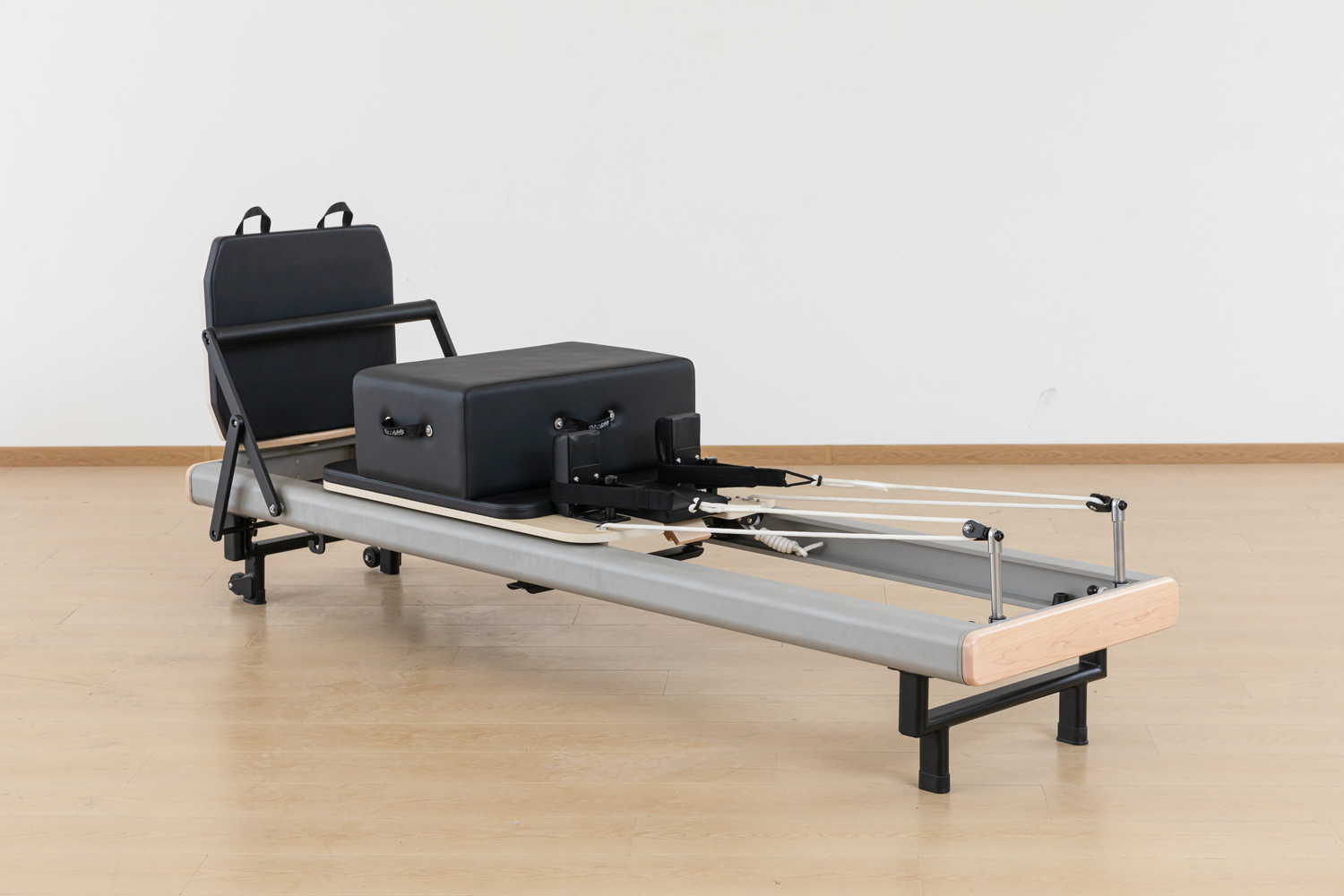
Private Label Pilates Equipment: What Distributors Should Know About Customization
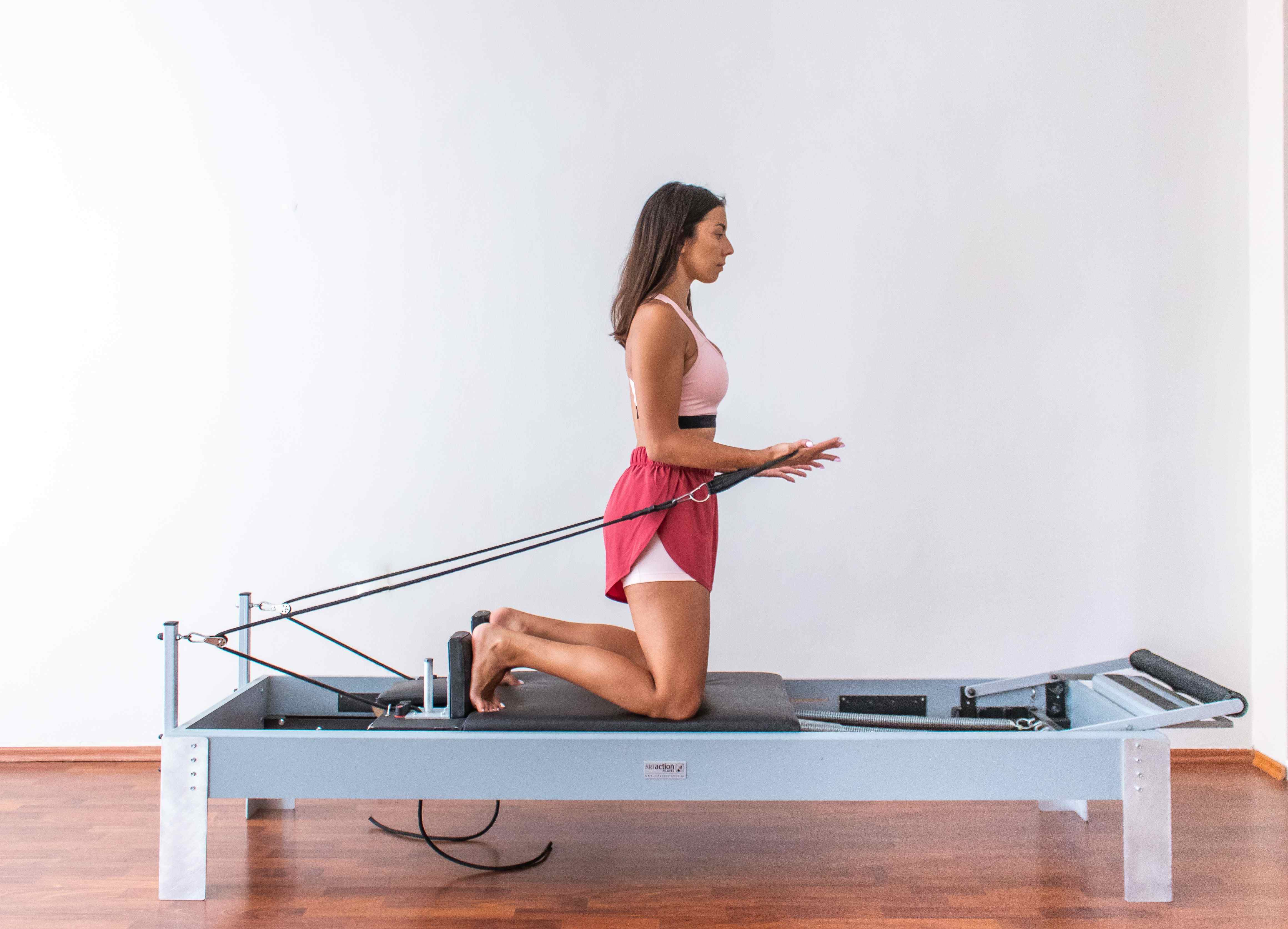
In the competitive global Pilates fitness market, generic white-label equipment can hardly support brand differentiation and profit growth. For fitness distributors, importers, and wholesale resellers, private label Pilates equipment customization has become a core strategy to build exclusive brand images, stabilize customer groups, and increase product premium space.
Many new distributors misunderstand private labeling as simply printing logos on machines. In fact, professional Pilates private label customization covers multi-dimensional upgrades including appearance, material configuration, structural parameters, packaging, and certification. This article systematically explains private label customization types, available item ranges, standard MOQ rules, cooperation processes, and key risk control points, helping global distributors launch competitive customized Pilates product lines.
1. What Is Private Label Pilates Equipment Customization?
Private label service means distributors cooperate with professional manufacturers to attach their own independent brand identity and customized specifications on standard commercial Pilates equipment. Unlike pure generic wholesale, private label products feature exclusive brand visuals and personalized configurations, avoiding homogeneous price competition in the wholesale market.
In the fitness manufacturing industry, private label customization is mainly divided into two mature modes for distributors: OEM private labeling based on existing standard models andODM deep customization with adjusted specifications and designs, suitable for different brand development stages and order scales.
2. Full Range of Customizable Private Label Items
Professional Pilates equipment manufacturers support hierarchical private label customization from shallow branding to deep structural optimization. Distributors can flexibly select items according to market positioning and budget.
Basic Branding Customization (Low MOQ)
This is the most popular and cost-effective private label solution for startup distributors, requiring low order quantities with fast delivery cycles.
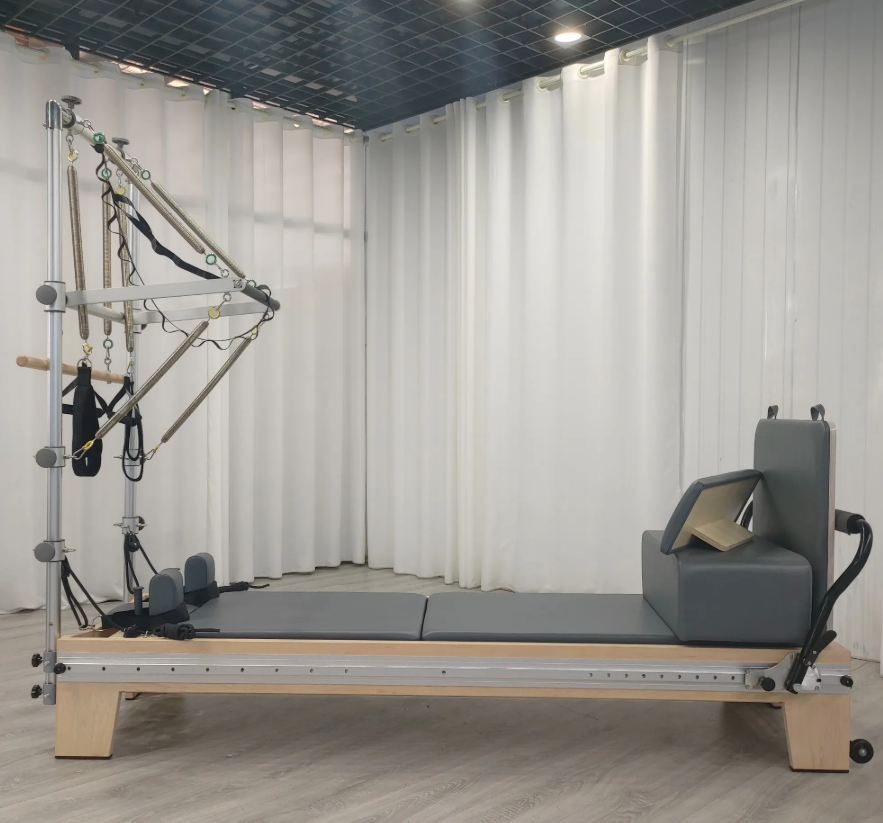
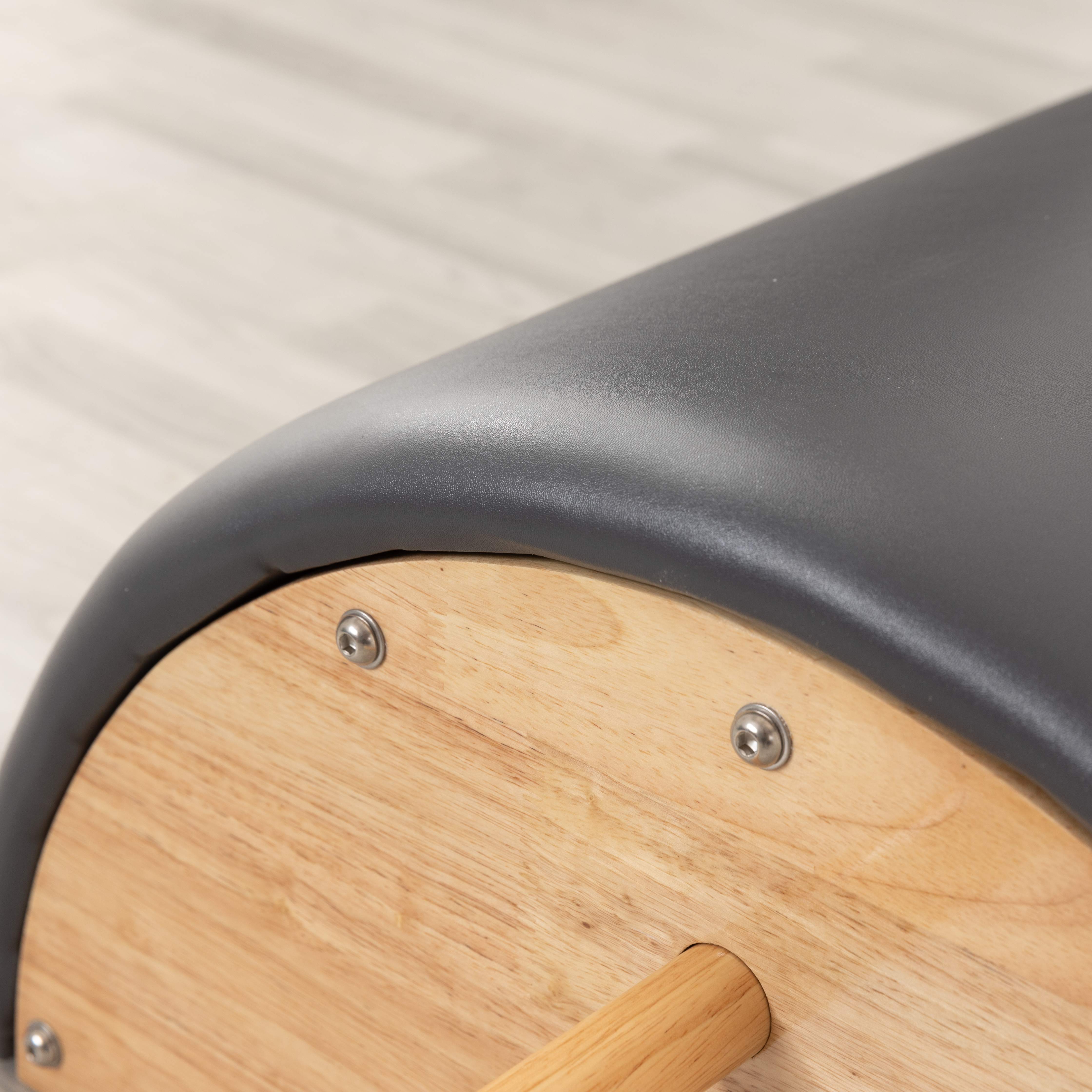
- Custom brand logo: Laser engraving on wooden/aluminum frames, embossing on upholstery, or woven label attachment
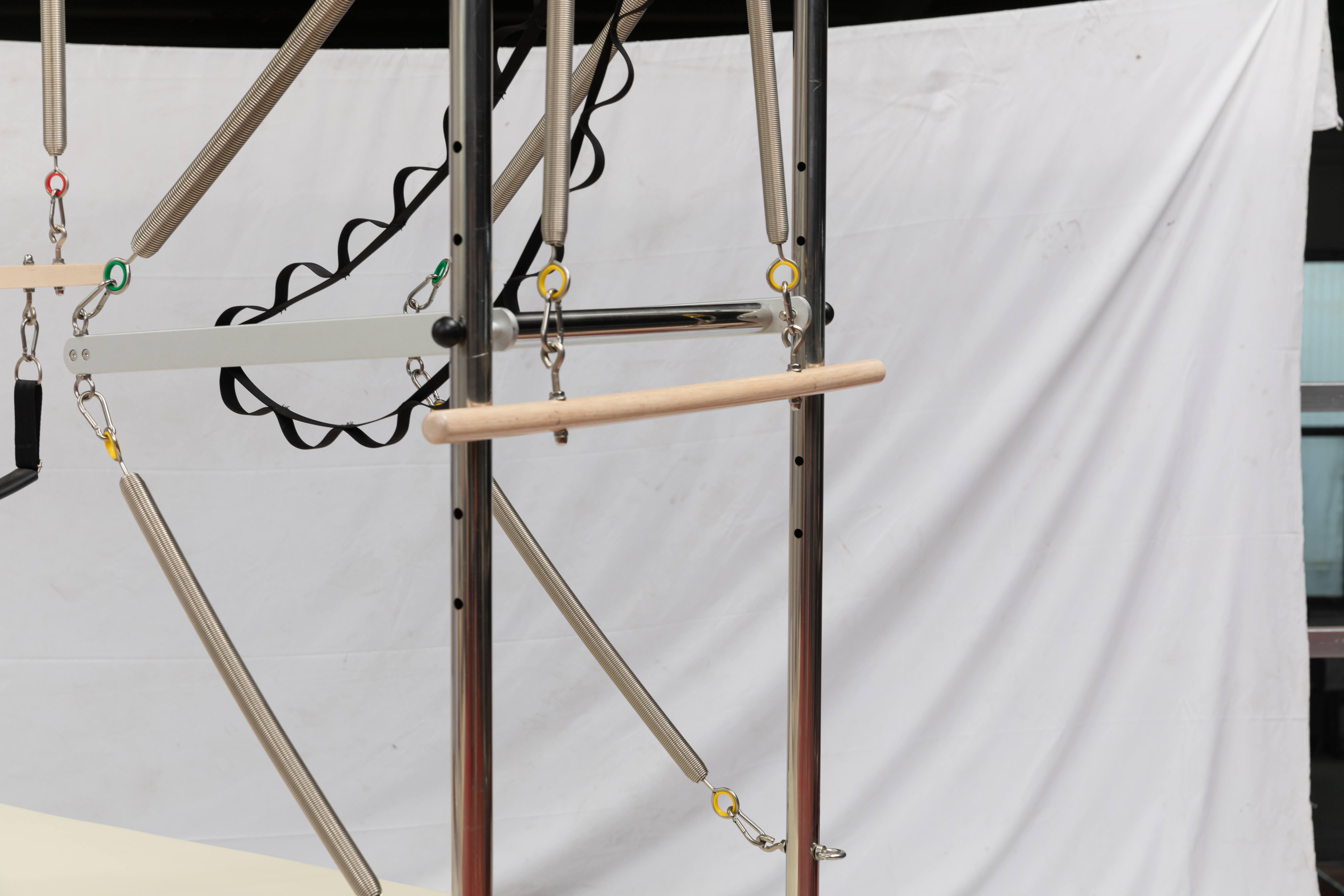
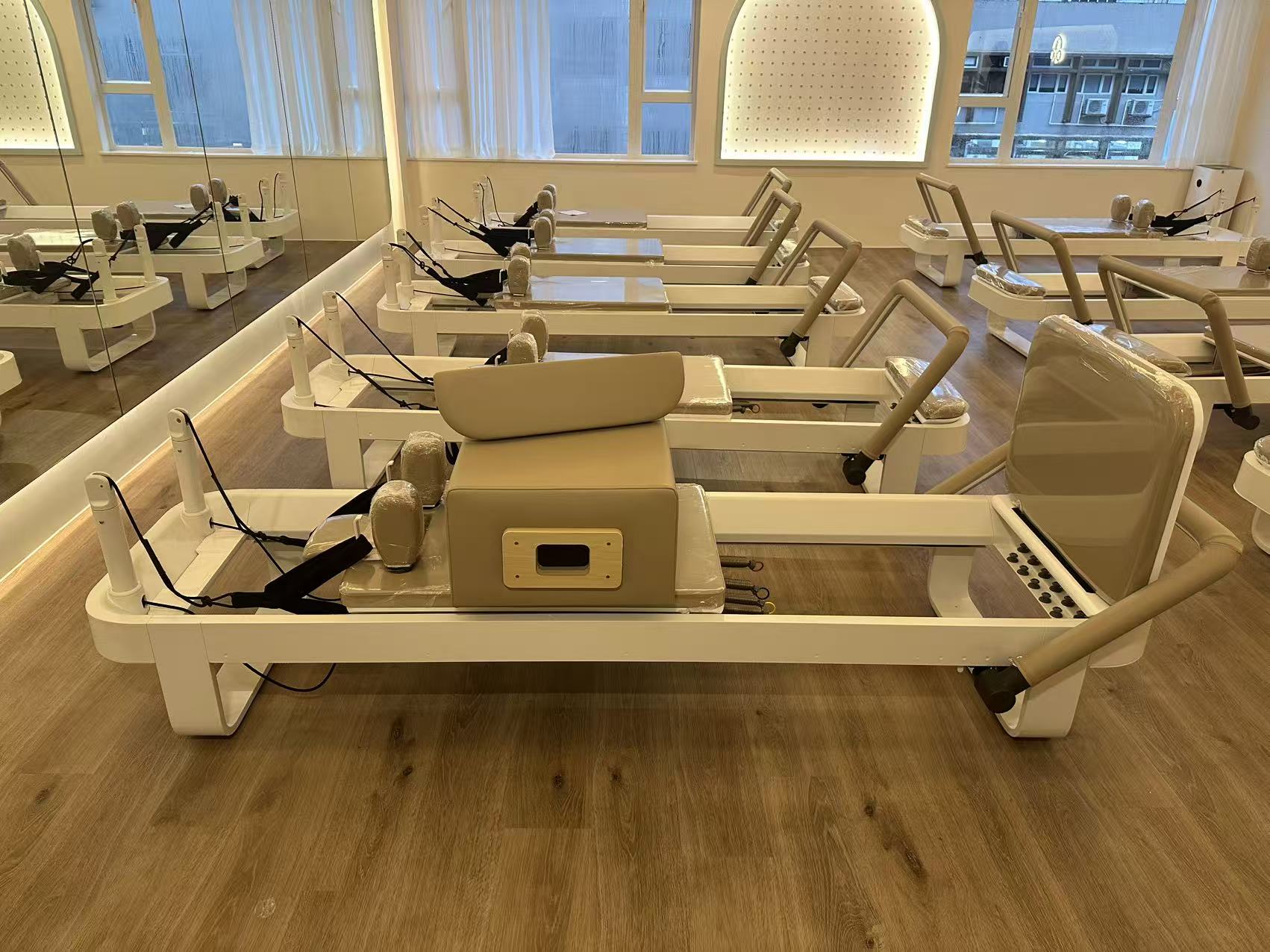
- Exclusive color matching: Custom frame spray paint colors, microfiber leather tones, and spring colors to match brand VI systems
- Custom packaging: Branded export cartons, instruction manuals, accessory cards, and outer shipping marks
Medium Specification Customization (Medium MOQ)
Suitable for distributors with stable regional market sales, realizing differentiated product competitiveness.
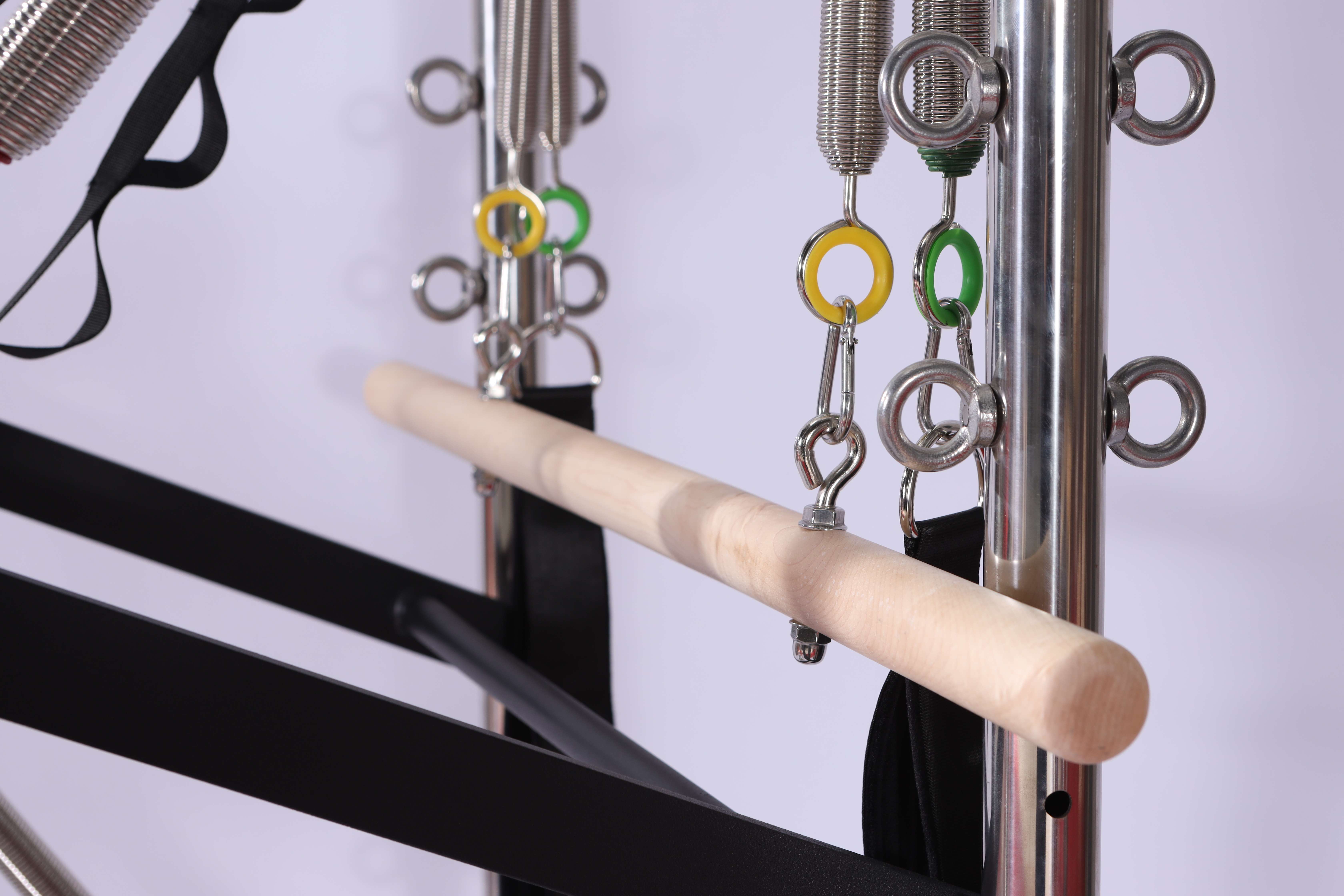
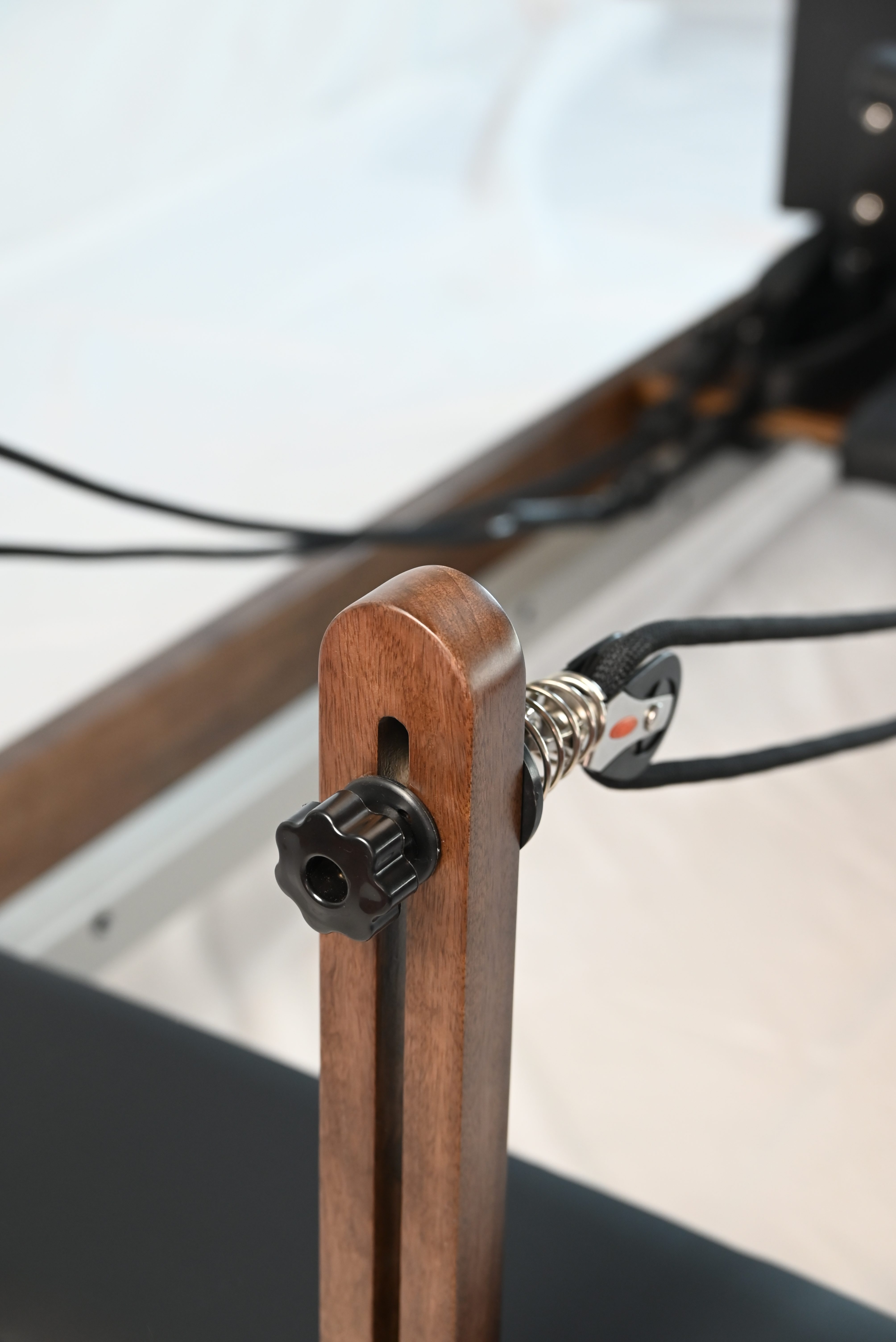
- Material upgrading: Replace standard leather with high-grade anti-wear microfiber padding, or upgrade ordinary springs to high-fatigue-resistance silent springs
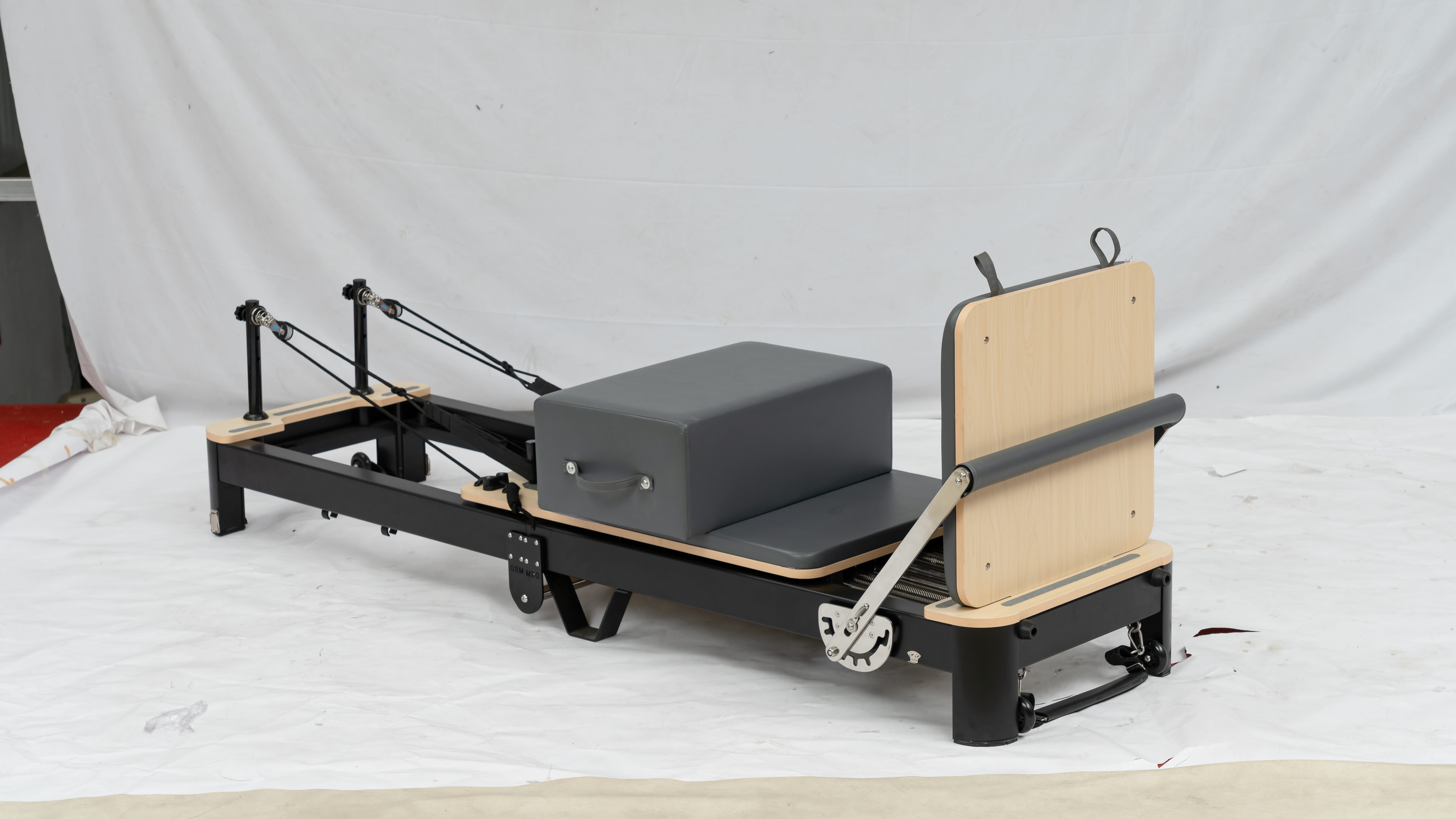
- Accessory configuration adjustment: Match exclusive jump boards, reformer boxes, extended foot bars, or customized tension spring combinations
- Surface finish optimization: Matte, frosted, or polished frame treatments to distinguish from standard wholesale models
Deep Structural ODM Customization (High MOQ)
For mature brands and chain studio suppliers, support independent product development and exclusive market rights.
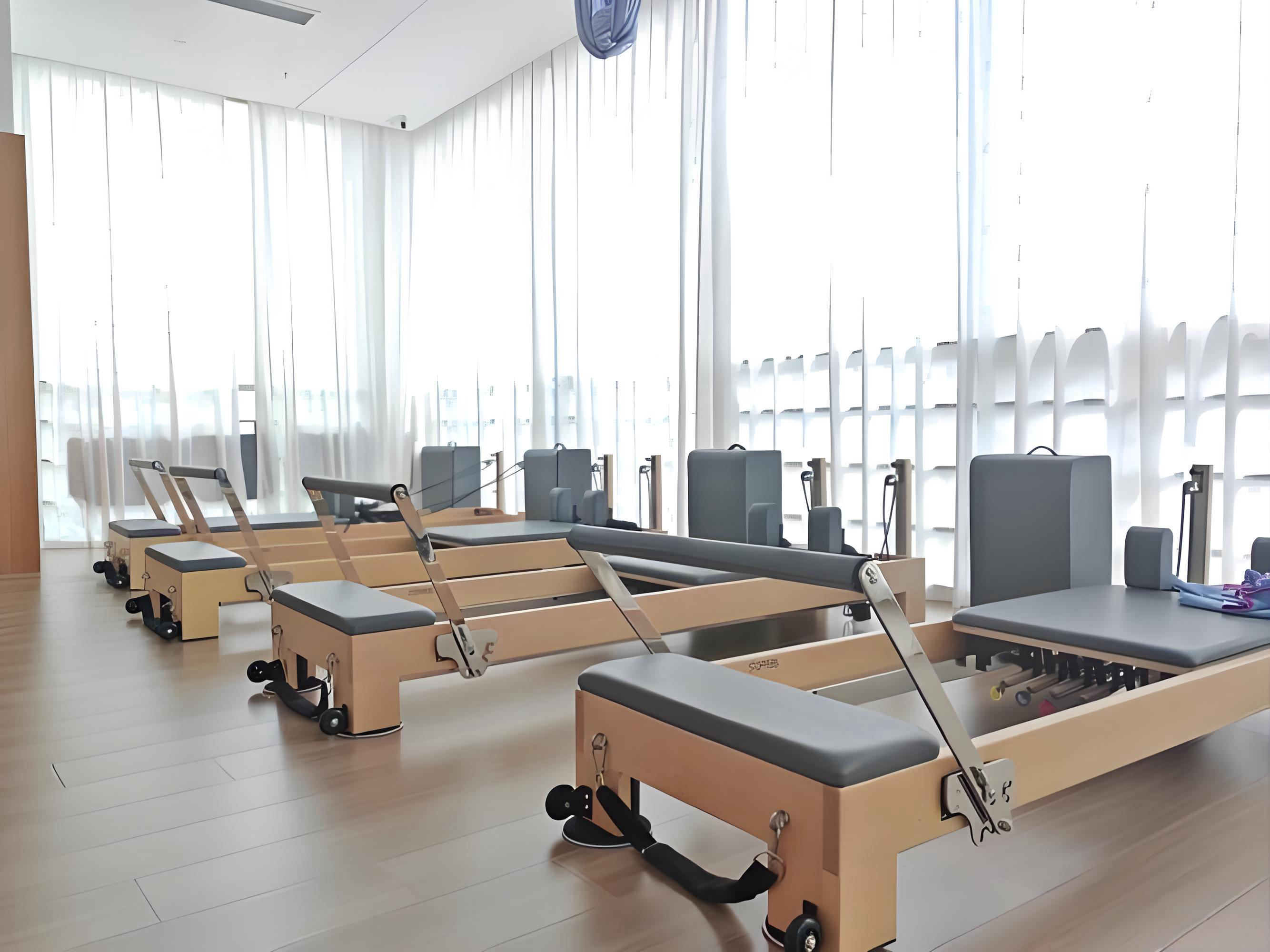
- Adjust frame dimensions, bed height, and sliding rail stroke to adapt to regional user physical characteristics
- Optimize internal structural design, pulley positions, and damping systems to form unique training feedback
- Develop exclusive patented appearances and functional structures to realize market exclusivity
3. Clear MOQ Rules for Private Label Orders
MOQ is the core factor determining distributors’ customization plans. Formal manufacturers adopt tiered MOQ standards for different customization levels, balancing flexibility and production efficiency.
- Logo & color private label: Low MOQ of 10–20 units, supporting mixed model orders
- Specification & accessory customization: Medium MOQ of 20–50 units, allowing batch standardized upgrades
- ODM structural customization: High MOQ of 50–100 units, suitable for long-term brand iteration
For long-term cooperative distributors, most factories support negotiable MOQ and flexible trial order policies, helping new brands steadily open regional markets.
4. Standard Private Label Cooperation Process for Distributors
A standardized cooperation process can effectively avoid communication errors, delayed delivery, and inconsistent customized effects. The industry’s mature private label process includes six steps:
- Demand confirmation: Clarify customization items, color codes, logo files, and configuration requirements
- Mockup & sample confirmation: Factory provides 3D renderings or physical sample confirmation before mass production
- Order arrangement & deposit payment: Confirm production schedule and sign formal private label cooperation contract
- Mass production & quality inspection: Complete customized production and pre-shipment full inspection
- Custom packaging & loading: Apply exclusive brand packaging and export protection treatment
- Delivery & after-sales handover: Provide complete certification documents and long-term spare parts support
5. Core Benefits of Private Label for Fitness Distributors
- Abandon low-price competition: Exclusive customized products form brand barriers and avoid homogeneous wholesale price wars
- Improve customer loyalty: Independent brand image helps stabilize local studio customers and form repeat order resources
- Increase profit margin: Customized private label products have higher market recognition and premium pricing space
- Build long-term brand value: Gradually accumulate local brand influence and realize sustainable business expansion
- Support market differentiation: Targeted configuration customization adapts to regional consumer habits and studio positioning
6. Common Private Label Customization Pitfalls to Avoid
- Unclear file standards: Blurred logo pictures and uncertain color codes lead to inconsistent batch effects
- Ignoring certification compatibility: Customized appearance or materials must comply with EU, Australian, and local market safety standards
- Over-customization in trial stage: New distributors are advised to start with low-MOQ logo and color customization to control trial risks
- No written confirmation of customized parameters: Oral communication easily causes product inconsistency and after-sales disputes
- Neglecting unified batch consistency: Require factories to ensure consistent color, logo position, and process standards for bulk goods
7. How to Choose a Qualified Private Label Manufacturer
Reliable factory partners determine the stability of private label product quality and brand reputation. Distributors should focus on the following capabilities when selecting suppliers:
- Complete OEM/ODM private label service experience and mature customization cases
- Stable batch production capacity and strict pre-shipment quality control system
- Professional design team to provide free mockup and color matching services
- Complete export certification documents to support global customs clearance
- Long-term after-sales guarantee and spare parts supply system for customized products
Final Conclusion
Private label Pilates equipment customization is an essential upgrade path for fitness distributors to transform from simple wholesale resale to independent brand operation. Hierarchical customization from basic logo branding to deep structural optimization can meet the development needs of different-scale distributors, effectively solving the pain points of homogeneous competition and low profit margins.
By standardizing customization processes, controlling MOQ risks, and cooperating with professional manufacturers, distributors can build exclusive, high-competitiveness Pilates product lines, steadily occupy regional market shares, and realize long-term brand value growth.
We provide one-stop private label Pilates equipment customization services, covering logo printing, color matching, material upgrading, packaging customization, and ODM independent development. Flexible MOQ, fast production cycles, and complete export support help global distributors quickly launch their own branded Pilates product series.