Space-Saving Pilates Equipment for Boutique Small Studios
The appeal of boutique small studios lies in intimacy and personalized service, but limited space is often the biggest constraint. In a compact space, fitting essential equipment while ensuring sufficient movement area for both instructors and clients requires careful equipment selection and layout planning. This article provides a systematic guide to equipment configuration for small studios, covering space planning, equipment selection, and layout recommendations.
I. Space Planning: Calculate Usable Area First
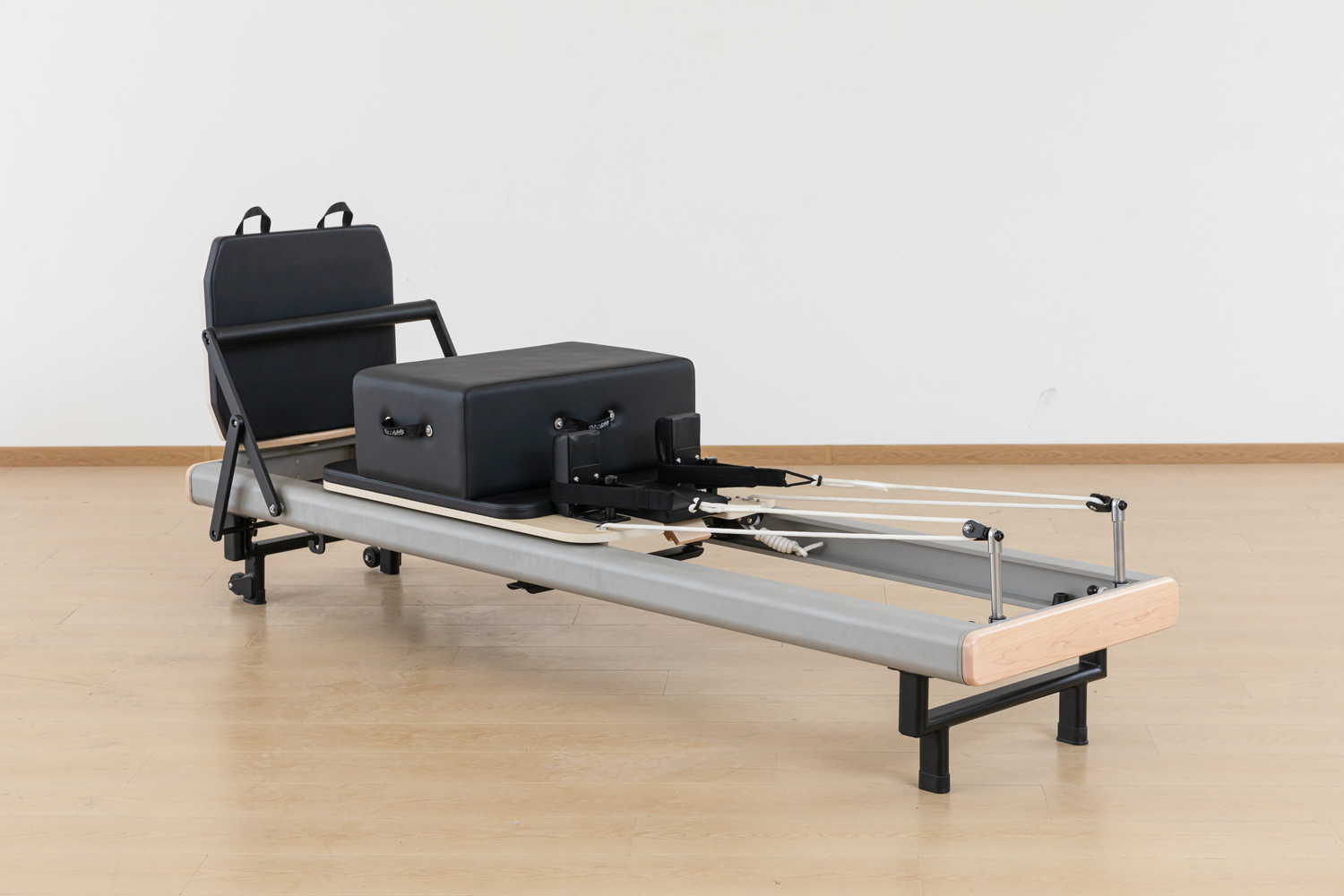
A common mistake studio owners make is calculating space based solely on equipment footprint dimensions. A reformer is approximately 2.3–2.5 meters long and 0.65–0.85 meters wide — but that's just the machine's footprint, not the operational space required.
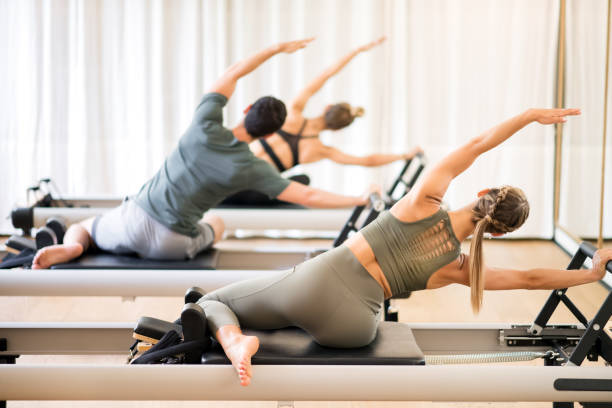
In Pilates training, instructors need space beside the carriage for hands-on cueing and assistance; clients need safe access for mounting and dismounting, plus room for side-lying and kneeling exercises; spring changes and strap adjustments also require clearance space. The professional planning standard is: each reformer requires 8–9 square meters of operational space — encompassing the machine itself, instructor movement area, and client safety clearance.
A simple calculation: with 30 square meters of usable training space, following the 8 sqm/unit standard, you can accommodate a maximum of 3–4 reformers. Exceeding this density compresses instructor movement and compromises class quality.
For boutique private studios with rehabilitation focus, slightly tighter spacing is acceptable. Dutch supplier standards suggest 5–6 sqm per reformer, approximately 3 sqm per Stability Chair, and 2 sqm per Wall Unit. This works for one-on-one private sessions where instructor and client move more closely together.
II. Equipment Selection: Three Space-Saving Core Options
Category 1: Foldable Reformers — "Disappear" After Use
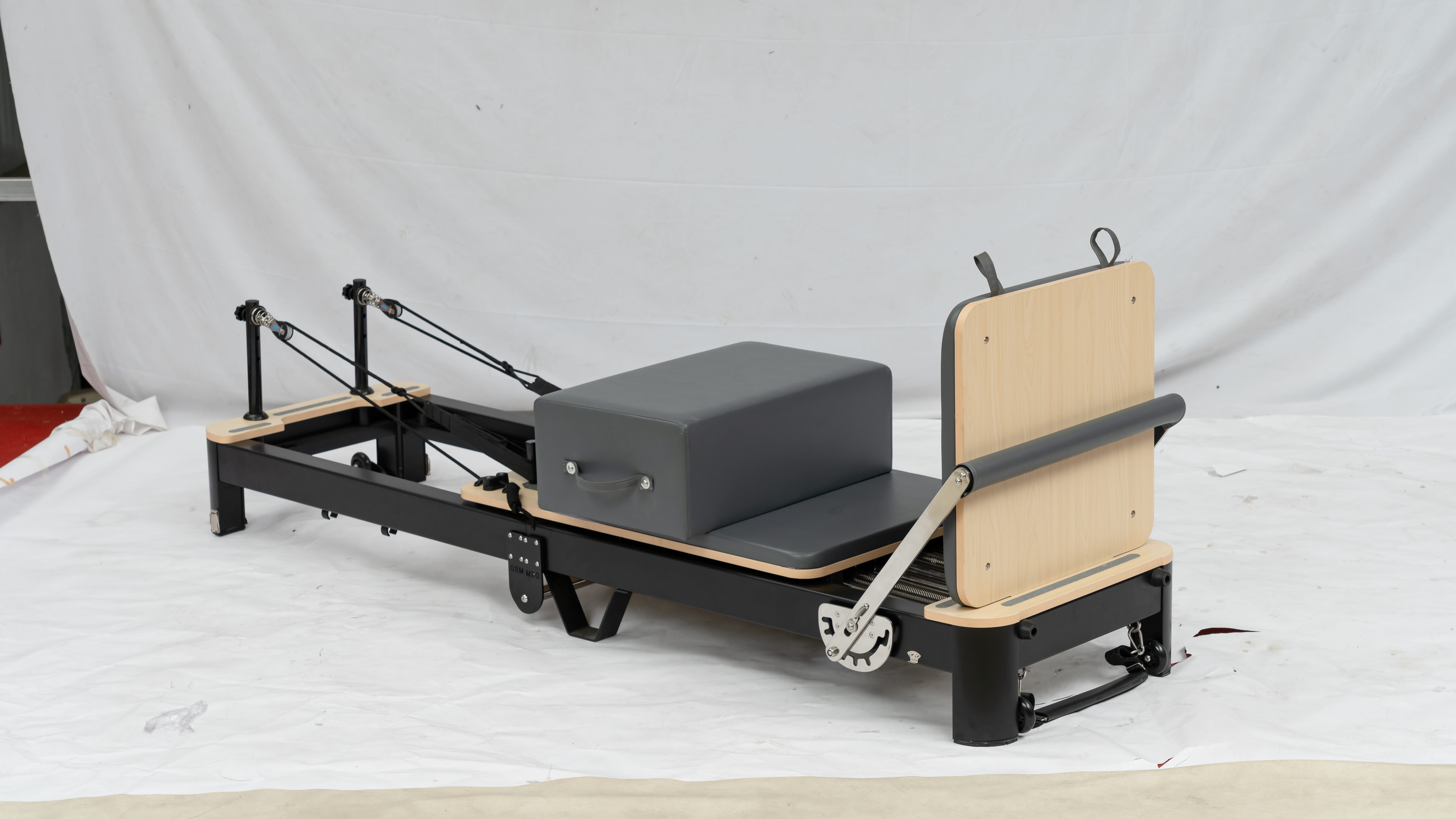
For space-constrained studios, foldable reformers are the most practical choice. When unfolded, these machines deliver commercial-grade performance; when folded, they can stand vertically against a wall, drastically reducing floor space.
The Pioneer Pilates PP-07 measures 240 cm unfolded, folding down to 122 cm × 64 cm × 50 cm for vertical storage without removing any parts. Its lightweight aluminum version, the Fold Lite, weighs just 35 kg — 10 kg lighter than the standard model — and features 6 base wheels for easy mobility by a single person.
Three details to examine when choosing a foldable reformer:
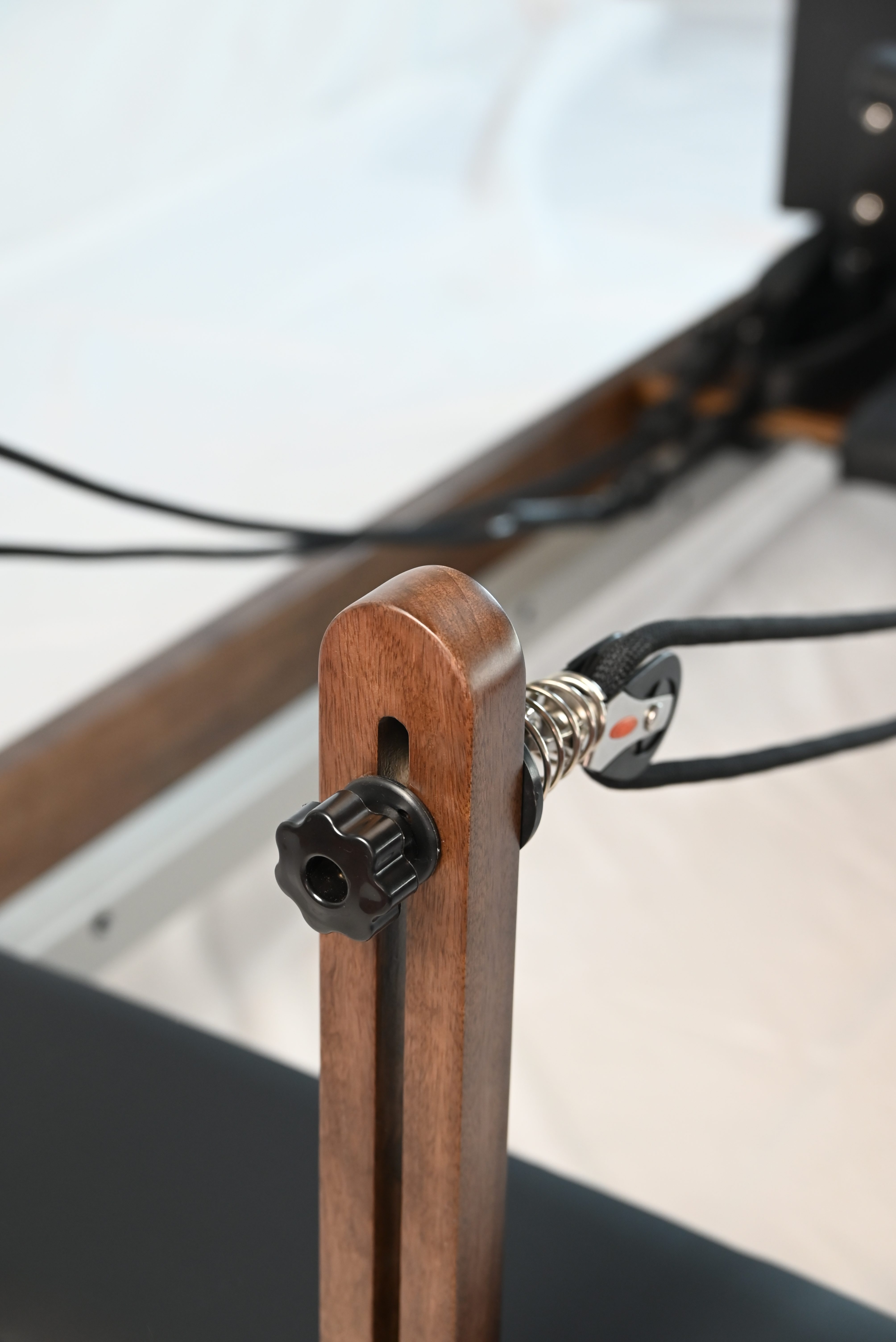
Truly "part-free" folding: Some budget foldable units require removing shoulder rests, straps, or even springs before storage — after two uses, you'll stop bothering. A true foldable design, like the PP-06, stores vertically without removing any accessories.
Folded dimensions vs. storage location: Some fold to just 15 cm thickness, nearly disappearing against a wall; others still occupy nearly 1.5 square meters. Always confirm the exact folded dimensions.
Folding ease: A unit requiring two people and five minutes to fold will quickly become "not worth folding." Watch demo videos or test the folding mechanism before purchasing.
Category 2: Reformer with Tower — Multifunctional Space-Saver
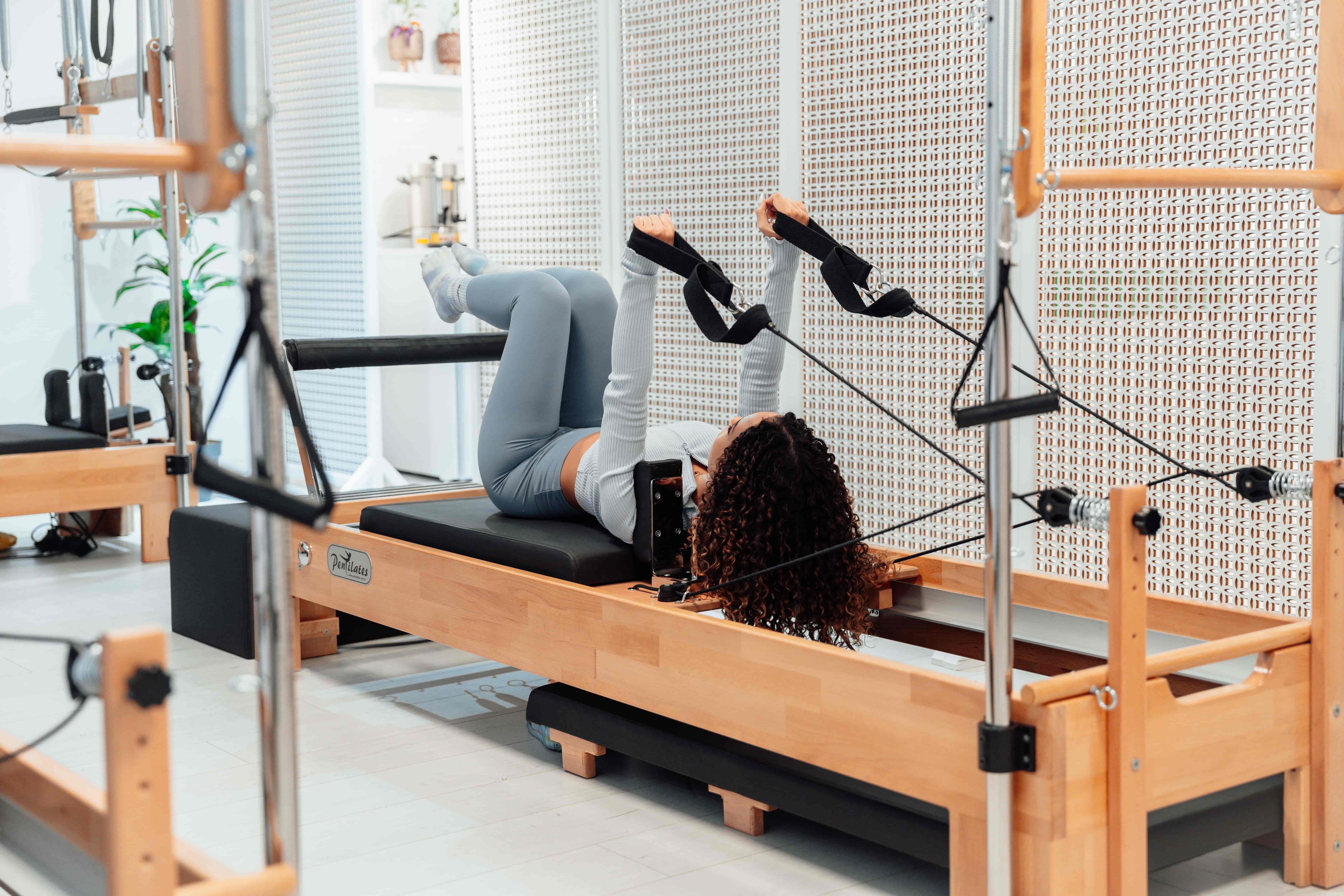
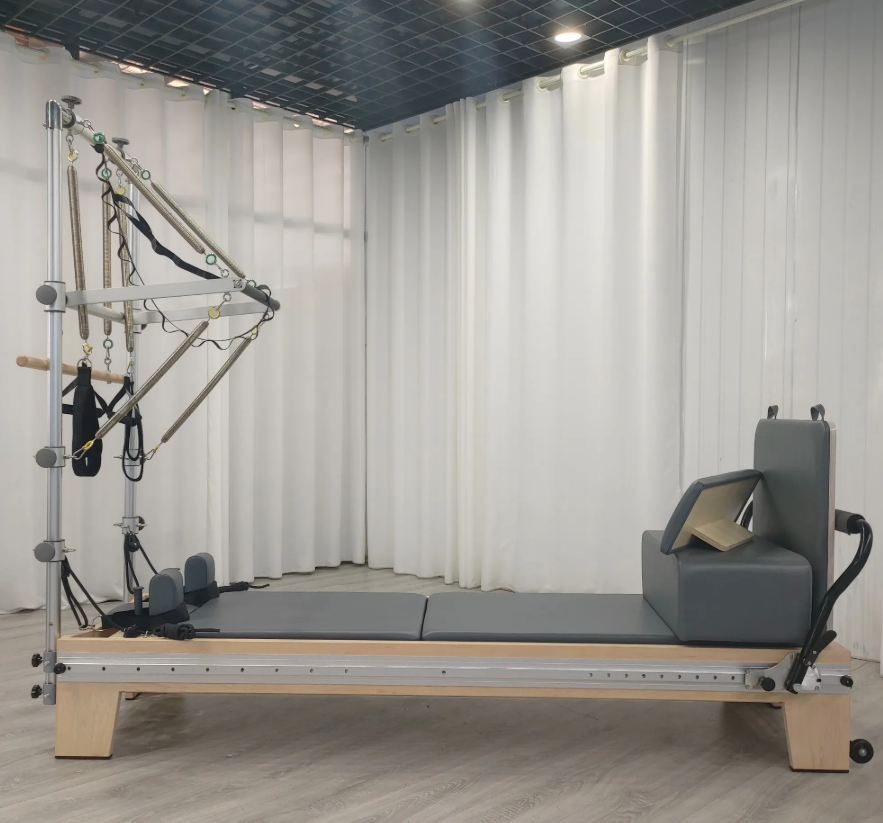
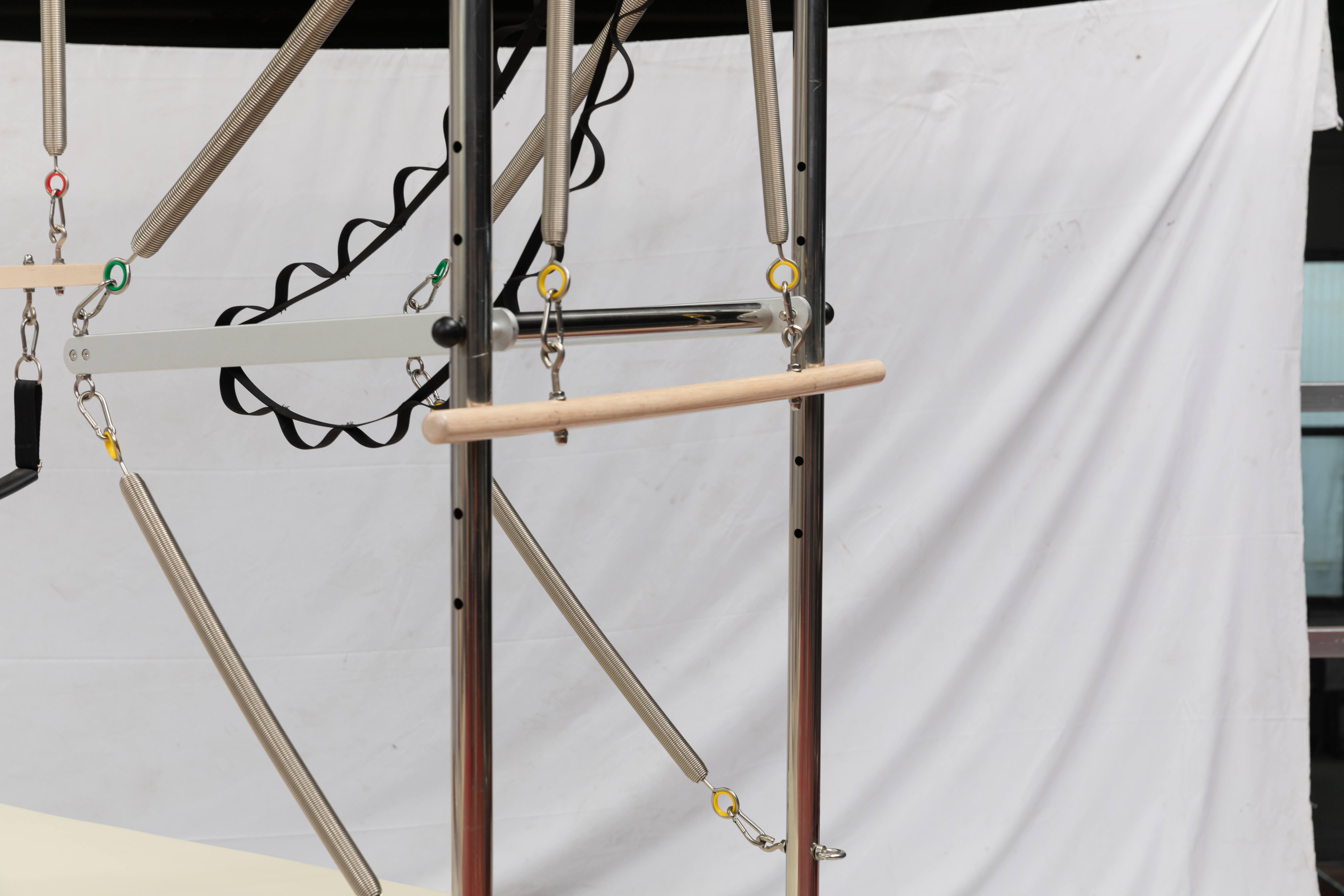
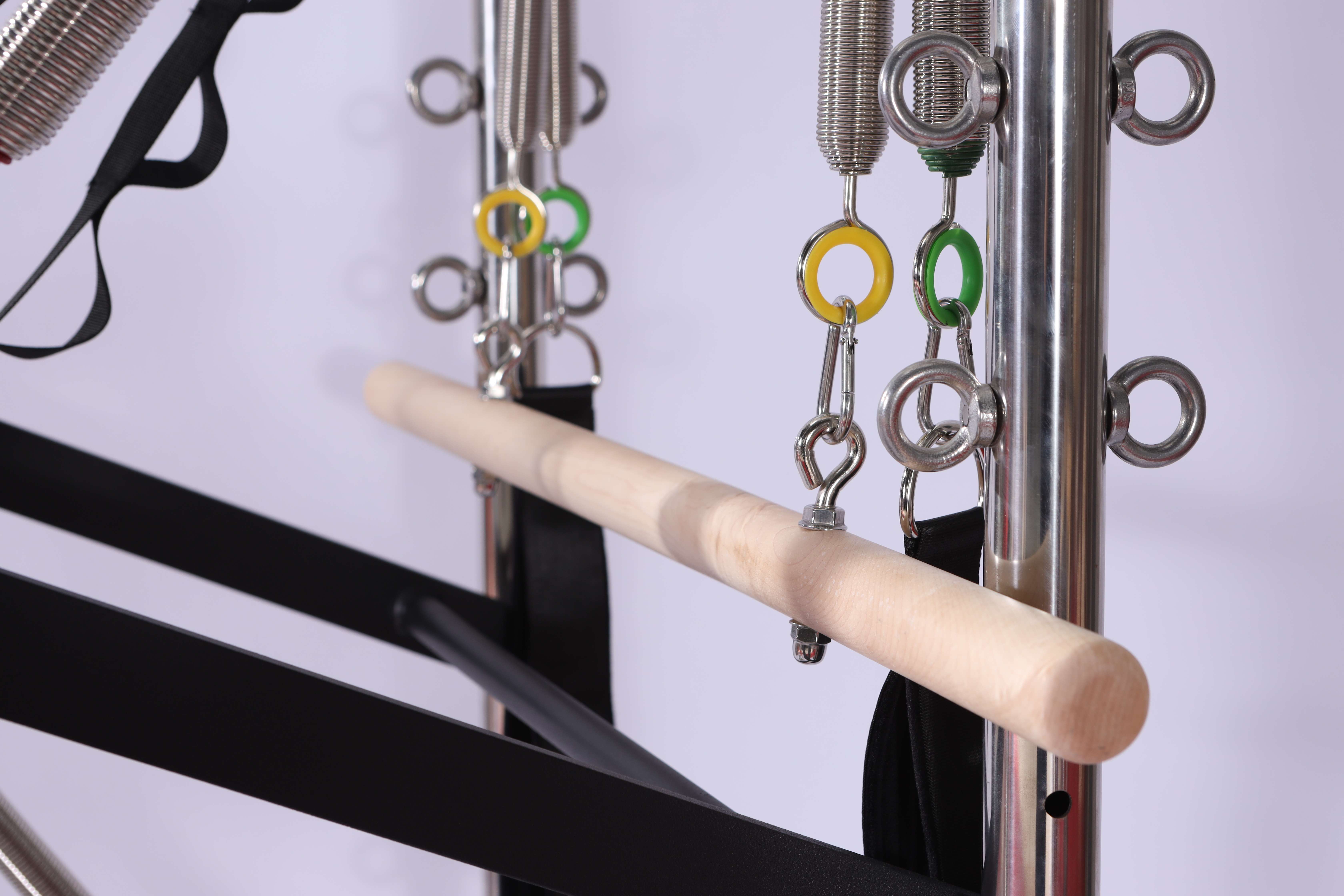
If budget and space allow, a Reformer with Tower offers excellent value. It combines Reformer functionality with Cadillac capabilities on a single machine — the carriage provides dynamic resistance and sliding exercises; the tower enables suspension stretching and rehabilitation work — eliminating the need for a separate Cadillac.
The Elina Pilates Nubium, a white aluminum model with vertical storage, measures 246 cm unfolded and features 8 tower springs, balancing space efficiency with functional completeness. For small studios without a dedicated rehab area, one Reformer with Tower can serve both regular training and private rehab sessions.
Category 3: Space-Efficient Auxiliary Equipment
Beyond reformers, small studios need supporting equipment to diversify class offerings. These options offer high functionality in minimal footprint:
Stability/Wunda Chair: Approximately 2–3 sqm footprint, offering seated, standing, and unilateral training — excellent for lower body strength and core stability.
Wall Unit: Only 2–3 sqm floor space, using wall-mounted springs to perform suspension and pulling exercises similar to a Cadillac — a viable option for extremely tight spaces.
Small Props: Magic Circles, resistance bands, small balls, and foam rollers — stored in baskets or wall hooks — occupy almost no floor space while adding rich training variety.
III. Layout Recommendations: Let Your Space Breathe
Smart equipment selection needs a thoughtful layout to maximize the sense of space. Proven layout principles include:
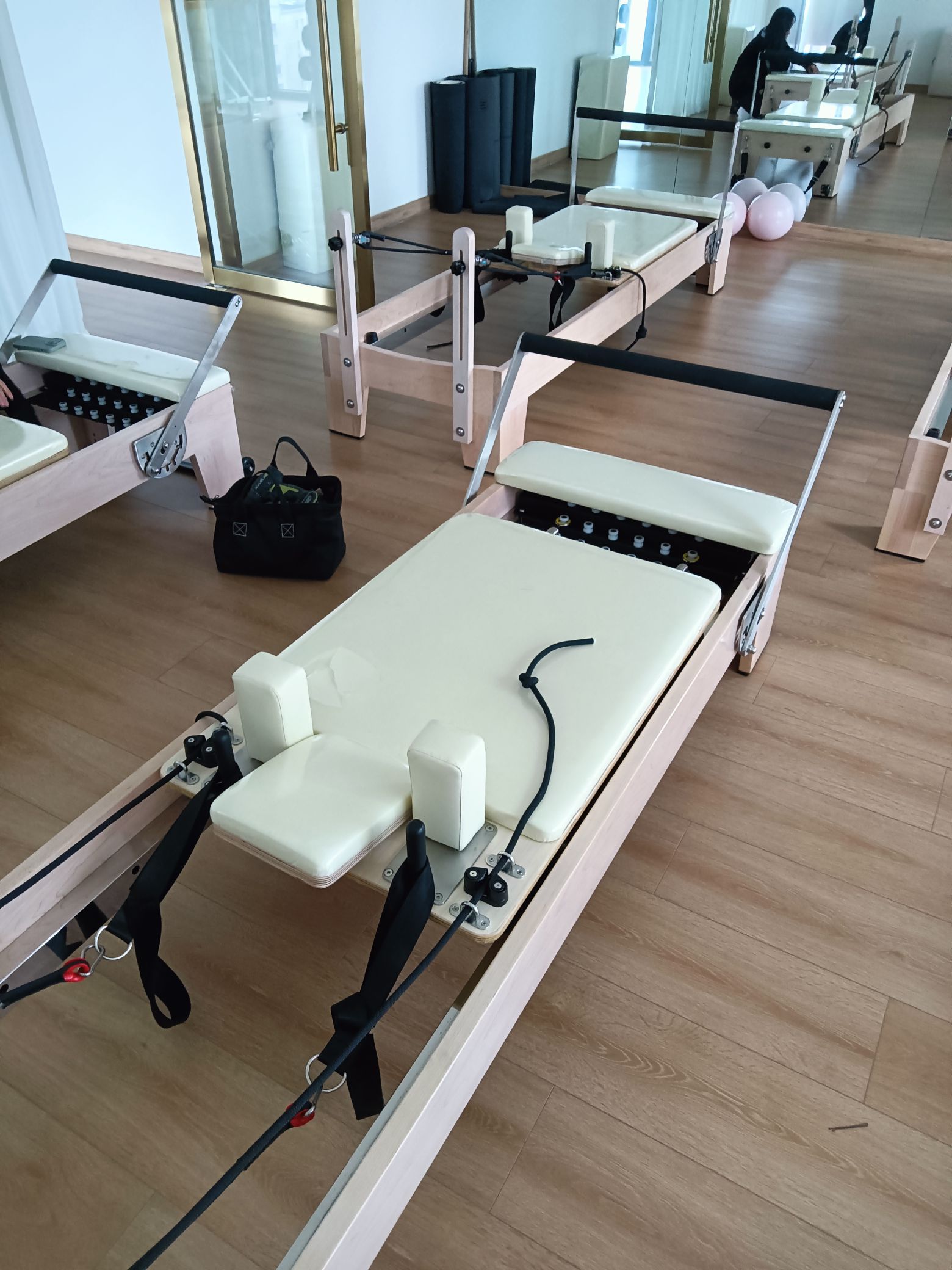
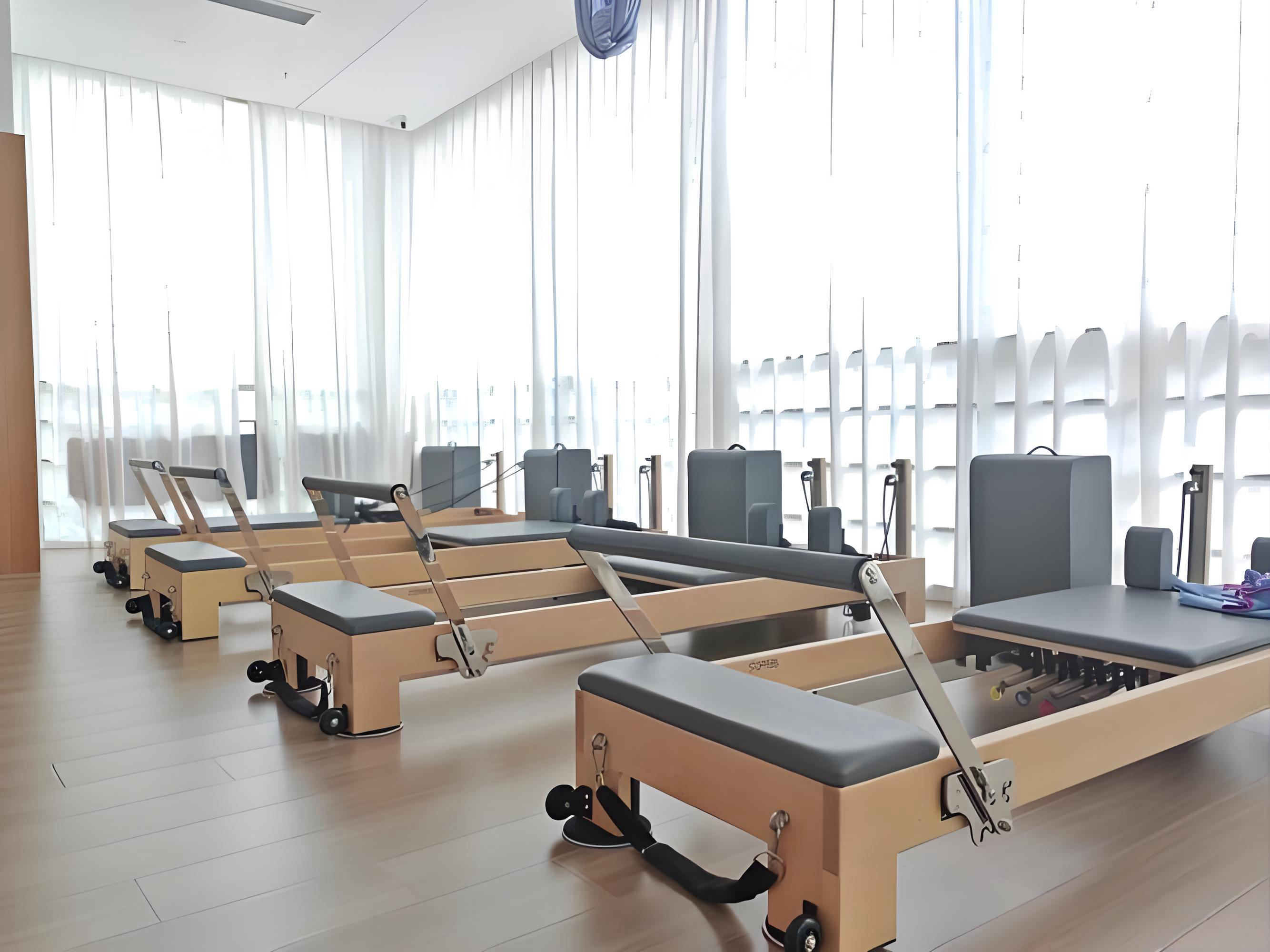
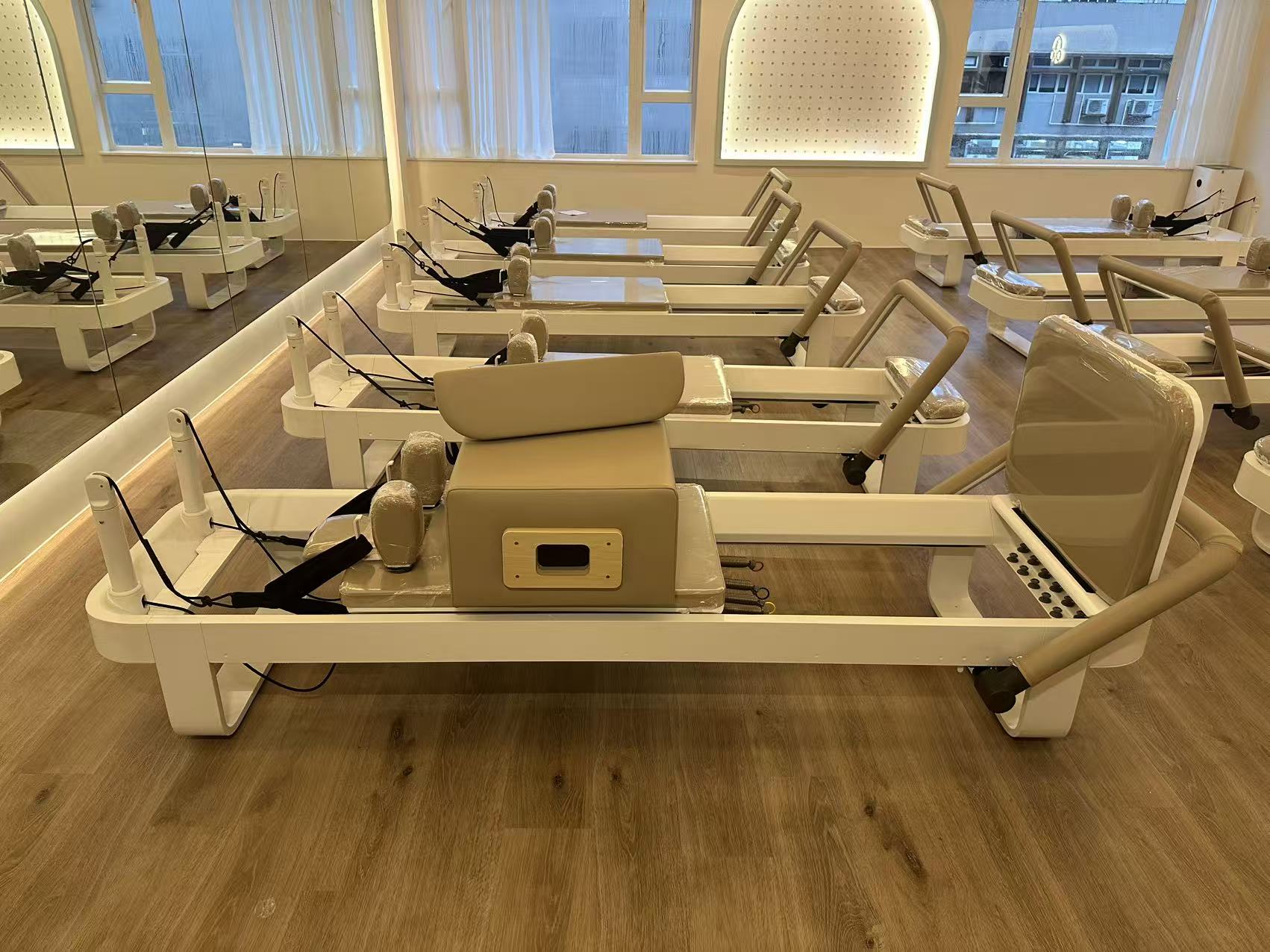
Maintain spacing: For multiple reformers side by side, center-to-center spacing of 1.2–1.5 meters (4–5 feet) allows instructors to move freely between machines and clients to mount/dismount without interference. Allow 0.8–1 meter clearance at the carriage end for client access, instructor positioning, and spring changes.
Use walls: Position the footbar end against the wall with the carriage facing the room center — the most common arrangement. Foldable reformers can stand vertically against the wall when not in use, further freeing floor space. Wall units use vertical wall space directly.
Zone planning: If the studio offers both private and small-group classes, use a "reformer zone + mat zone" layout. Place 2–4 reformers in one area for equipment classes, and lay out mats in another for warm-up, stretching, and mat work. This zoning allows simultaneous classes without frequent equipment relocation.
Lighting and mirrors: Natural light expands small spaces visually. Position reformers near windows if possible, but avoid direct sunlight on upholstery. A main mirror visually doubles the space and helps clients observe their own alignment.
IV. Cost Reference and Procurement Tips
For small studios, equipment investment requires balancing quality, space, and budget. Here is a starter configuration for reference:
Starter Configuration (approx. $20,000–28,000 USD): 3 foldable reformers + 1 Stability Chair + full prop set. This supports private and 4-6 person small-group classes; foldable reformers can be stored when not in use, freeing space for mat work.
Advanced Configuration (approx. $35,000–50,000 USD): 4 foldable reformers + 1 Reformer with Tower + 1 Stability Chair + Ladder Barrel + full prop set. The Tower Reformer serves as a dedicated private rehab machine; the Ladder Barrel supports posture and spinal flexibility programs.
When purchasing, prioritize commercial-grade products — even with limited space, durability shouldn't be compromised. Small studios often have high equipment usage rates (alternating private and small-group sessions), and home-grade equipment may show spring fatigue and rail wear within months.
Summary: Small studio spaces don't require compromising on equipment quality. Foldable reformers enable "use-and-store" efficiency; Tower-equipped reformers consolidate training functions; Stability Chairs and Wall Units maximize floor utilization — these three categories are the space-efficiency champions for small studios. Follow the planning sequence of "calculate usable area first, then determine equipment count, then plan spacing" to make compact spaces both professional and comfortable. As one industry observer noted: "Small isn't a limitation — it's a reason to be more intentional about every piece of equipment you choose."