Pilates Spring Tension Guide: Matching Spring Combinations for Different Training Goals
Spring tension is the core foundation of all Pilates reformer training. Every stretch, stabilization movement, core contraction, and corrective exercise relies on precise spring resistance to control movement speed, muscle activation, and body alignment. For professional Pilates instructors and studio owners, mastering standardized spring tension combinations for different training goals is essential to deliver scientific, hierarchical, and injury-free courses for clients of all levels.
Many beginner trainers randomly adjust spring numbers or tension levels, leading to insufficient muscle stimulation, unstable body posture, or excessive joint pressure. Different from casual home workouts, commercial studio Pilates requires goal-oriented spring matching. This guide summarizes mainstream industry spring tension standards, explains the function of each spring level, and provides exclusive spring combination schemes for rehabilitation, posture correction, core shaping, strength improvement, and advanced training.
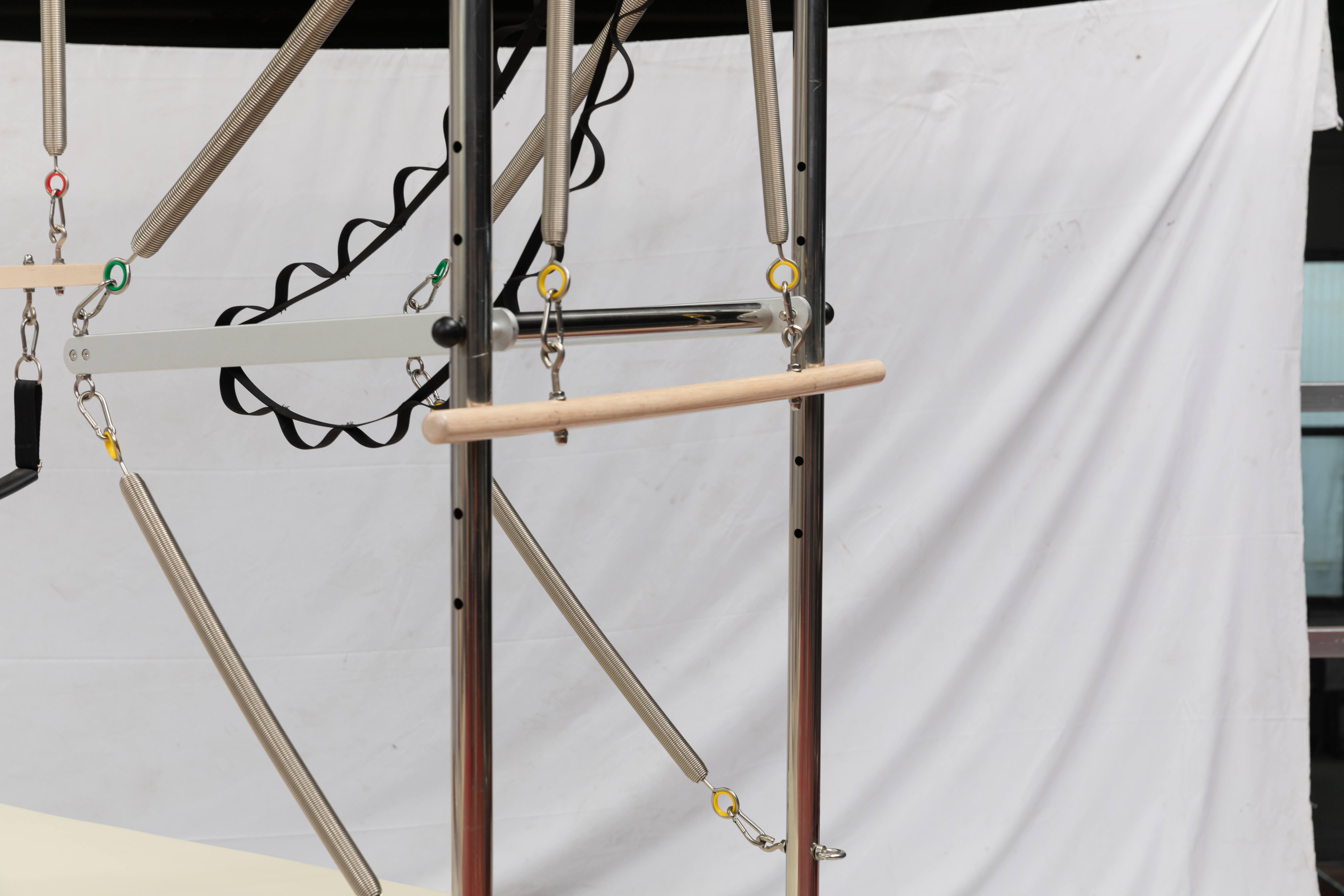
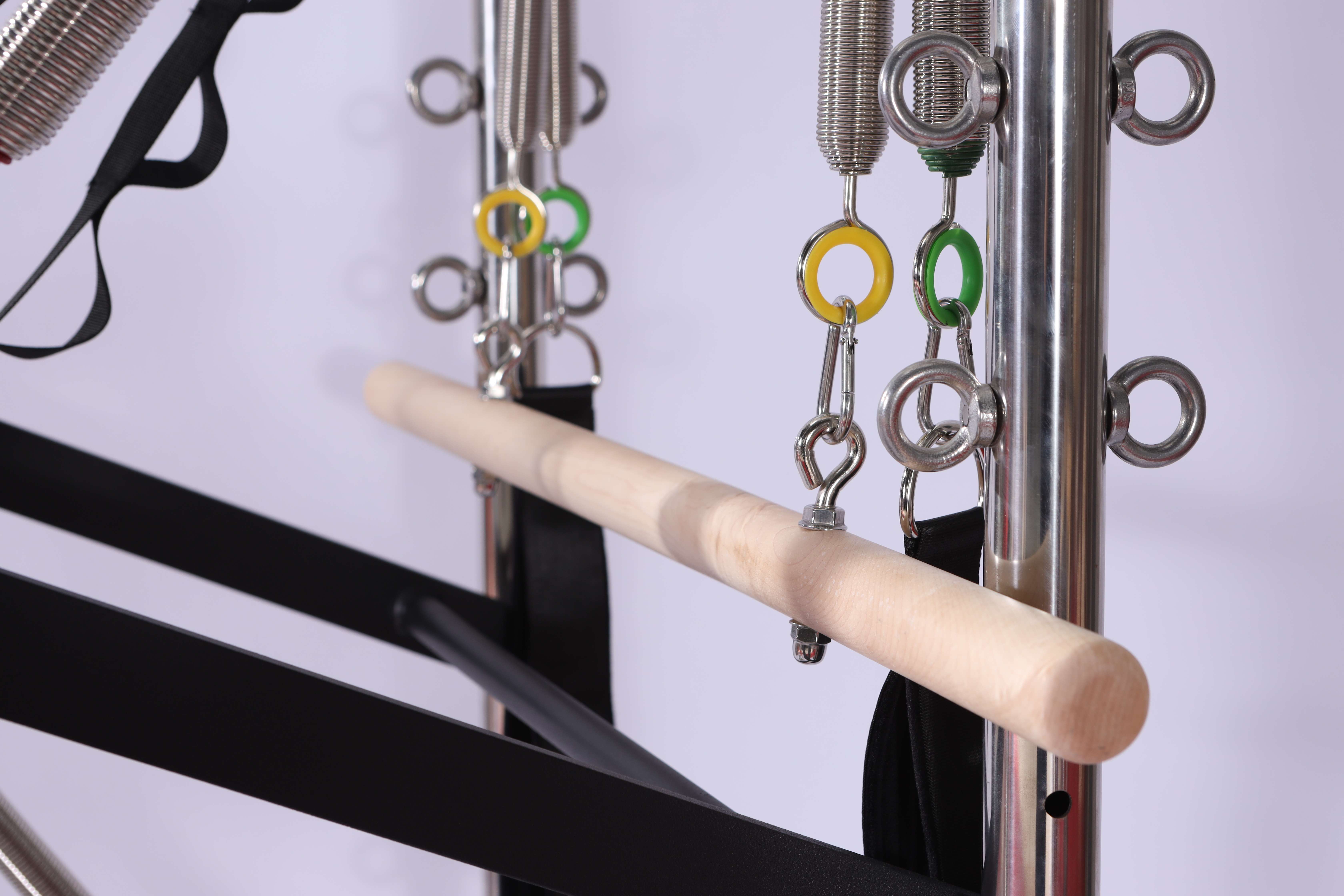
Standard Pilates Spring Color & Tension Level Industry Overview
Although minor tension values vary across different equipment brands, global commercial Pilates studios follow a unified color-coded tension hierarchy. The standard system is divided into five core levels from ultra-light to extra-heavy resistance, covering all beginner to professional training scenarios.
- White/Green (Extra Light): 8–12 lbs, ultra-gentle tension for precise control, joint protection, and rehabilitation mobilization
- Yellow (Light): 12–18 lbs, beginner-friendly resistance for basic posture training and upper-body fine muscle activation
- Blue (Medium): 18–25 lbs, the most versatile universal tension for mainstream core shaping and full-body toning
- Red (Heavy): 25–35 lbs, strong resistance for lower-body strength training and deep core endurance exercises
- Black/Silver (Extra Heavy): 35–50 lbs, professional-level tension for advanced strength improvement and athlete functional training
The core principle of spring matching: lighter tension for precision and control, heavier tension for strength and muscle endurance. No single combination fits all training goals, and hierarchical adjustment is the key to professional Pilates teaching.
Spring Combination Matching by Core Training Goals
- Rehabilitation & Injury Recovery Training
Recommended Spring Combination: Single White / Single Green / White + Yellow
Rehabilitation training for spinal stiffness, joint injury recovery, postpartum repair, and chronic muscle soreness prioritizes low resistance and full range of motion. Ultra-light spring tension reduces joint compression and spinal pressure, allowing clients to complete slow, controlled movements without muscle compensatory force.
This combination effectively awakens deep stabilizing muscles, improves joint mobility, relieves muscle adhesion, and avoids secondary strain caused by excessive resistance. It is the safest spring setting for beginner rehabilitation clients, elderly groups, and post-surgical recovery training.
- Posture Correction & Spinal Alignment Training
Recommended Spring Combination: Single Yellow / Yellow + Light Blue
Rounded shoulders, forward head posture, thoracic kyphosis, and pelvic tilt require moderate and controllable tension. Light spring resistance helps clients perceive spinal segmental movement, correct asymmetric muscle force, and establish neutral spine awareness.
Excessively heavy springs easily cause superficial muscle overactivation, leading to shoulder tension and lumbar compensation. Light tension combinations focus on muscle stretching and low-intensity stabilization, perfectly matching long-term posture adjustment courses for office workers and sub-health groups.
- Beginner Foundation & Body Awareness Training
Recommended Spring Combination: Single Blue / Yellow + Blue
For zero-basis clients who have mastered basic breathing and neutral posture, medium-light tension is the best choice for foundation training. This combination balances movement fluency and muscle stimulation, helping beginners master sliding control, core engagement, and limb coordination without feeling strenuous.
It effectively improves body rigidity, enhances overall coordination, and lays a solid foundation for subsequent high-intensity shaping and strength training, suitable for most entry-level group classes and private basic courses.
- Body Shaping, Fat Loss & Muscle Toning
Recommended Spring Combination: Double Blue / Blue + Red
Weight loss and body shaping require continuous muscle tension and metabolic consumption. Medium to medium-heavy spring resistance increases muscle endurance, accelerates fat burning, and tightens loose muscle lines in the abdomen, hips, and legs.
This combination maintains smooth movement tracks while improving training intensity, avoiding bulky muscle growth, and creating slender and tight body lines. It is the mainstream spring setting for studio signature fat-burning shaping courses.
- Lower Body Strength & Hip Leg Sculpting
Recommended Spring Combination: Single Red / Double Red / Red + Blue
Hip lifting, leg shaping, and lower body strength training need stronger resistance to break through muscle tolerance. Heavy spring tension fully activates gluteal muscles, hamstrings, and lower limb stabilizers, solving problems of flat hips, loose leg lines, and weak lower limb strength.
High-resistance spring combinations enhance muscle contraction amplitude and tension duration, significantly improving lower body muscle density and body curve definition, ideal for intermediate and advanced clients pursuing perfect body lines.
- Advanced Core Strength & Functional Training
Recommended Spring Combination: Red + Black / Double Black / Multi-spring Heavy Combination
For advanced practitioners, fitness coaches, and professional athletes, extra-heavy spring tension is used for high-intensity core breakthrough, functional strength improvement, and explosive power training. Complex multi-spring combinations increase overall movement load, challenge deep core stability, and improve body control under high resistance.
This setting is suitable for advanced private courses and professional skill improvement training, helping users break training bottlenecks and enhance overall physical fitness and sports performance.
Professional Spring Matching Rules for Studio Teaching
- From light to heavy progressive adjustment: Always start with low tension to activate muscles, then increase resistance gradually to avoid compensatory injuries
- Light tension for precision, heavy tension for strength: Fine movements and spinal correction use thin springs; large muscle groups and strength training use thick springs
- Avoid excessive tension for beginners: Over-resistance easily causes lumbar pressure, shoulder tension, and incorrect movement patterns
- Unified spring standard for group classes: Ensure consistent tension settings for group training to standardize teaching effects
- Regular spring tension calibration: Replace fatigued springs regularly to avoid inconsistent resistance affecting training accuracy
Common Spring Matching Mistakes to Avoid
- Using heavy springs for rehabilitation and posture correction, resulting in joint compression and muscle stiffness
- Long-term use of single light tension for advanced clients, leading to training bottlenecks and poor shaping effects
- Ignoring spring fatigue differences, causing unbalanced left and right body force
- Randomly mixing multiple tension springs without hierarchical training logic
Final Conclusion
Scientific Pilates spring tension matching is the core of professional studio teaching. Different color-coded springs carry unique resistance values and training functions, corresponding to targeted goals such as rehabilitation repair, posture correction, foundation training, body shaping, and advanced strength improvement. Standardized spring combinations can maximize training efficiency, ensure movement safety, and achieve hierarchical teaching for all client levels.
Excellent Pilates teaching is not about pursuing heavy resistance, but about selecting the most accurate spring tension according to clients’ physical conditions and training goals. Mastering this matching system can greatly improve studio course professionalism, client satisfaction, and renewal rates.
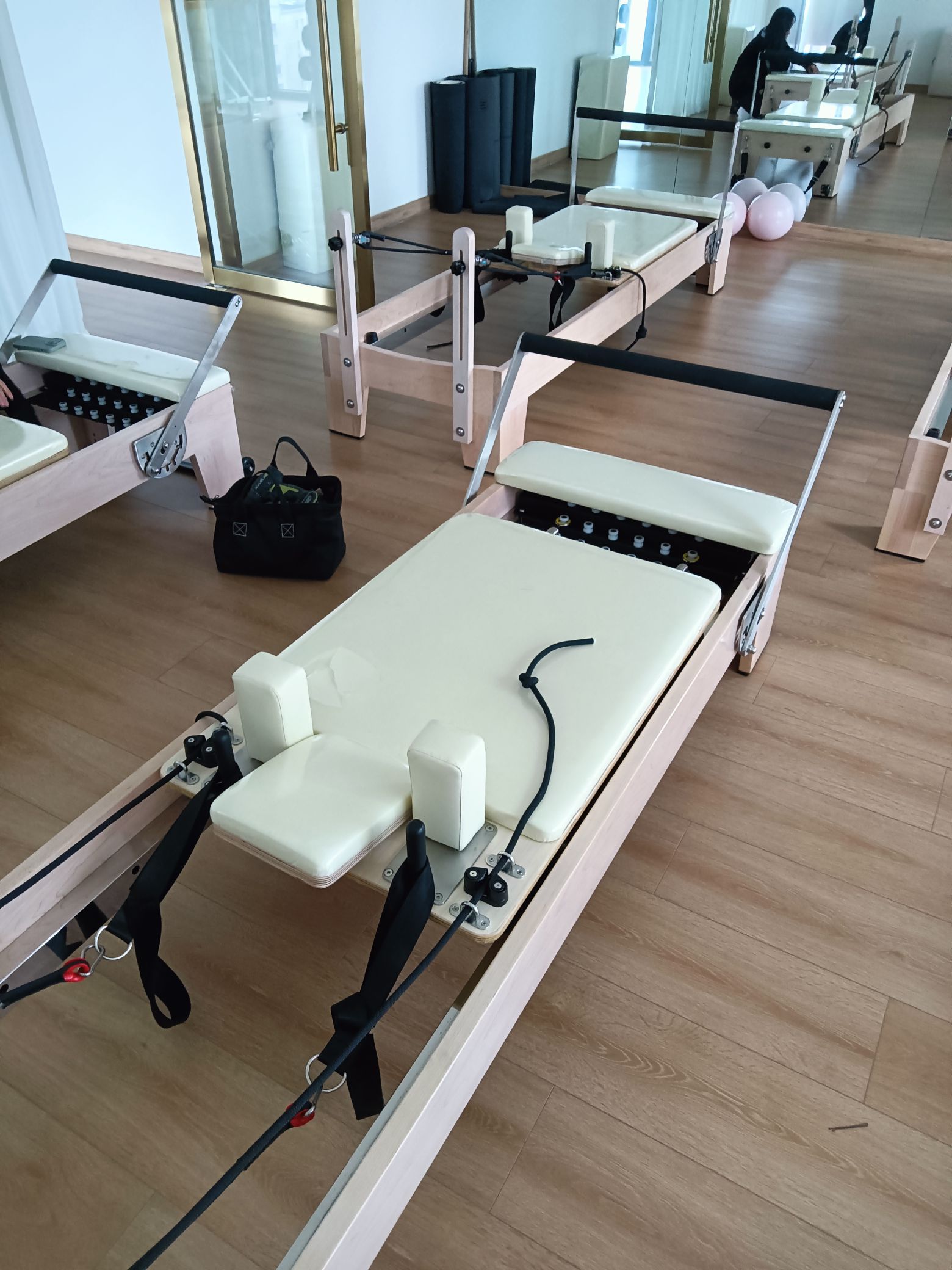
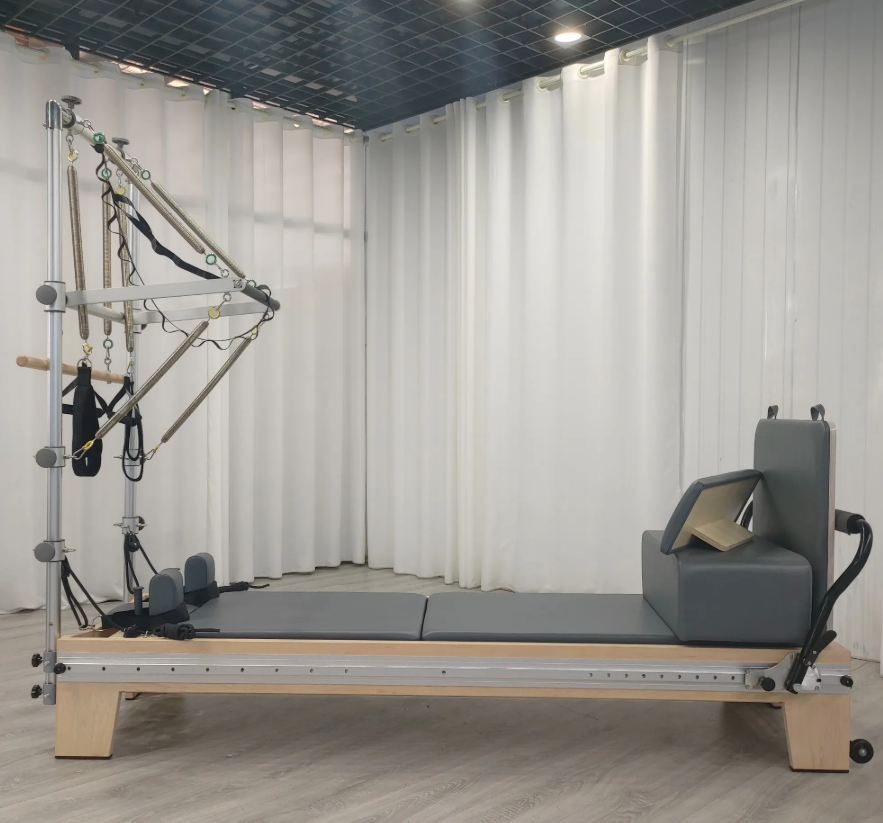
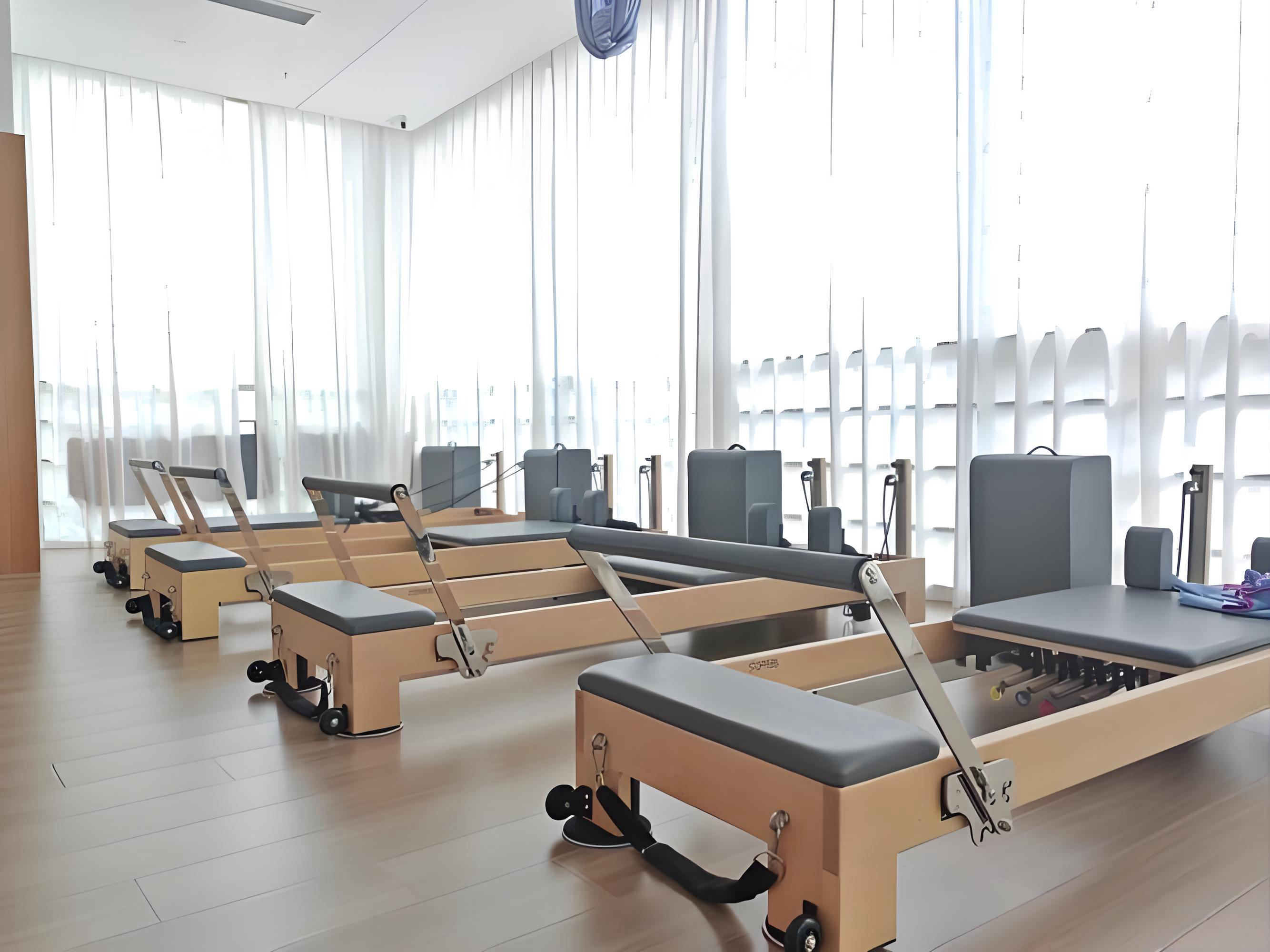
Our commercial Pilates reformers adopt standard international color-coded spring tension systems with stable fatigue resistance and consistent tension output, supporting professional hierarchical training and standardized studio course construction for global studios.