Anti-Slip & Safe Design Standards for Commercial Pilates Beds

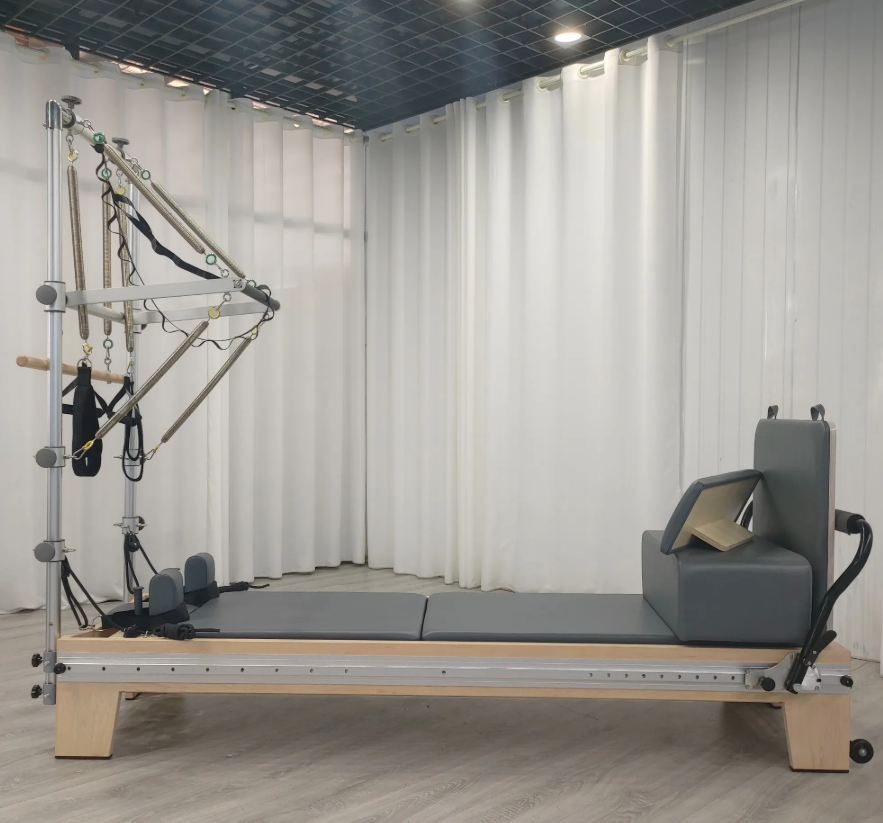
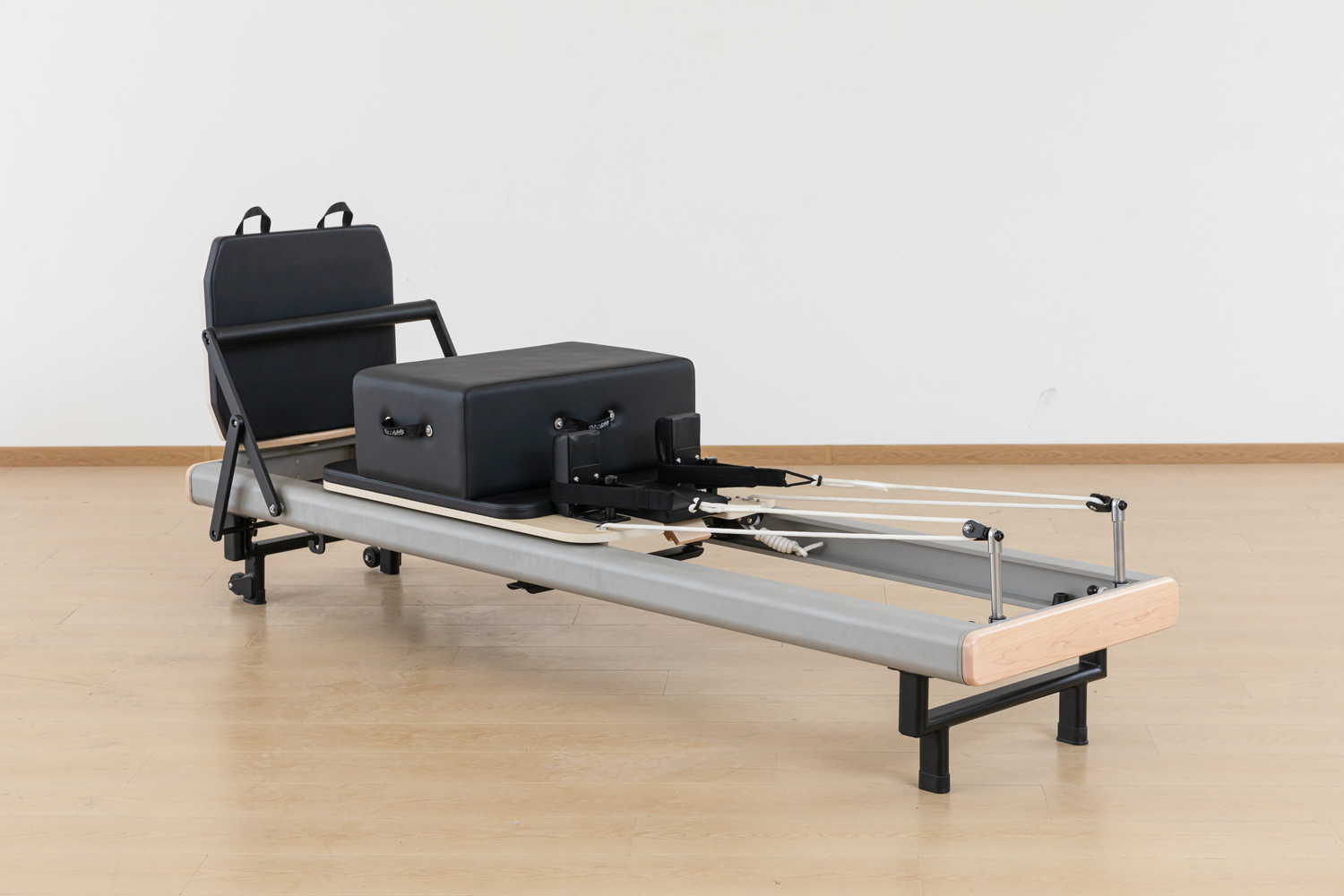
In commercial Pilates studios, safety design is not an optional extra — it is a primary criterion that must be prioritized during equipment selection. A properly qualified commercial Pilates reformer must meet rigorous safety standards across multiple dimensions: floor slip resistance and equipment fixation, frame structure, spring systems, carriage stops, footbar latching, and rope and pulley systems. This article systematically outlines the key safety design requirements for commercial Pilates reformers.
I. Floor Slip Resistance and Equipment Fixation: The First Line of Defense
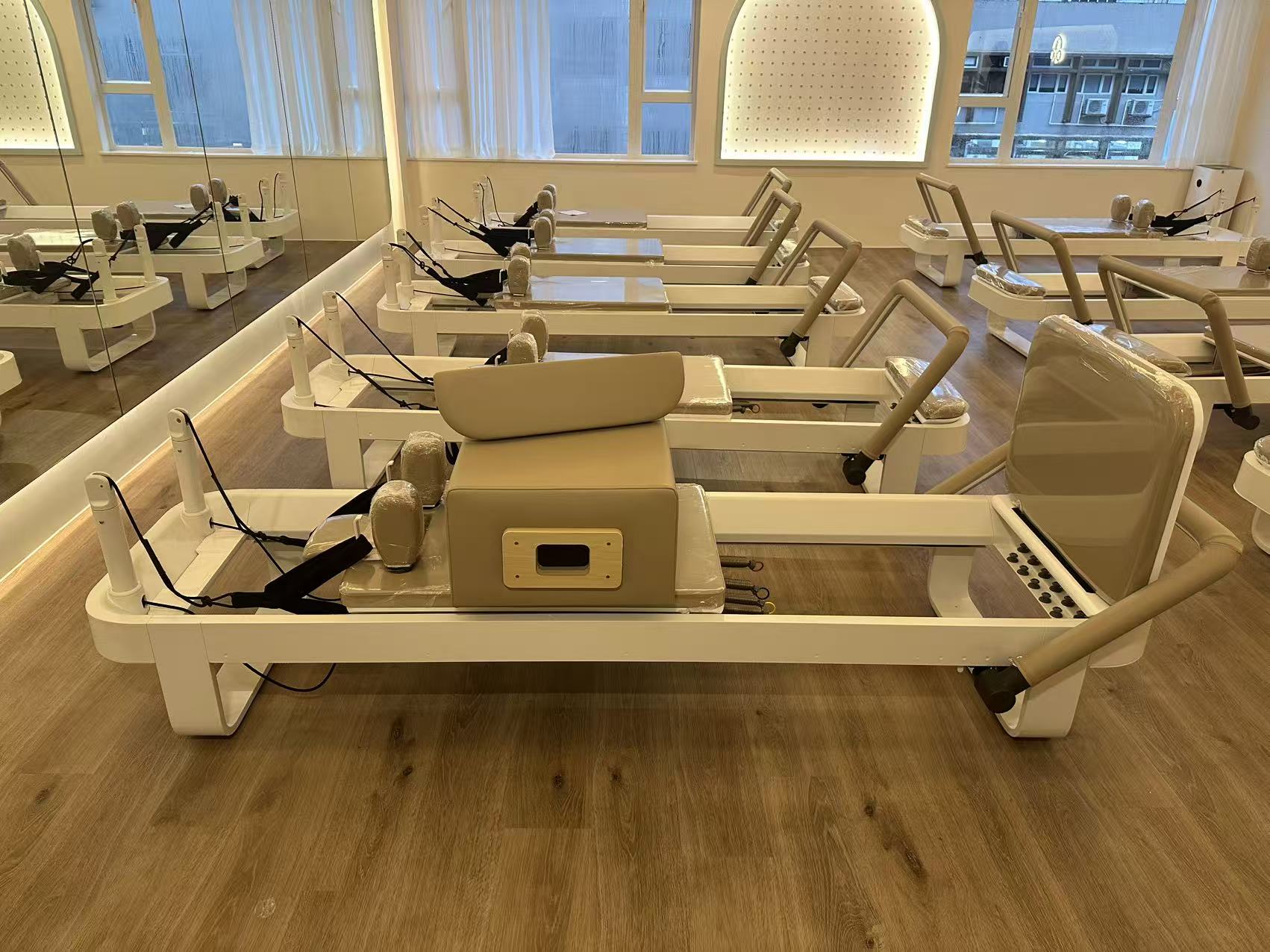
Floor slip resistance in a Pilates studio is fundamental to training safety. During dynamic movement, maintaining secure footing is critical for both balance and safety. Commercial studio floors should be finished with slip-resistant materials — such as matte anti-slip treated wood flooring, or epoxy floors with anti-slip particles — ensuring adequate friction even in humid conditions.
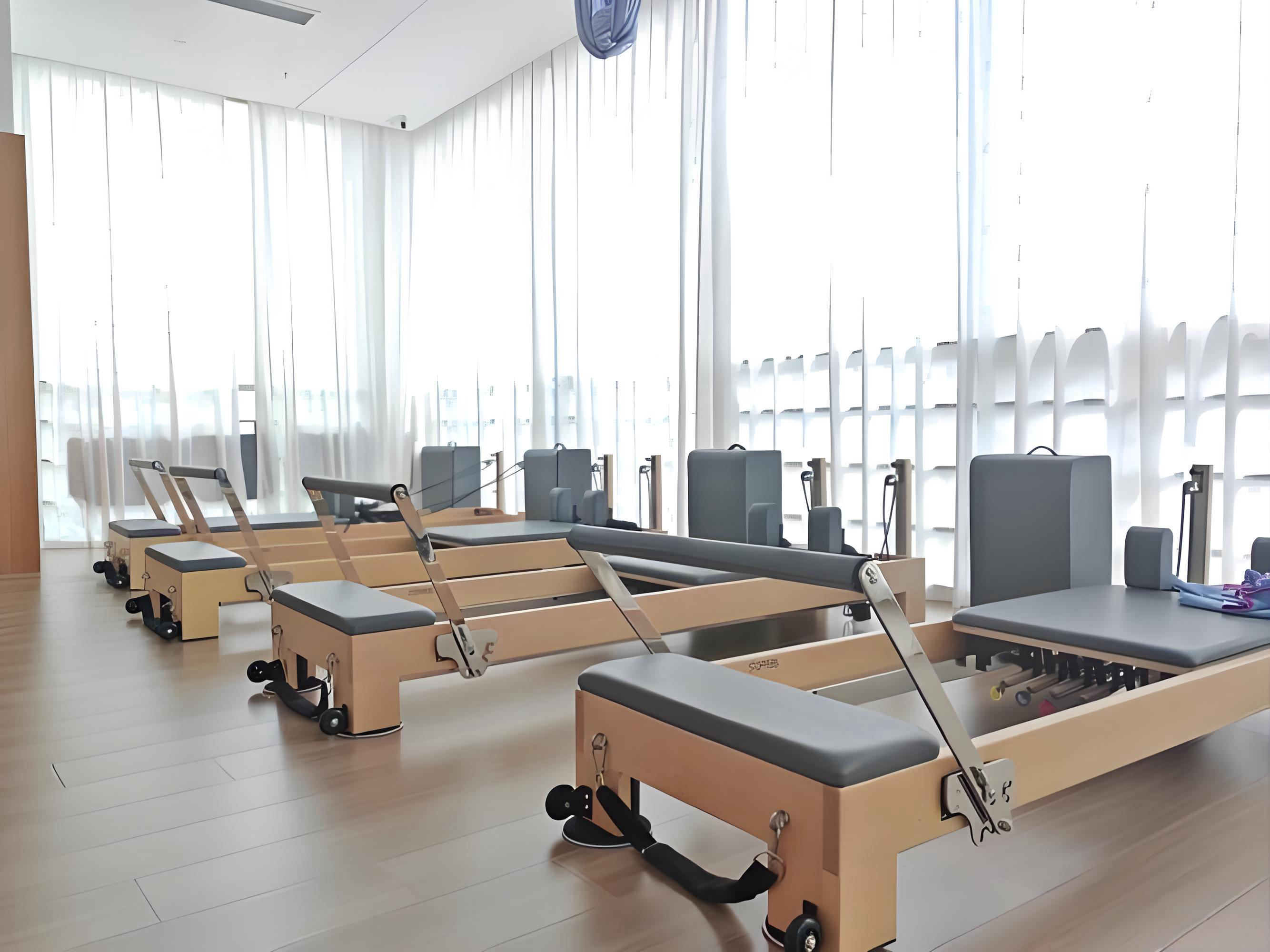
Beyond the floor itself, equipment fixation is equally critical. The metal brackets of commercial Pilates reformers should be secured through pre-drilled floor fixing holes or expansion screws to prevent equipment shaking during exercise. Adequate spacing (1.5 to 2 meters recommended) between reformers ensures clients do not collide during movement and facilitates instructor guidance.
II. Frame Structural Integrity: The "Skeleton" of Safety
The frame is the foundation of all Pilates reformer safety standards. A commercial reformer must support users up to its rated weight capacity without flexing, bending, or developing stress fractures over time.
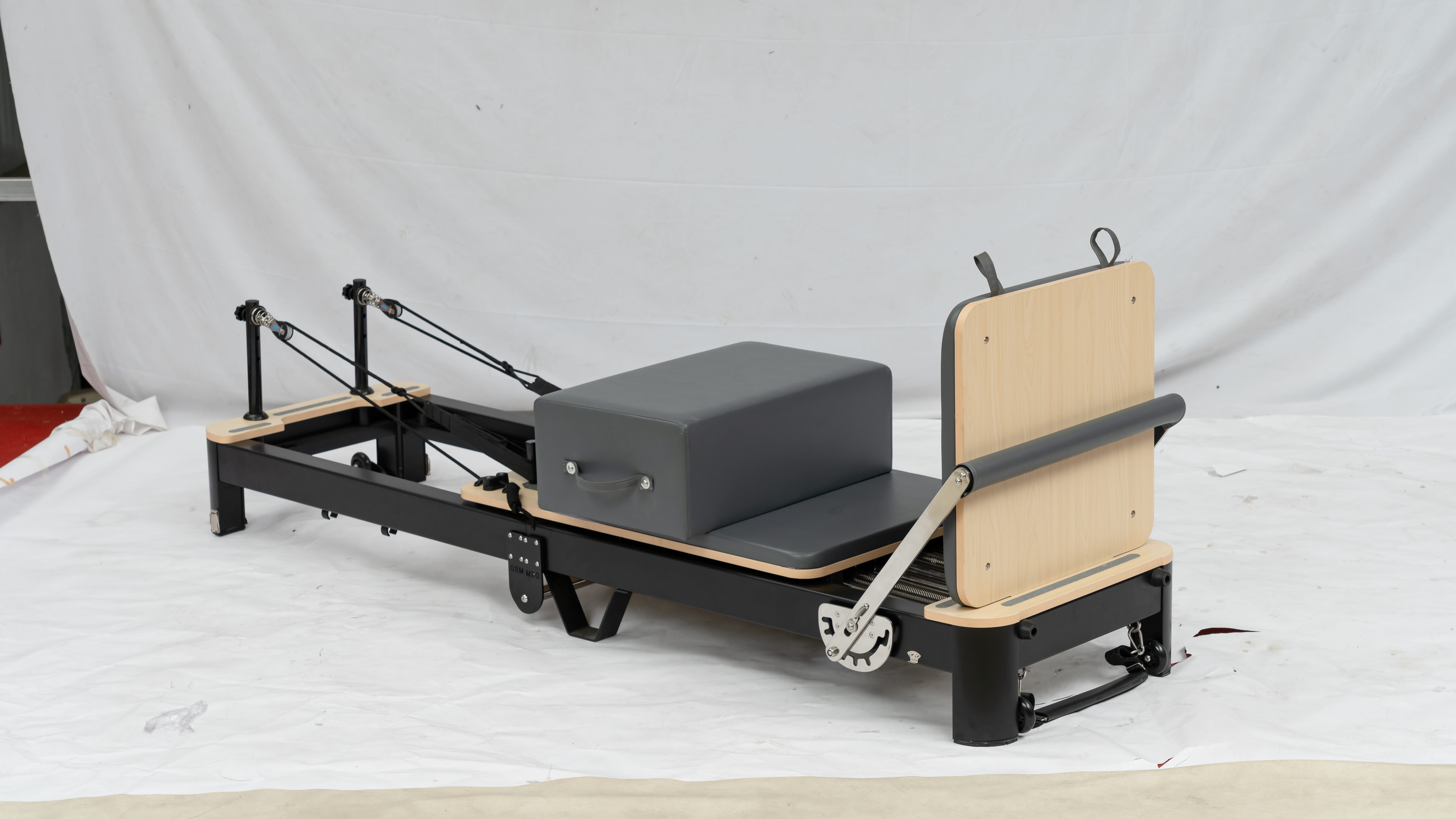
Quality commercial reformers use welded steel frames with minimum 14-gauge tubing. The frame should be rigid enough that no movement is detectable when pushing laterally against the carriage or footbar during use. Aviation-grade aluminum alloy frames offer another premium option — their moisture resistance, deformation resistance, and sweat resistance make them particularly suitable for high-traffic environments, maintaining precise rail alignment over time.
Commercial equipment should be accompanied by independent frame load testing documentation. For example, Megacore reformers are built with Q235 commercial-grade steel in a welded frame construction, load-tested to 200 kg dynamic load. Aluminum alloy luxury reformers can support up to 150 kg (approx. 330 lbs), safely accommodating larger athletes and clients requiring high-intensity rehabilitation training.
III. Spring System Safety: The Overlooked "Kinetic Energy Risk"
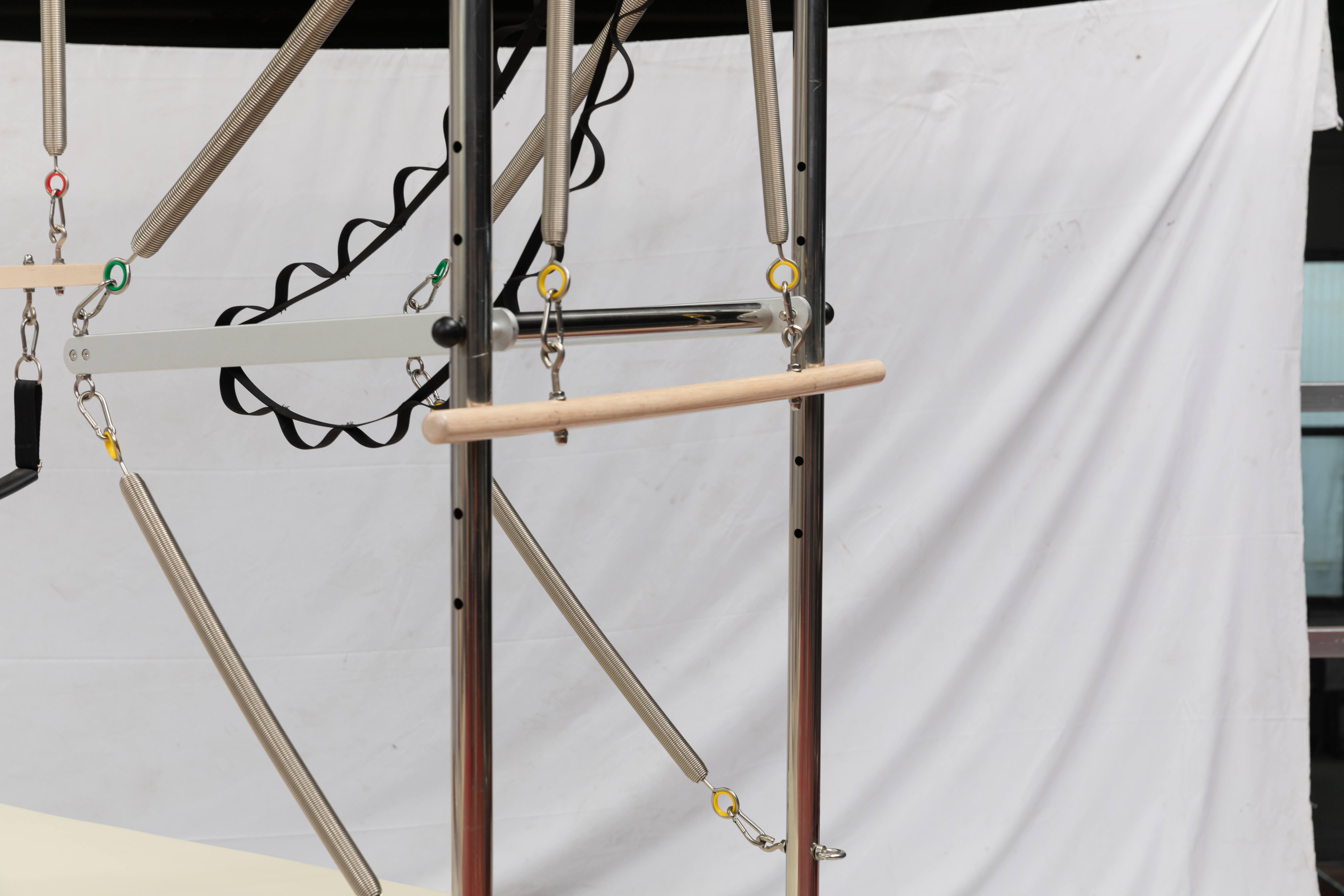
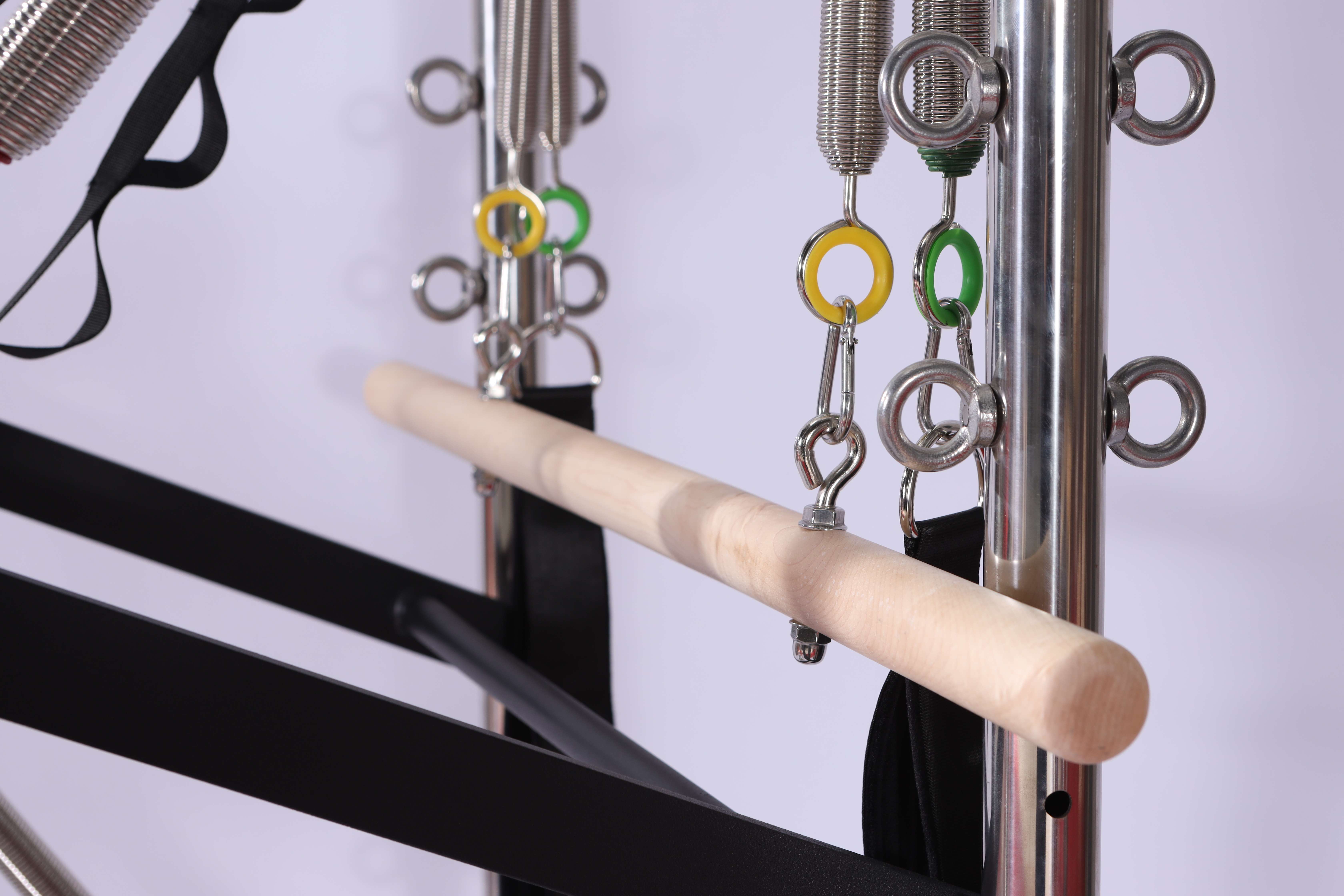
Pilates reformer springs store significant elastic potential energy when under tension. If a spring accidentally detaches from its hook or anchor point, the energy is released instantaneously, potentially causing serious injury to the user or instructor — including facial lacerations, eye injuries, and blunt trauma.
Engineering requirements for springs: Commercial Pilates springs are typically cold-coiled from high-carbon steel wire (ASTM A228 music wire or equivalent), then heat-treated to eliminate residual stress and stabilize spring rate. Hooks should be formed integrally with the spring body (superior to welded hooks, which can be potential failure points), and should fully enclose the attachment bar to prevent slippage during use.
Spring system safety features:
·Hooks that fully enclose the attachment bar to prevent slippage
·Calibrated and consistent tension across all springs in the set
·Springs rated for at least 500,000 cycles before losing tension
·Springs that do not reach their elastic limit even at full extension under maximum load
Some brands have further optimized spring system safety. NordicTrack's Smart Spine™ fully enclosed spring system completely conceals spring hardware from the member's experience, simplifying resistance changes while reducing the risk of user error.
Replacement cycle: Under commercial use, springs should typically be replaced every 2 to 3 years, or at the first sign of stretching or distortion.
IV. Carriage Stop Mechanisms: The Last Line of Defense Against Derailment
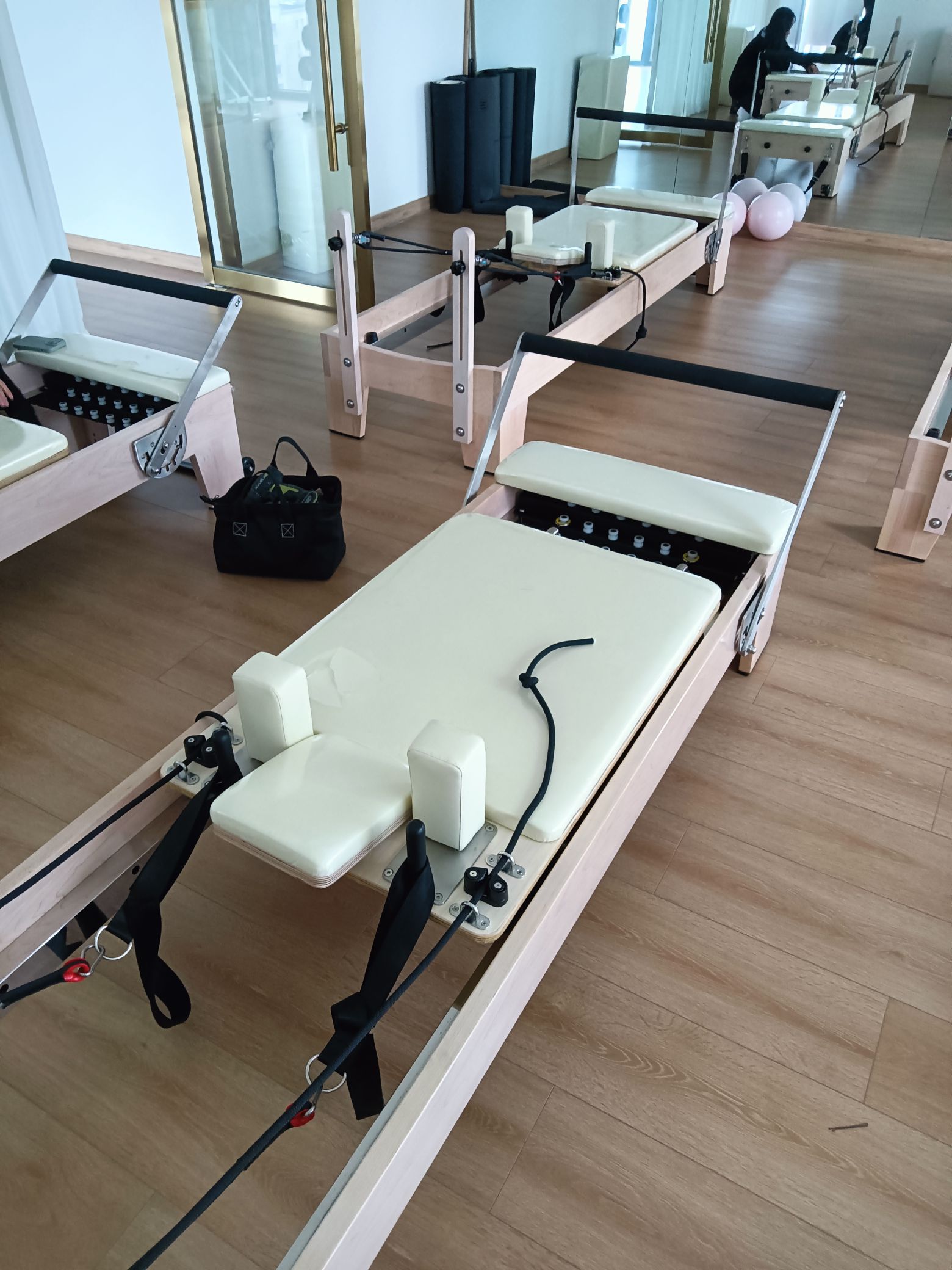
Every commercial reformer must have reliable carriage stops at both ends of the rail system to prevent the carriage from coming off the rails. The stops should engage positively and cannot be dislodged during use.
Some cost-conscious reformers use small rubber bumpers as carriage stops. These can compress, crack, or dislodge over time. Commercial-grade reformers use mechanical stops — metal blocks or pins that physically prevent the carriage from passing a certain point. Megacore reformers use reinforced metal carriage stops bolted through the frame, with rubber cushioning inserts that absorb impact without relying on the rubber for primary retention.
V. Footbar Latching and Adjustment Safety
The footbar is one of the most heavily used components on any reformer, and its latching mechanism is a primary safety concern. Commercial Pilates reformers require footbars that lock securely at each adjustment position and cannot accidentally release during use.
The latch mechanism should provide audible and tactile feedback so instructors and clients can confirm it is engaged. Commercial-grade footbars use spring-loaded latch pins that engage into machined slots in the footbar support brackets. Test method: push firmly against the footbar in multiple directions — it should not shift or release under any normal use condition.
VI. Rope and Pulley Systems
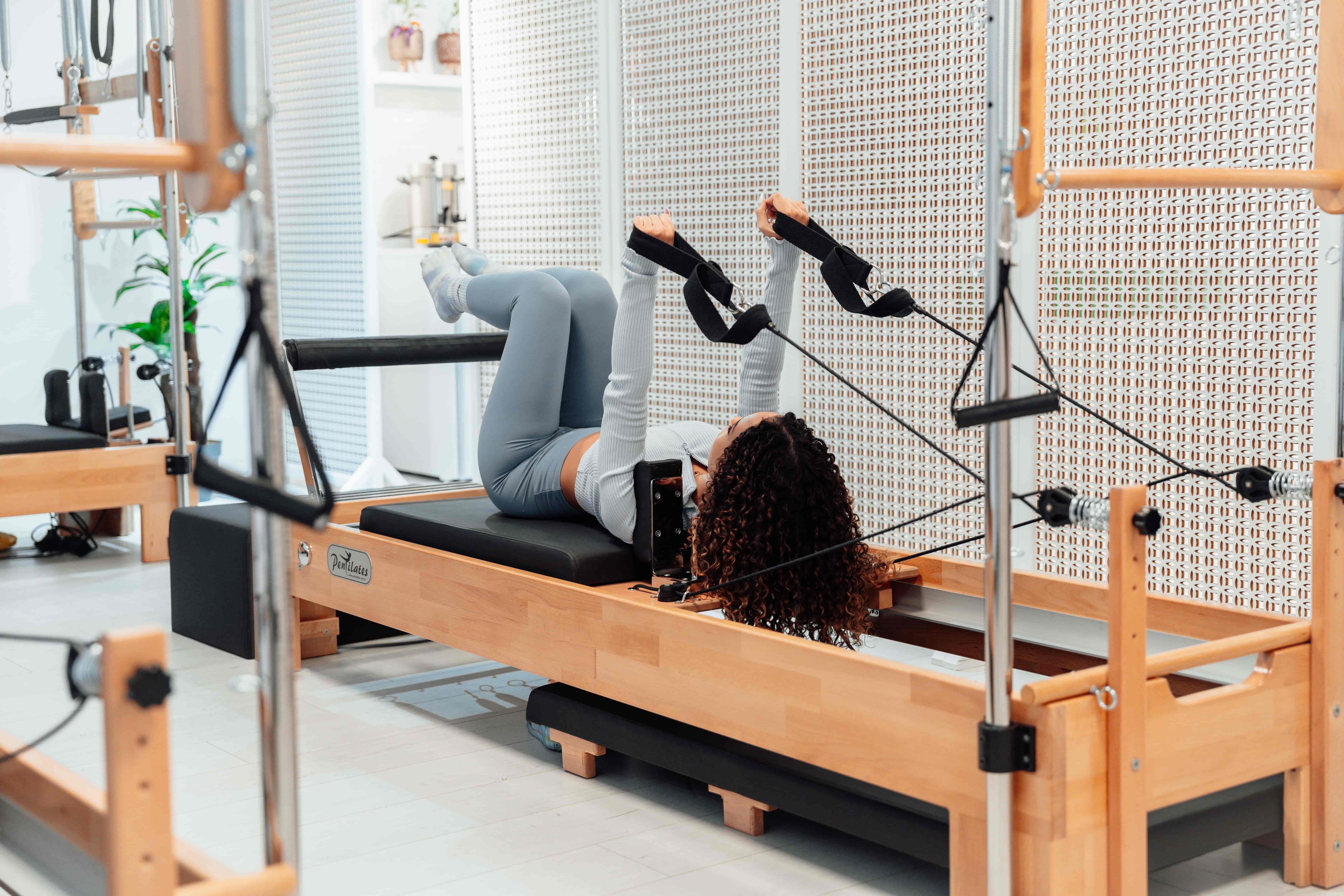
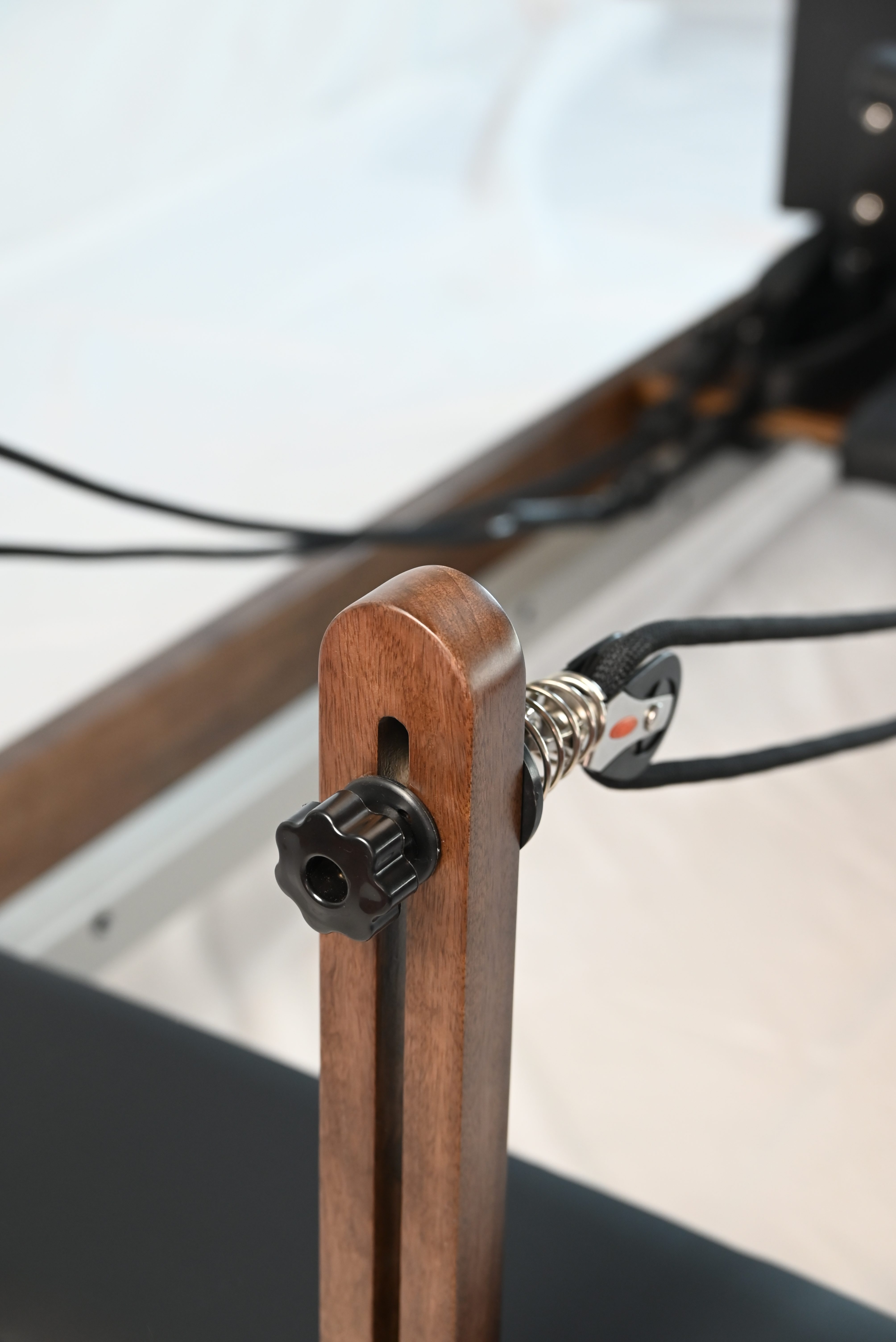
The rope and pulley system carries the entire working load of the reformer — every pulling, pressing, and stretching exercise transfers force through these components. Commercial-grade ropes should be rated for at least 5 times the maximum expected working load, typically using braided marine-grade rope or reinforced nylon straps rated to 300 kg or more.
Pulley wheels should rotate smoothly on sealed bearings with deep grooves that keep the rope properly aligned. Rope attachment points at both the carriage and handle ends should be reinforced with stitching or crimping that cannot pull loose. Inspect ropes regularly for fraying and replace them at the first sign of wear — rope failure during exercise can cause sudden loss of resistance and potential injury.
VII. Upholstery and Material Safety
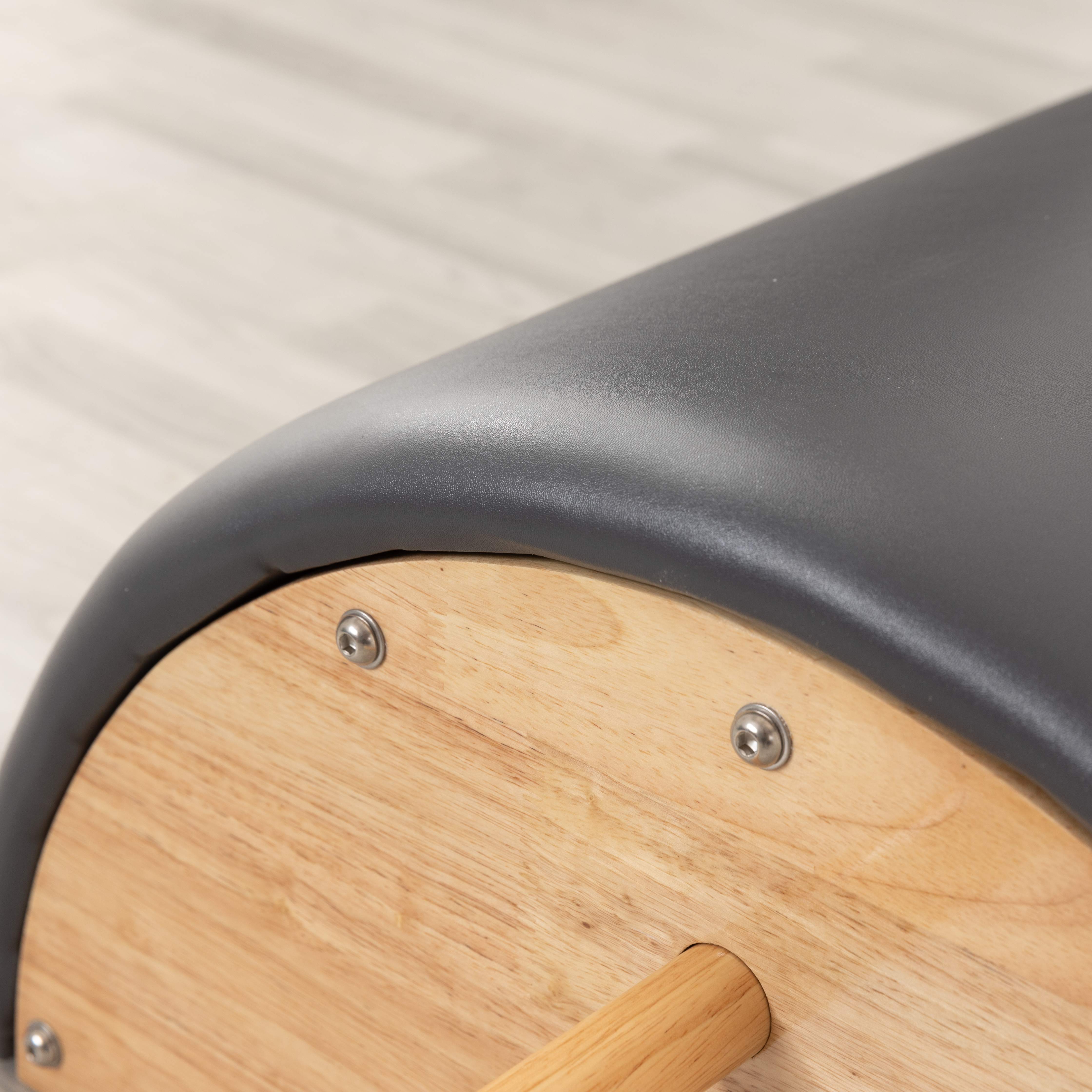
Safety extends beyond mechanical components to the materials used in upholstery and padding. Commercial equipment upholstery should use high-density foam (ensuring support and rebound) and durable PU leather meeting commercial standards of Martindale abrasion testing above 50,000 cycles. Contact points such as shoulder rests should feature anti-slip design to improve stability and comfort during high-intensity practice.
Summary: Commercial Pilates reformer safety design standards span seven dimensions: floor slip resistance, frame strength, spring safety, carriage stops, footbar latching, rope systems, and upholstery materials. Among these, the spring system represents the highest risk point due to its stored elastic potential energy — hook design, force consistency, and regular replacement cycles are critical. When selecting commercial equipment, do not focus solely on price and appearance — request frame load test certification, spring fatigue life data, and specific safety design documentation from the supplier. Safety standards are not "bonus features" — they are the minimum threshold for commercial Pilates equipment.