How Flat-Pack Pilates Equipment Reduces Logistics Risks for Fitness Importers

For fitness importers, wholesalers, and global distributors, Pilates equipment logistics has always been one of the most unstable links in the supply chain. Traditional fully assembled Pilates reformers, chairs, and barrels feature oversized frames, irregular shapes, and protruding structures, leading to high CBM occupation, low container utilization, frequent collision damage, complicated packaging, and unpredictable shipping costs. These common logistics risks easily cause profit loss, customer complaints, and delayed delivery schedules.
In recent years, flat-pack Pilates equipment has gradually become the mainstream choice for B2B bulk imports. Through modular disassembly, standardized flat packaging, and optimized structural design, it solves almost all pain points of traditional assembled shipping. This article analyzes how flat-pack solutions effectively reduce core logistics risks for fitness importers, covering space loss, transit damage, cost volatility, storage pressure, and cross-border delivery uncertainty.
The Core Logistics Risks of Traditional Assembled Pilates Equipment
Before understanding the advantages of flat-pack shipping, importers need to clarify the hidden risks of fully assembled Pilates machines in international transportation.
- Low container utilization and wasted space: Fully assembled reformers occupy large and irregular volumes with numerous gaps during container loading. A standard 40HQ container can only hold a limited number of units, resulting in extremely high freight costs per unit.
- High transit damage rate: Protruding frames, exposed pulleys, soft upholstery, and loose accessories are prone to extrusion, friction, and vibration damage during long sea voyages and multiple loading and unloading processes, leading to scratches, deformation, and padding peeling.
- Bulky wooden crate packaging risks: Traditional assembled equipment relies on heavy wooden fumigation crates, which increase packaging costs, container weight, and customs inspection risks, easily causing clearance delays.
- Warehouse and last-mile pressure: Oversized finished products occupy massive warehouse space, restrict inventory turnover, and increase difficulty in local distribution and door-to-door delivery.
- Unstable freight budgets: Irregular product sizes lead to inconsistent loading quantities for each container, making it impossible for importers to accurately control unit logistics costs.
Flat-Pack Design: Fundamental Solution to Volume and Space Risks
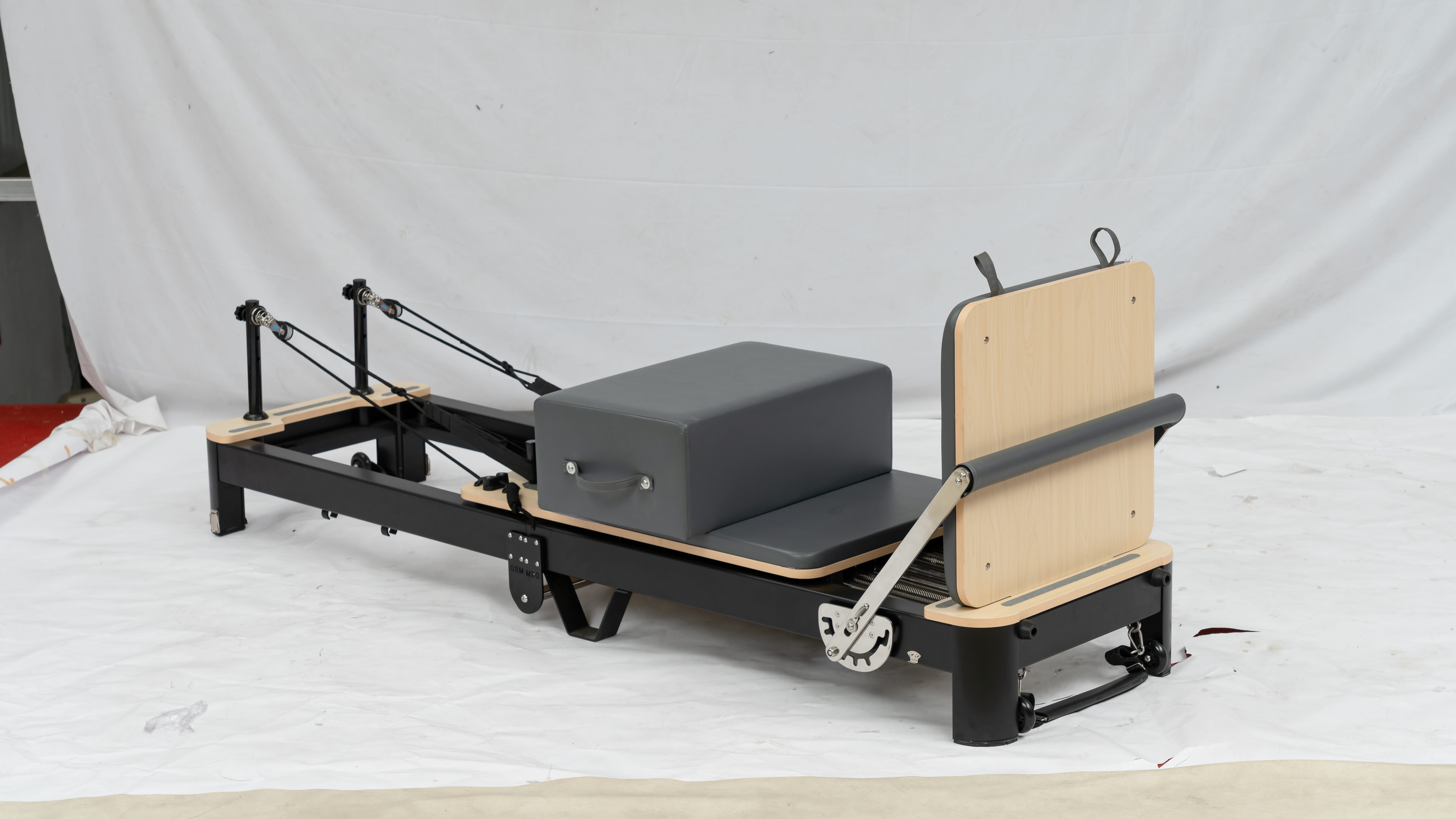
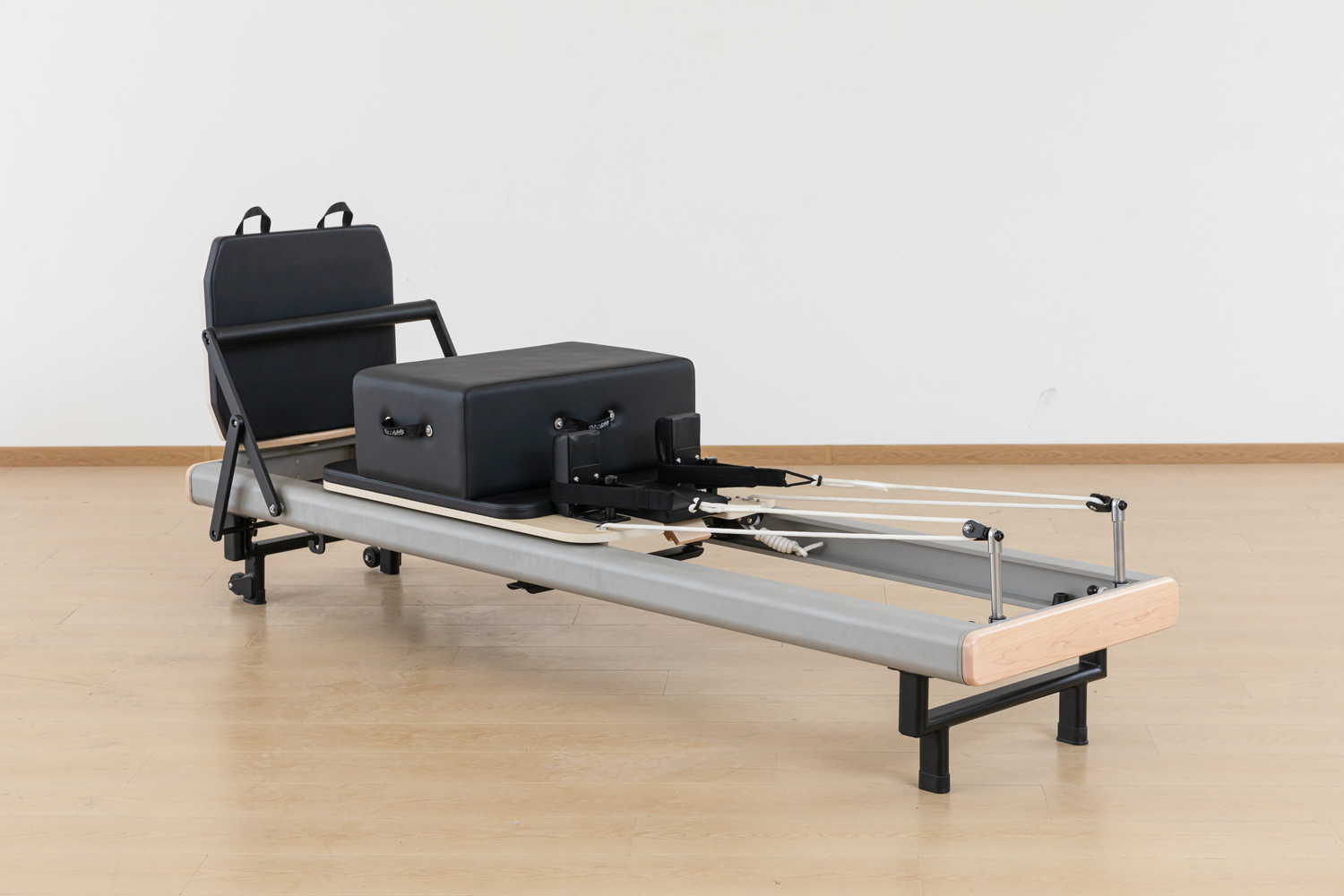
Flat-pack Pilates equipment adopts a detachable modular structure. All frames, rails, support feet, and accessories are disassembled into flat panels and standard parts, completely changing the spatial occupancy logic of traditional fitness equipment.
Compared with the average 1.0 CBM volume of a fully assembled commercial reformer, flat-pack models compress the volume to only 0.3–0.4 CBM per unit. The standardized flat carton design eliminates irregular gaps, greatly improving container filling rates. A single 40HQ container can load nearly three times more flat-pack units than assembled ones, maximizing every inch of container space and eliminating wasted shipping space.
For importers, this means significantly reduced ocean freight cost per unit, stable container loading plans, and accurate budget forecasting for each batch of orders, completely solving the risk of uncontrollable logistics costs caused by low space utilization.
Lower Transit Damage Rate: Safer Structure and Packaging Protection
Product damage during transportation is one of the biggest hidden losses for fitness importers, often resulting in after-sales compensation, returned goods, and customer trust loss. Flat-pack packaging fundamentally reduces damage risks from two dimensions: structural stability and standardized protection.
After disassembly, flat-pack parts have no protruding structures or vulnerable exposed components. All metal frames, wooden parts, and upholstery accessories are independently wrapped with EPE foam, corner protectors, and anti-collision cartons. The flat and neat stacking method avoids mutual extrusion and friction between equipment during sea transportation and container stacking.
In addition, flat-pack cartons have uniform specifications, ensuring tight and stable stacking inside the container without shaking or displacement during vessel turbulence. Industry data shows that flat-pack Pilates equipment reduces the transit damage rate by over 90% compared with traditional assembled products, greatly lowering importers’ after-sales maintenance and replacement costs.
Simpler Customs Clearance and Lower Inspection Risks
Traditional wooden fumigation crates for assembled equipment often trigger additional customs inspections in EU, Australian, and American markets due to non-standard wooden packaging, easily causing clearance delays and demurrage fees.
Flat-pack Pilates equipment adopts reinforced exported carton packaging without wooden crates, exempt from fumigation procedures. Standardized packaging specifications and consistent product appearance improve customs passing efficiency and reduce the probability of random inspection. Meanwhile, flat-pack parts have clear material classification and complete component lists, helping importers declare accurately and avoid clearance risks caused by unclear product attributes.
For cross-border bulk importers, this means shorter delivery cycles, zero demurrage losses, and more stable supply chain schedules.
Reduced Warehouse Inventory and Last-Mile Delivery Risks
After arriving at the destination port, oversized assembled Pilates equipment brings huge pressure on warehousing, inventory management, and secondary distribution. It requires large storage space, is inconvenient for classification and sorting, and increases the difficulty of last-mile delivery to studios and retail customers.
Flat-pack products are stacked flatly in cartons, featuring small floor space, neat arrangement, and flexible inventory management. Importers can store more inventory in limited warehouse space, improve capital turnover efficiency, and avoid overstocking risks. Meanwhile, flat cartons adapt to various transportation vehicles, supporting flexible batch distribution and small-batch retail delivery, perfectly matching B-end wholesale and C-end e-commerce sales models.
Stable Cost Control: Avoid Logistics Price Volatility Risks
International ocean freight prices fluctuate greatly with seasons, oil prices, and shipping line supply. Traditional low-loading-efficiency assembled equipment is more affected by freight fluctuations, with unit costs rising sharply during peak shipping seasons.
Flat-pack’s high container utilization dilutes fixed ocean freight costs. Even in peak seasons with rising shipping prices, the single-unit logistics cost remains stable, enabling importers to maintain competitive product pricing and avoid profit compression caused by logistics cost fluctuations. More predictable loading quantities and costs also support long-term order planning and stable customer quotation strategies.