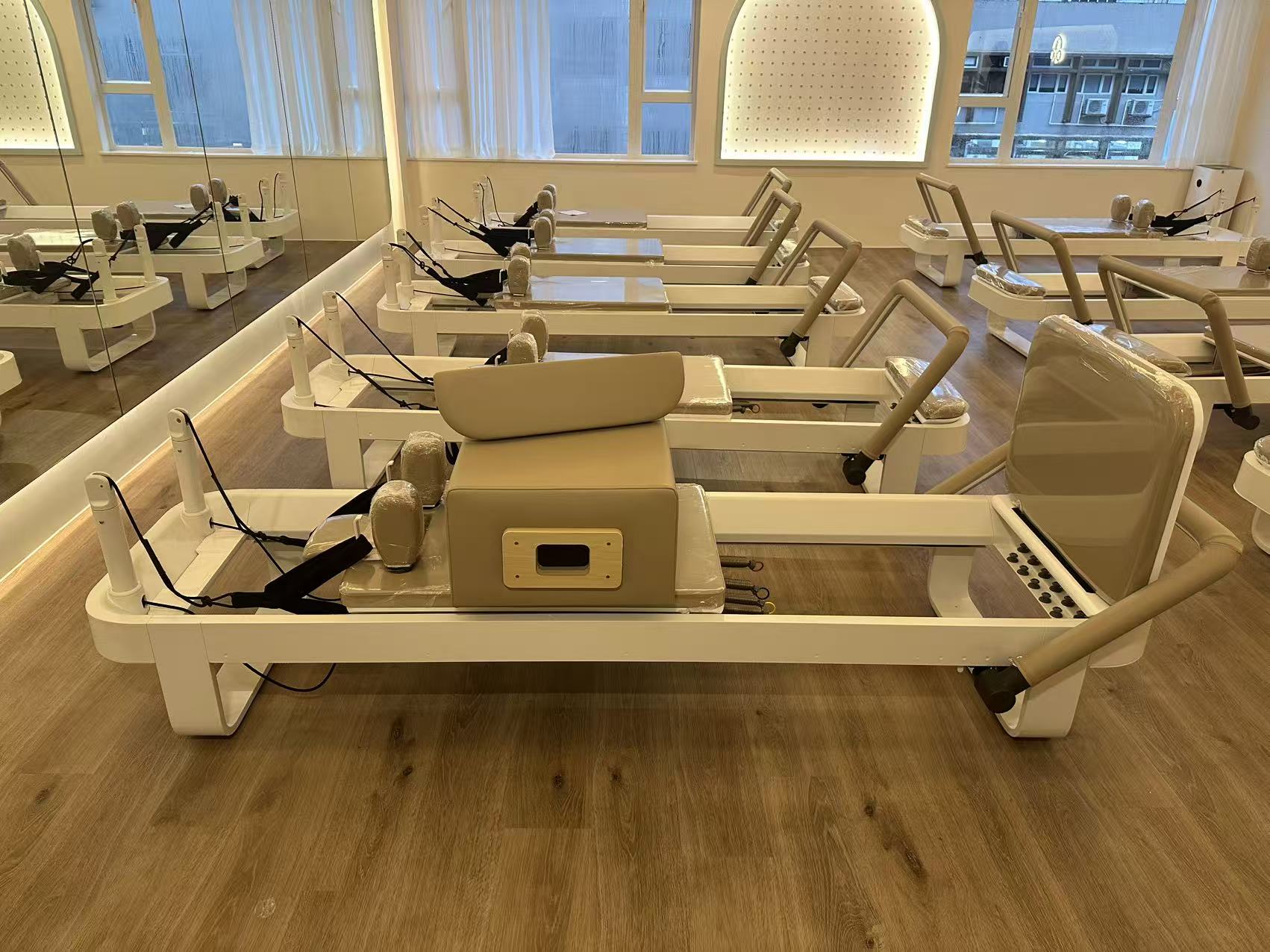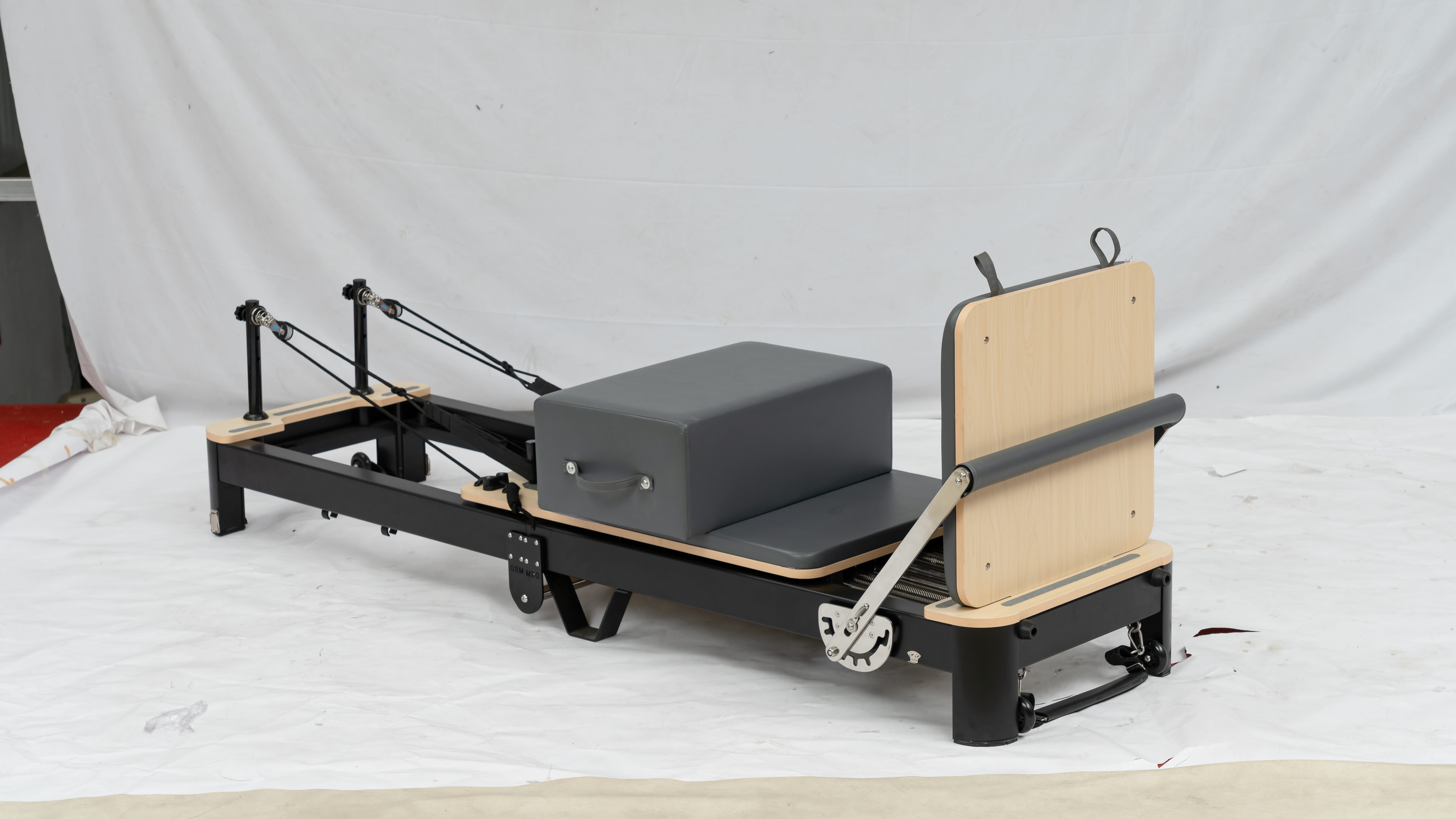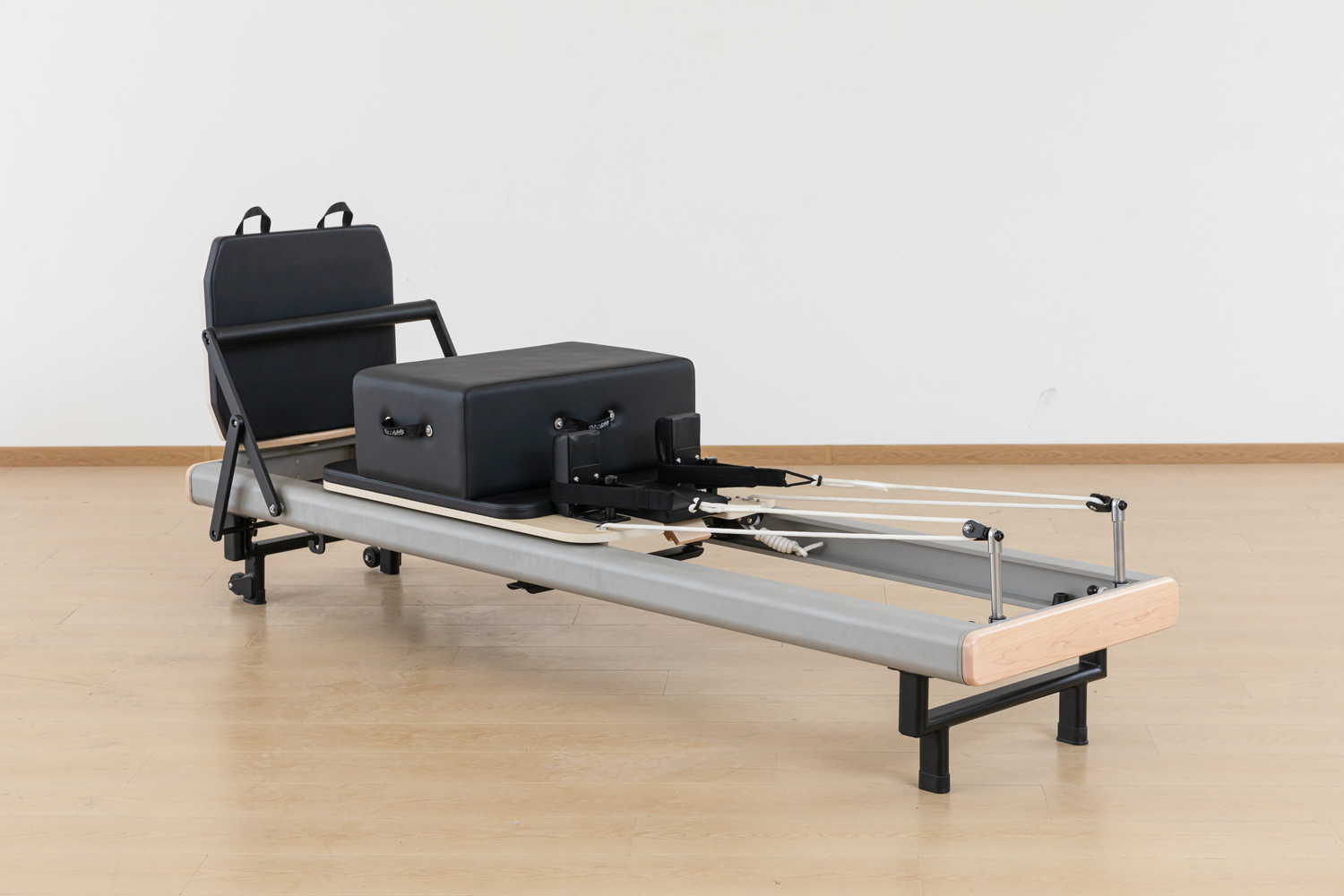
Compact Aluminum Pilates Reformer: Lightweight & Easy Storage

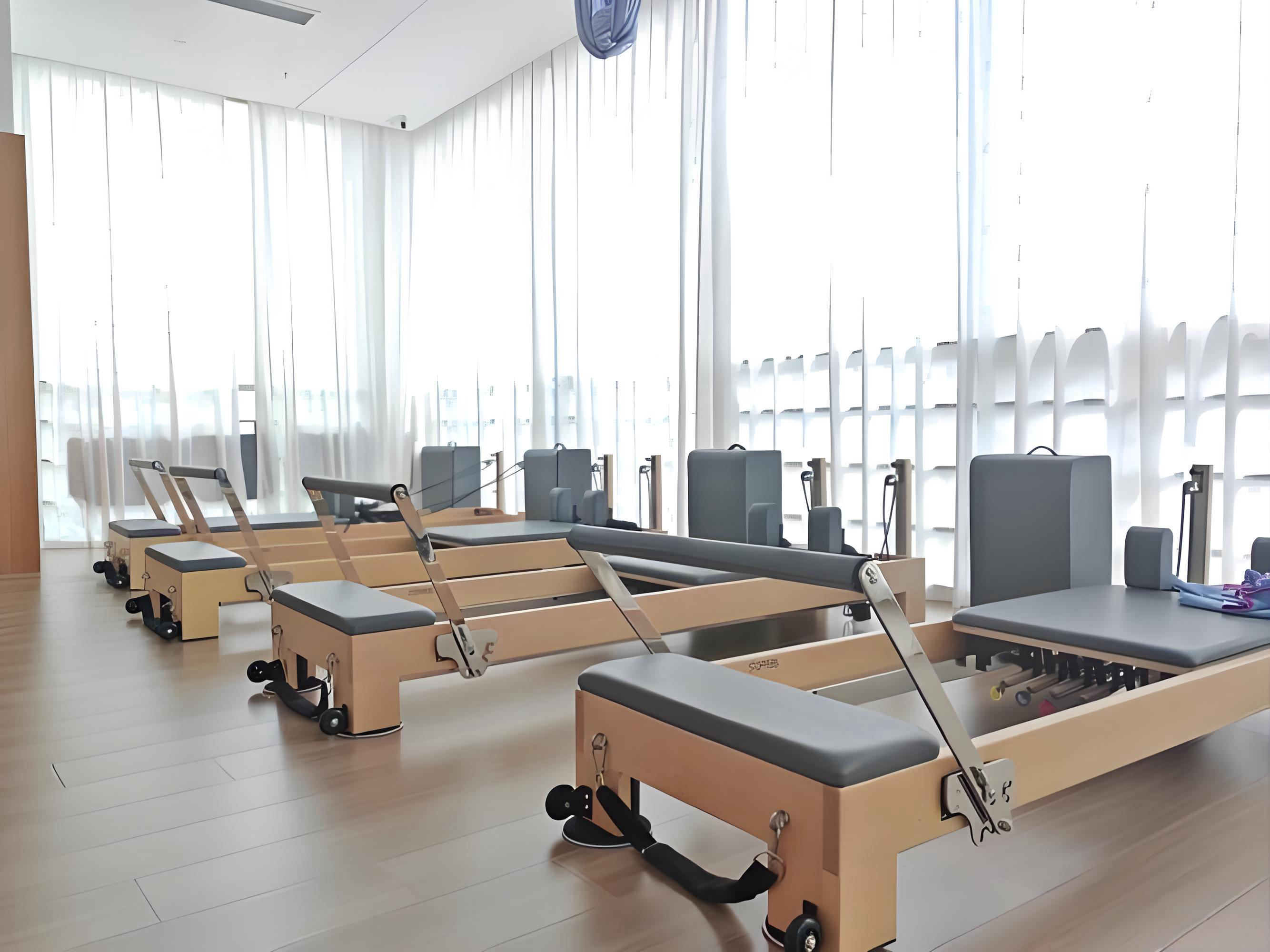
Aluminum reformers have become a popular choice for home Pilates enthusiasts and space-constrained studios. Compared to traditional steel-frame reformers, the key advantage of aluminum is that it significantly reduces equipment weight while maintaining adequate strength and stability. A standard steel reformer typically weighs 70-100kg, while an equivalent aluminum model can weigh between 35-68kg.
This weight reduction is not about "cutting corners"—it comes from the physical properties of aluminum itself. Aircraft-grade aluminum alloys (such as 6063) are approximately 30% lighter than steel at the same volume, while still providing load capacities exceeding 150kg through intelligent extrusion design and structural optimization. One user noted: "The aluminum frame is light but solid, gliding smoothly".
I. Why Aluminum Is Ideal for Home Use
Corrosion resistance: Aluminum's natural oxide layer provides self-protecting rust resistance. Whether facing humid southern rainy seasons or indoor-outdoor temperature differences that cause condensation, aluminum reformers hold up far better than steel frames, which risk paint peeling and rust. This "low-maintenance" quality makes aluminum reformers a durable choice for home environments.
Lightweight yet stable: The weight advantage of aluminum directly translates to everyday usability. One Hangzhou instructor shared: "Unfold and it's stable, press lightly and it folds"—in a shared space under 25㎡, she could complete equipment storage, floor cleaning, and class transition within 10 minutes. This "unfold to use, fold to go" convenience is difficult to achieve with steel frames.
Low thermal expansion: Aluminum's coefficient of thermal expansion is lower than steel, meaning better dimensional stability in temperature-changing environments. This translates to joints staying tight and components remaining properly aligned even after repeated folding and angle adjustments.
II. Foldable Design: Making "Large Equipment" Space-Efficient
One of the aluminum reformer's core strengths is its natural compatibility with foldable designs.
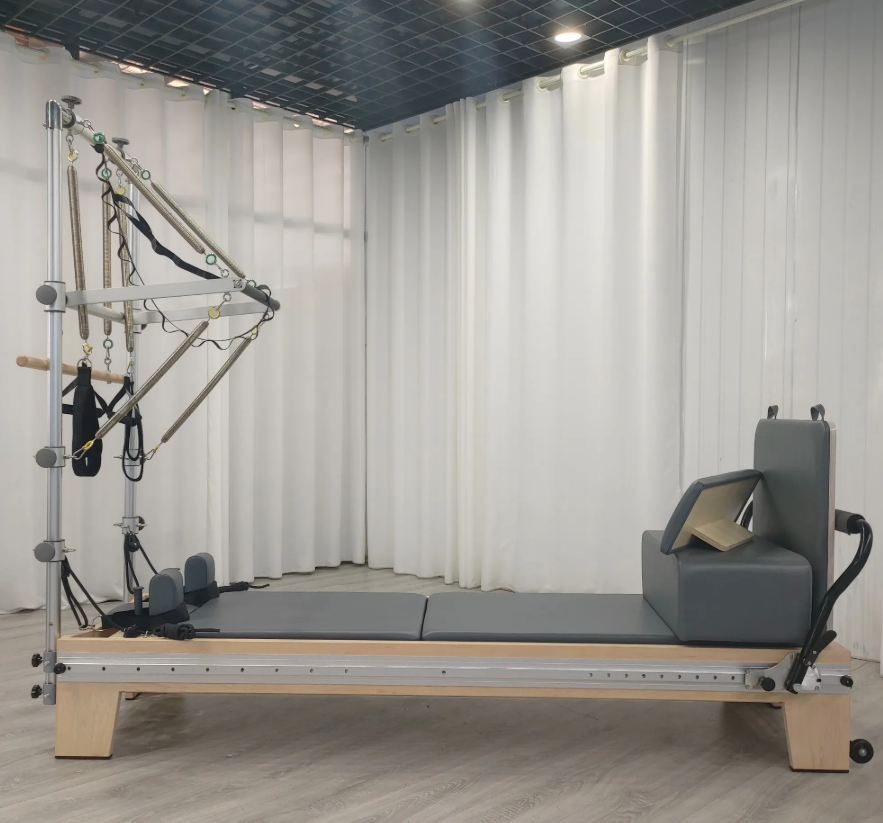
Currently available foldable aluminum reformers typically reduce to 15-40cm in thickness when stored. A standard 232cm bed can fold down to approximately 122cm height and 39cm thickness—ready to stand against a wall, slide beside a wardrobe, fit into a sofa gap, or tuck into a balcony corner.
Key storage metrics:
·Folded thickness: Quality models achieve 15-25cm
·No part removal needed: Premium foldable designs can be stored vertically without removing springs or shoulder rests
·Built-in transport wheels: Most aluminum foldable models include 4-6 base wheels for easy single-person movement
One user described the experience: "When folded, it's as thick as a dining table—completely invisible in the balcony corner".
III. Performance Without Compromise: Key Aluminum Reformer Metrics
Lightweight and folding convenience are only valuable if the training experience doesn't suffer. Here are the key performance metrics to evaluate:
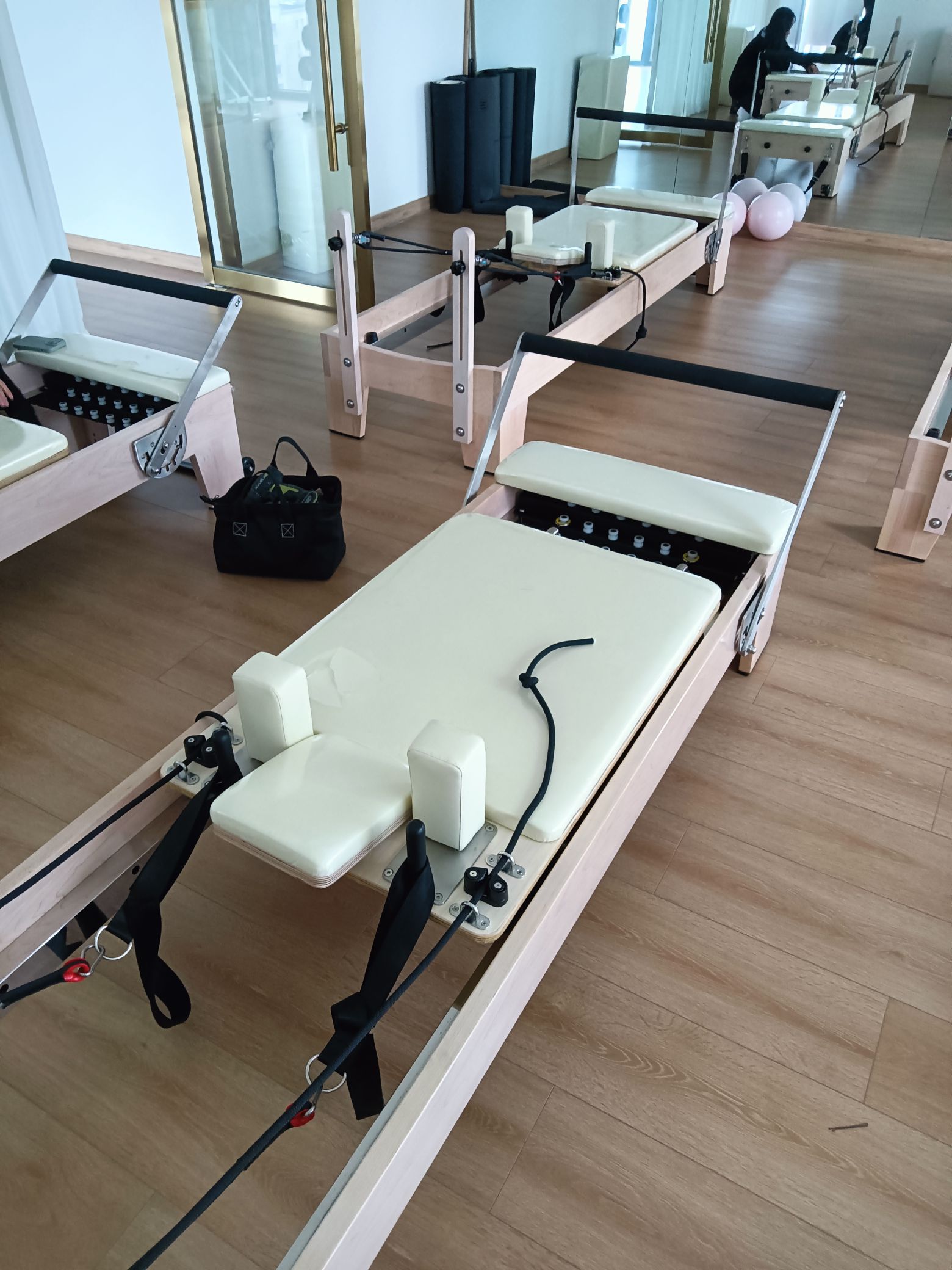
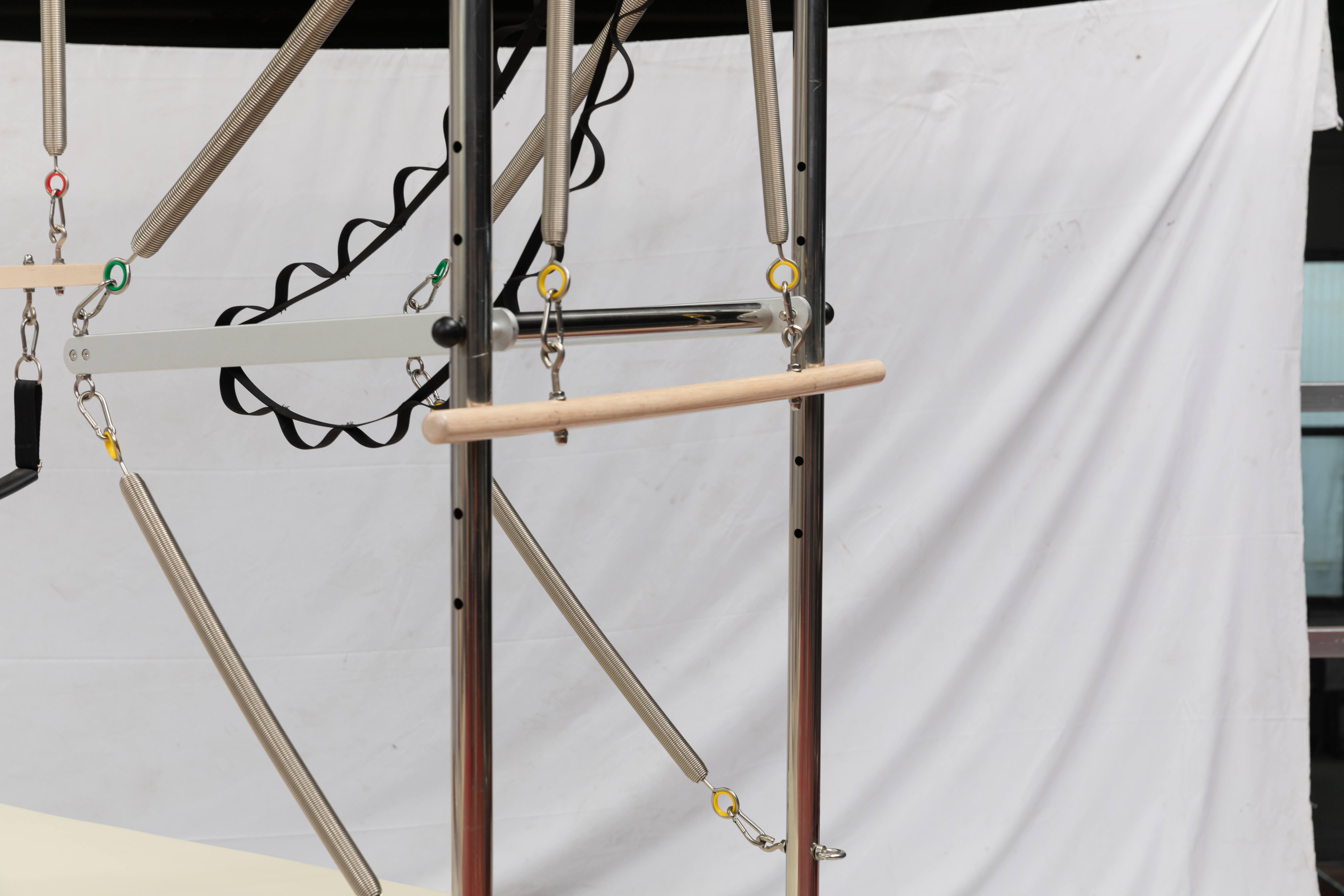
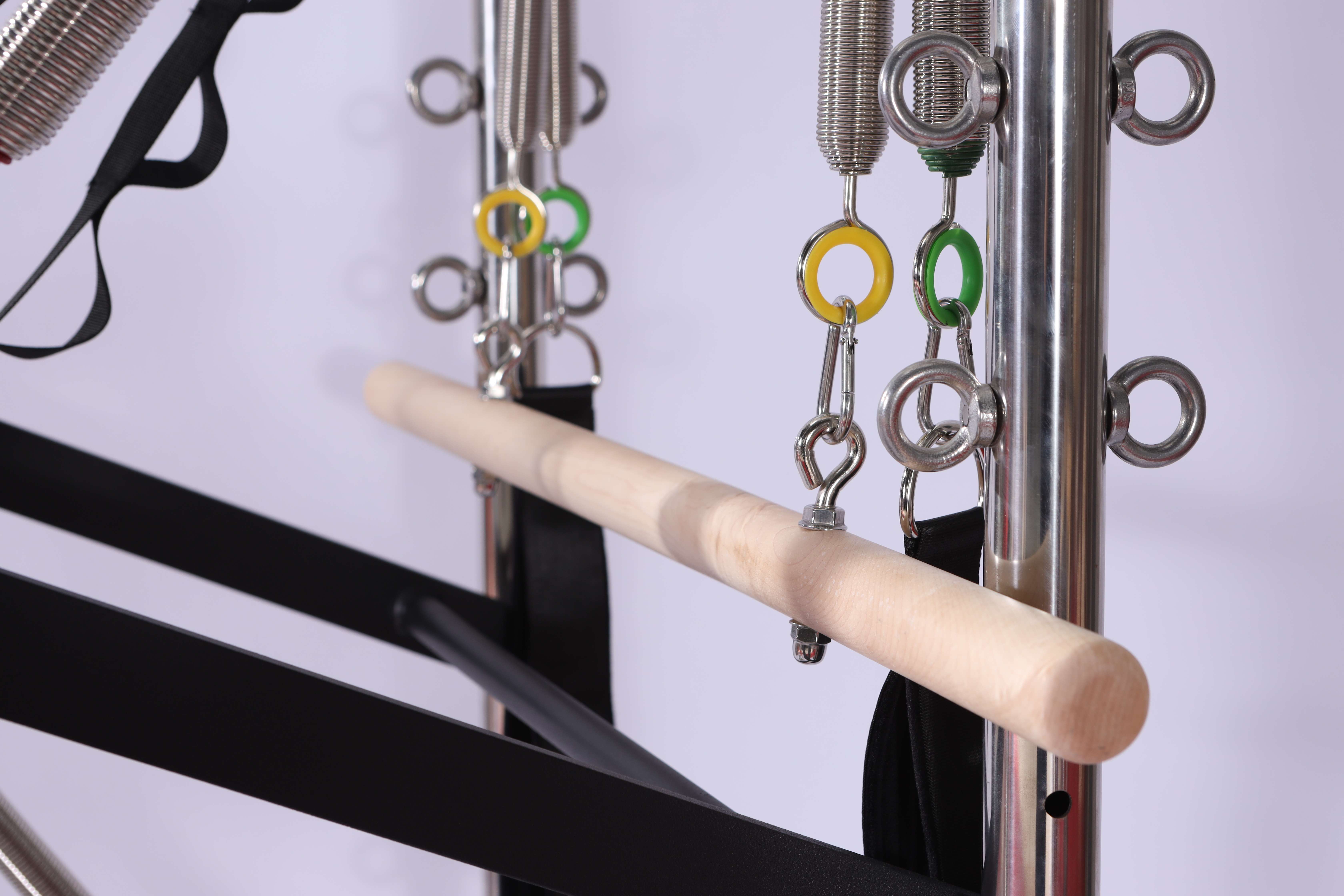
Spring system: Quality aluminum reformers come with 5-6 graded steel springs—typically 2 heavy + 2 medium + 1 light, or 3 red + 1 yellow + 1 blue configurations. Spring material and tension precision directly impact workout feel.
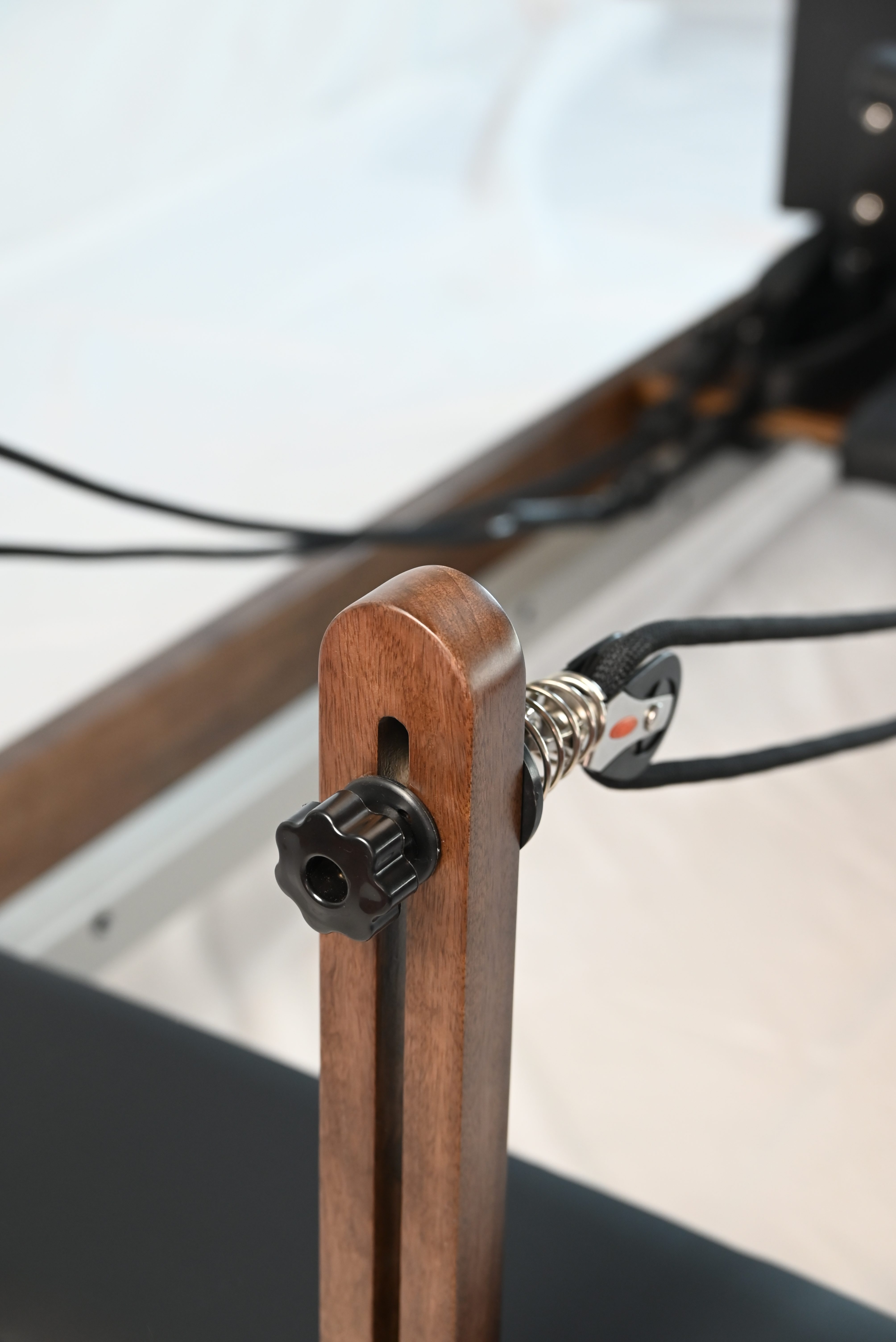
Frame stability: The folding mechanism's hinges and locking design determine whether the unfolded bed is "rock solid." One user emphasized: "The key to a space-saving reformer isn't 'thinness'—it's whether the hinge has double-bearing loading and whether the base auto-locks into a triangular stable state when unfolded".
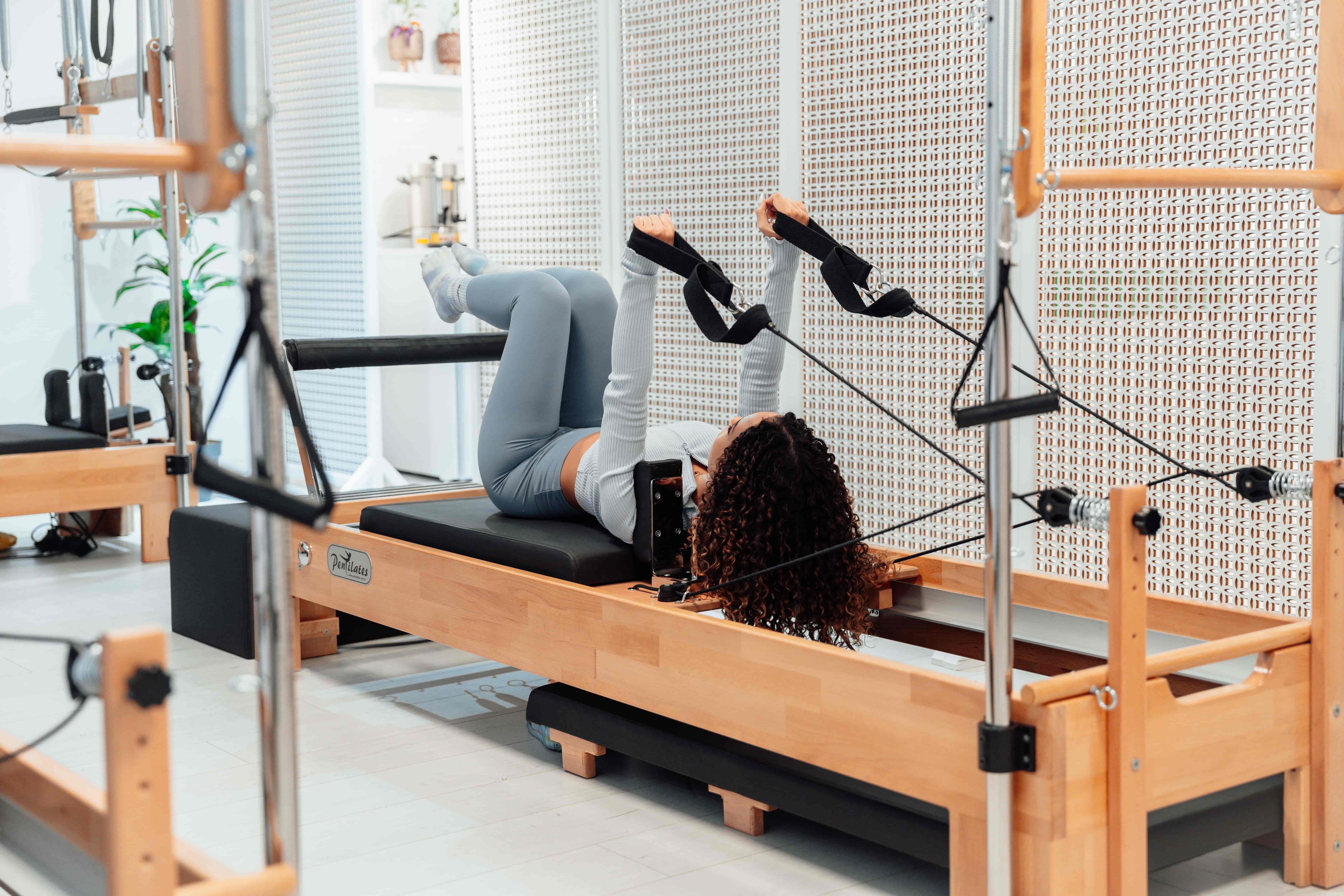
Glide smoothness: The carriage should run silently and smoothly on aluminum rails. One review noted: "The first time I did the Hundred on the aluminum bed, my lower back felt gently supported—rock steady during leg lifts and roll-ups".
Weight capacity: Home aluminum reformers typically support 110-200kg, covering the vast majority of home user needs.
IV. Three Key Buying Points
First, verify actual folded dimensions. Folded size specifications vary widely across brands. Prioritize models with folded thickness under 25cm that can stand vertically against a wall. Models exceeding 40cm folded thickness will disappoint in actual storage scenarios.
Second, examine hinge and lock mechanisms. Folding bed stability depends on hinge material and lock design. Prioritize models with "double-bearing hinges" and "auto-locking when unfolded"—avoid cheap alternatives relying solely on straps or simple pins.
Third, check warranty policy. Quality aluminum reformers typically offer 5-10 years on the frame and 2-3 years on parts. This also serves as a quality indicator.
Summary: The aluminum reformer is a solution designed for home users with limited space but undiminished training needs. It resolves the conflict between "large equipment" and "small space" through materials science—delivering professional training functionality at a weight and storage volume that steel frames simply cannot match. If you don't have a dedicated workout room but want your own Pilates reformer, a foldable aluminum model deserves serious consideration.