Pilates Machine Height Adjustment Solutions for Short/Tall Users

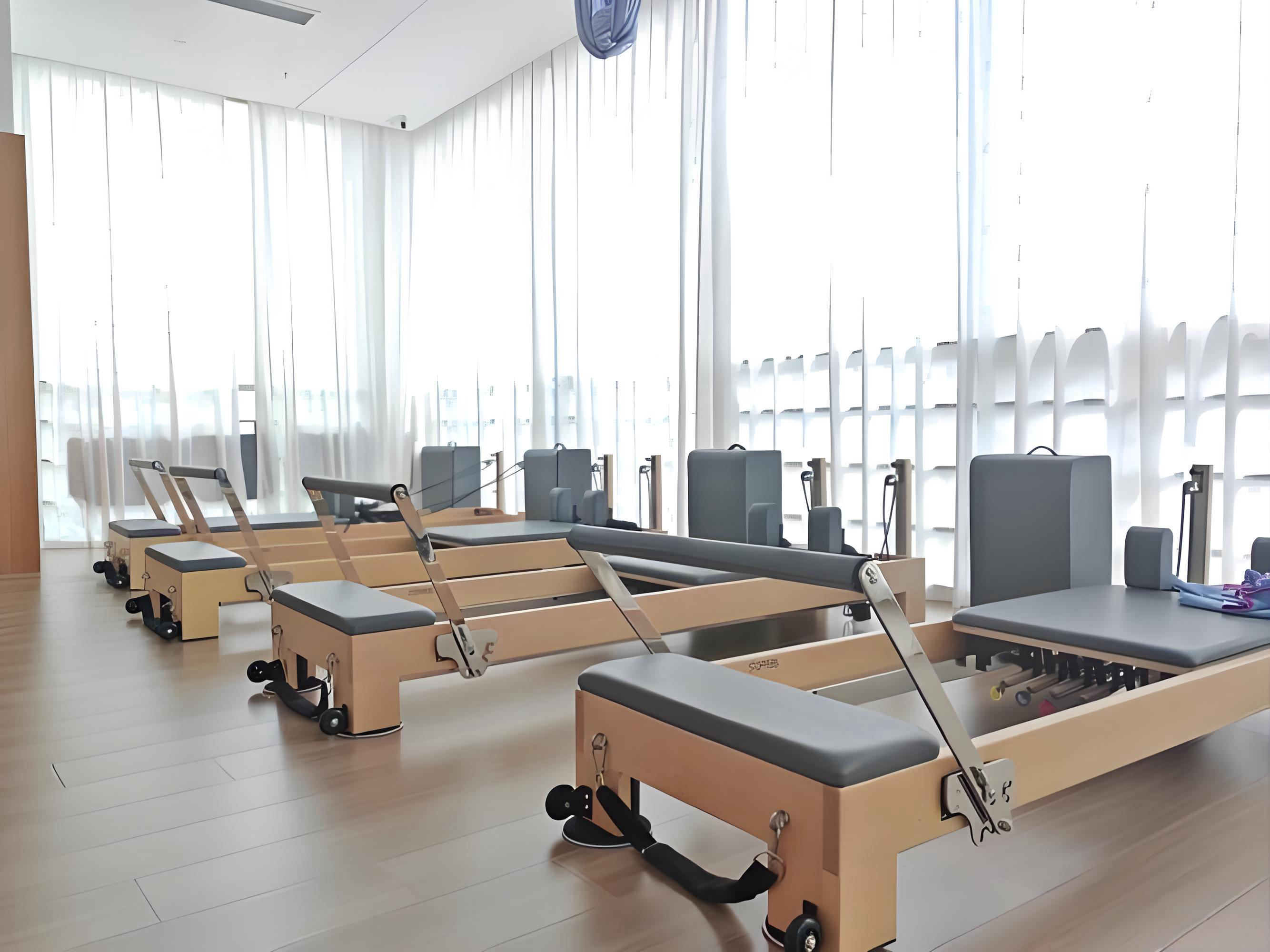
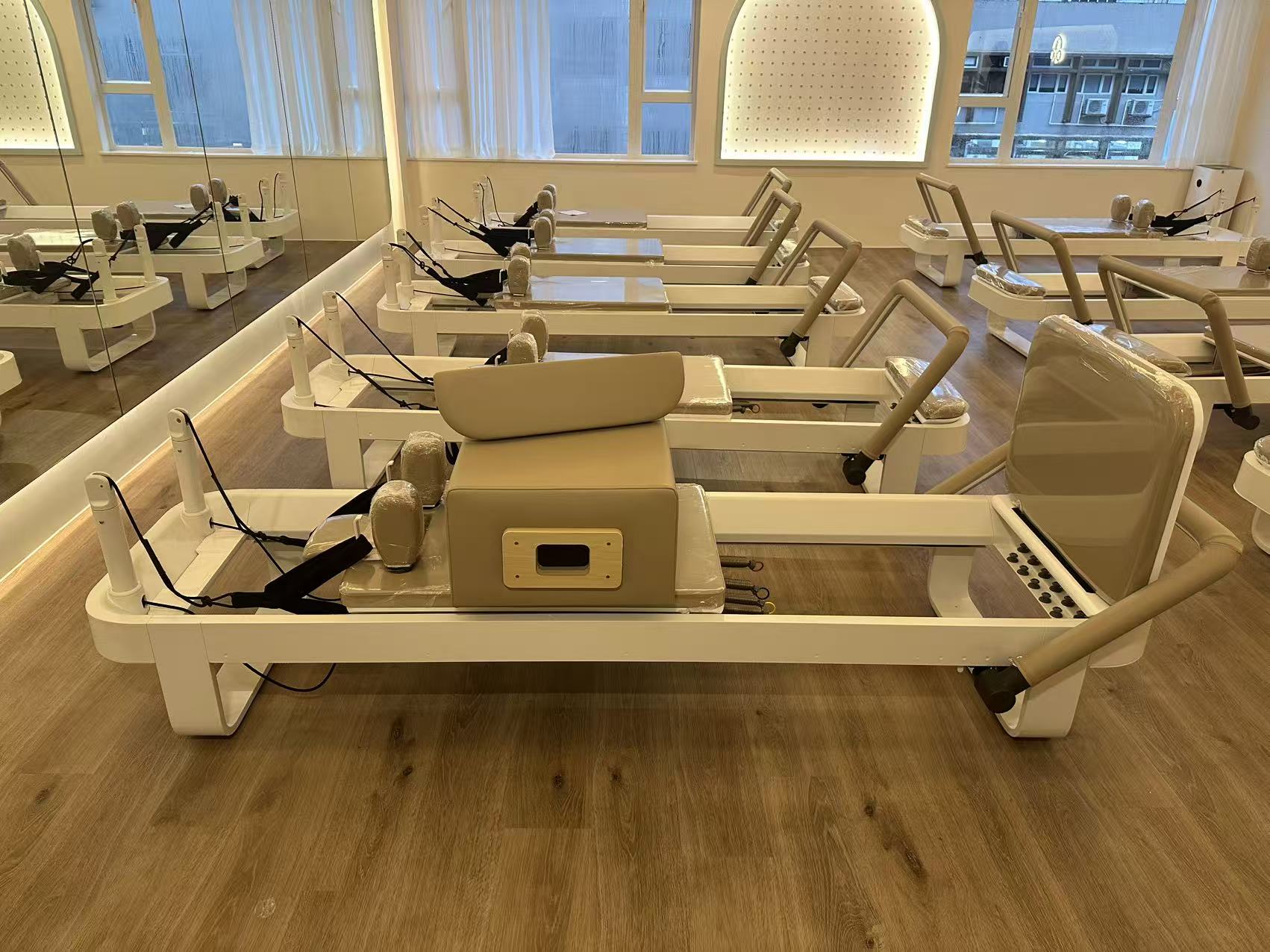
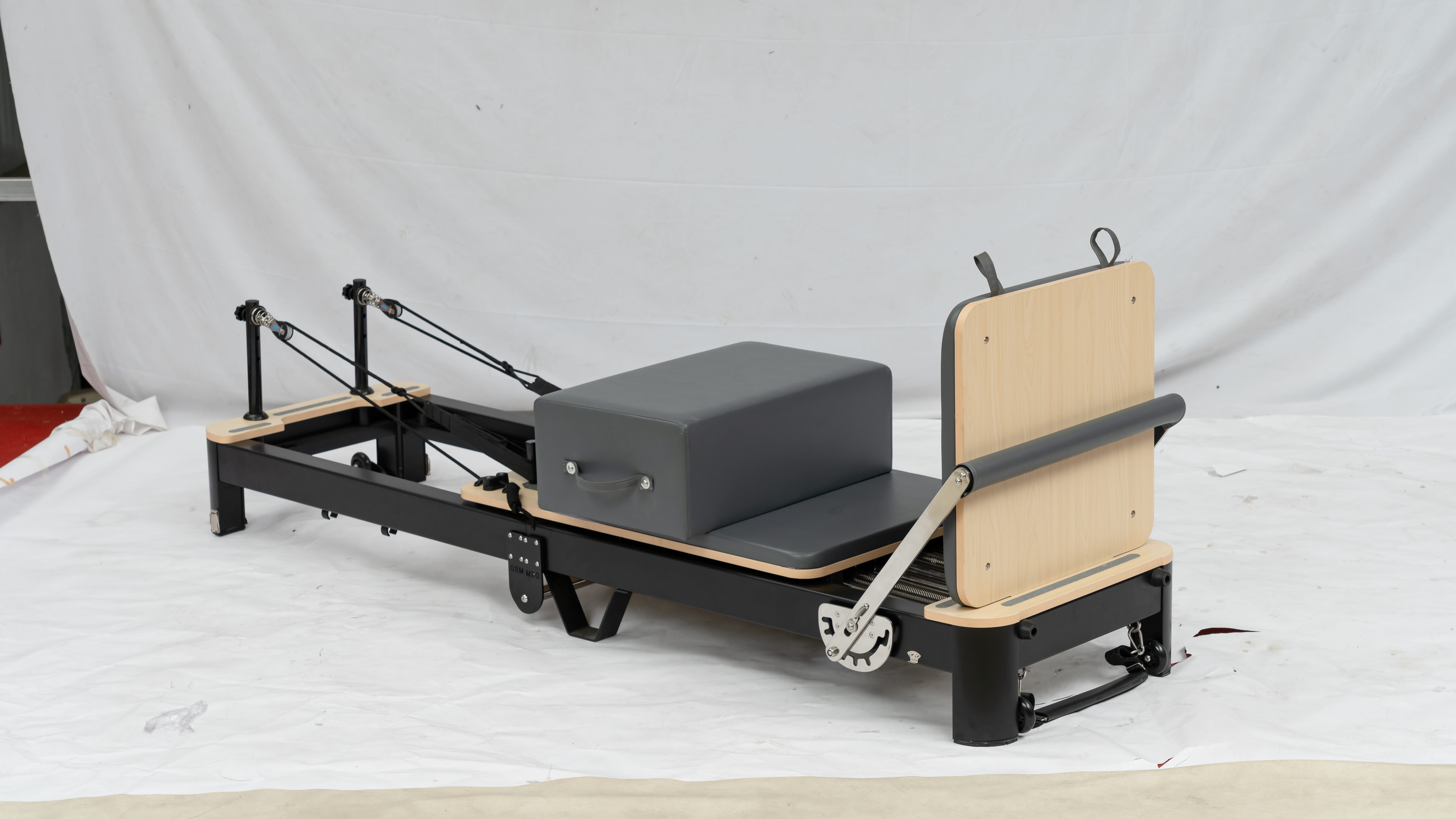
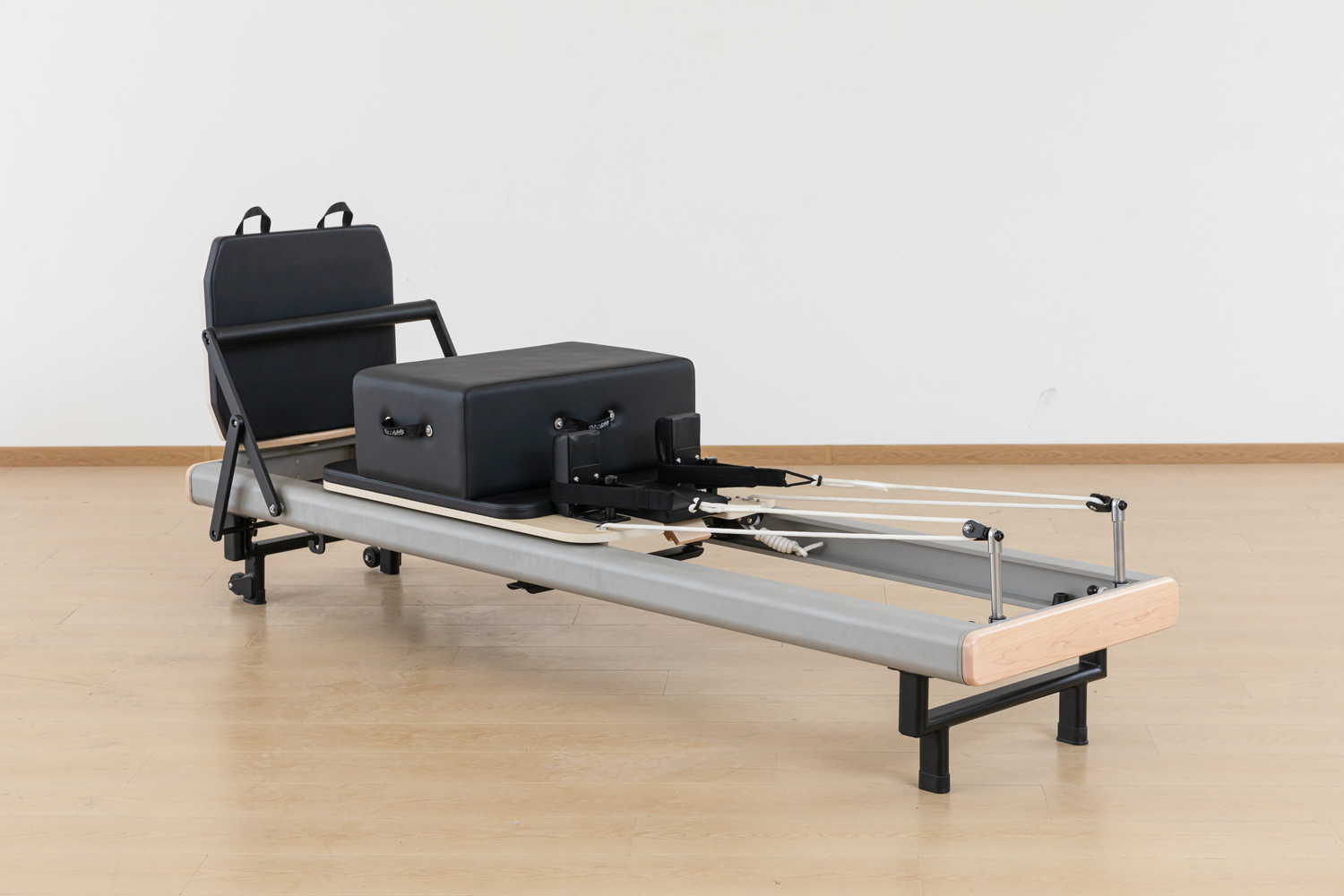
The "universal size" of Pilates equipment doesn't really fit everyone. A standard Reformer feels completely different for a 155cm user versus an 185cm user — footbar distance, headrest height, and shoulder rest position all affect movement initiation and movement patterns. This article provides practical adjustment solutions for short and tall users across three dimensions: Reformer length selection, footbar adjustments, and shoulder/headrest positioning.
I. Choosing the Right Reformer Length
Reformer length is the foundation of height compatibility. If the bed is too long or too short for you, no amount of fine-tuning can fully compensate.
Based on decades of manufacturing experience, Gratz Pilates provides the following height-to-length reference:
·80" (~203cm) model: Suitable for users under 5'8" (172cm) .Longer Reformers can be "too long" for shorter individuals, creating discomfort in starting positions.
·86" (~218cm) model: Suitable for users between 5'8" and 6'2" (172-188cm) . This is the most popular choice for studios, accommodating the widest range of client heights. Shorter users typically have no issues with this length.
·89" (~226cm) model: Suitable for users over 6'2" (188cm) . Taller users need longer carriage travel to perform full-body stretches and advanced movements.
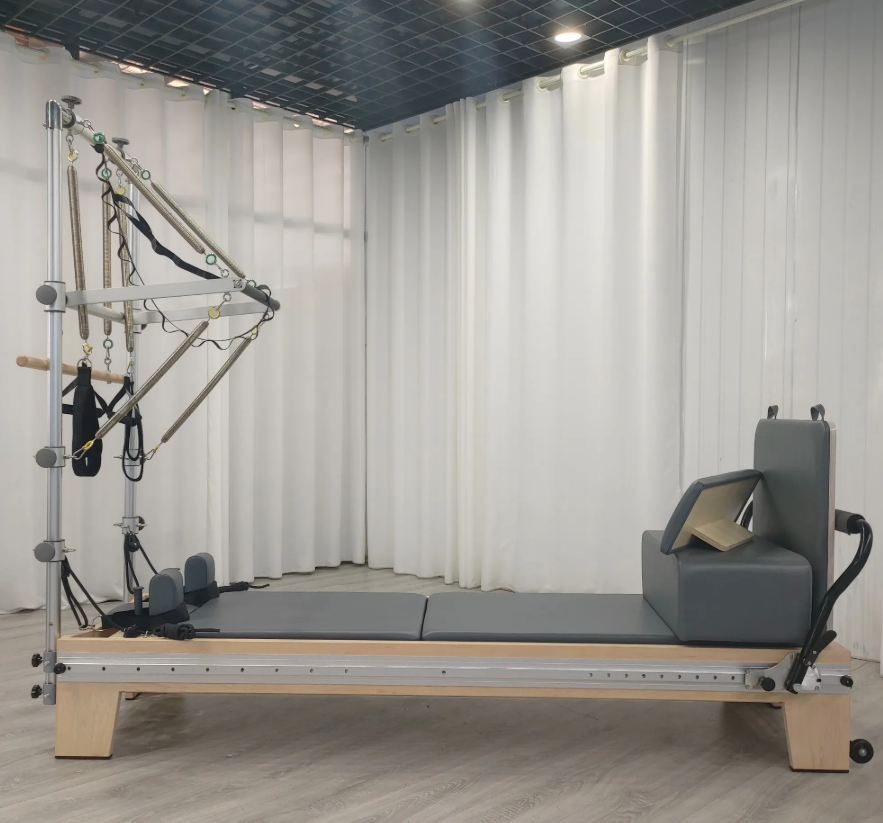
For users over 6'2", Balanced Body offers the Allegro Reformer STRETCH — 46cm longer than the standard version, with a wider carriage and 5-position adjustable footbar.
Selection Advice: If you're purchasing equipment for a studio with diverse client heights (155-185cm), prioritize the 86"/218cm length — it's the most inclusive option. For dedicated home use, select based on the primary user's height.
II. Footbar Height and Position Adjustment
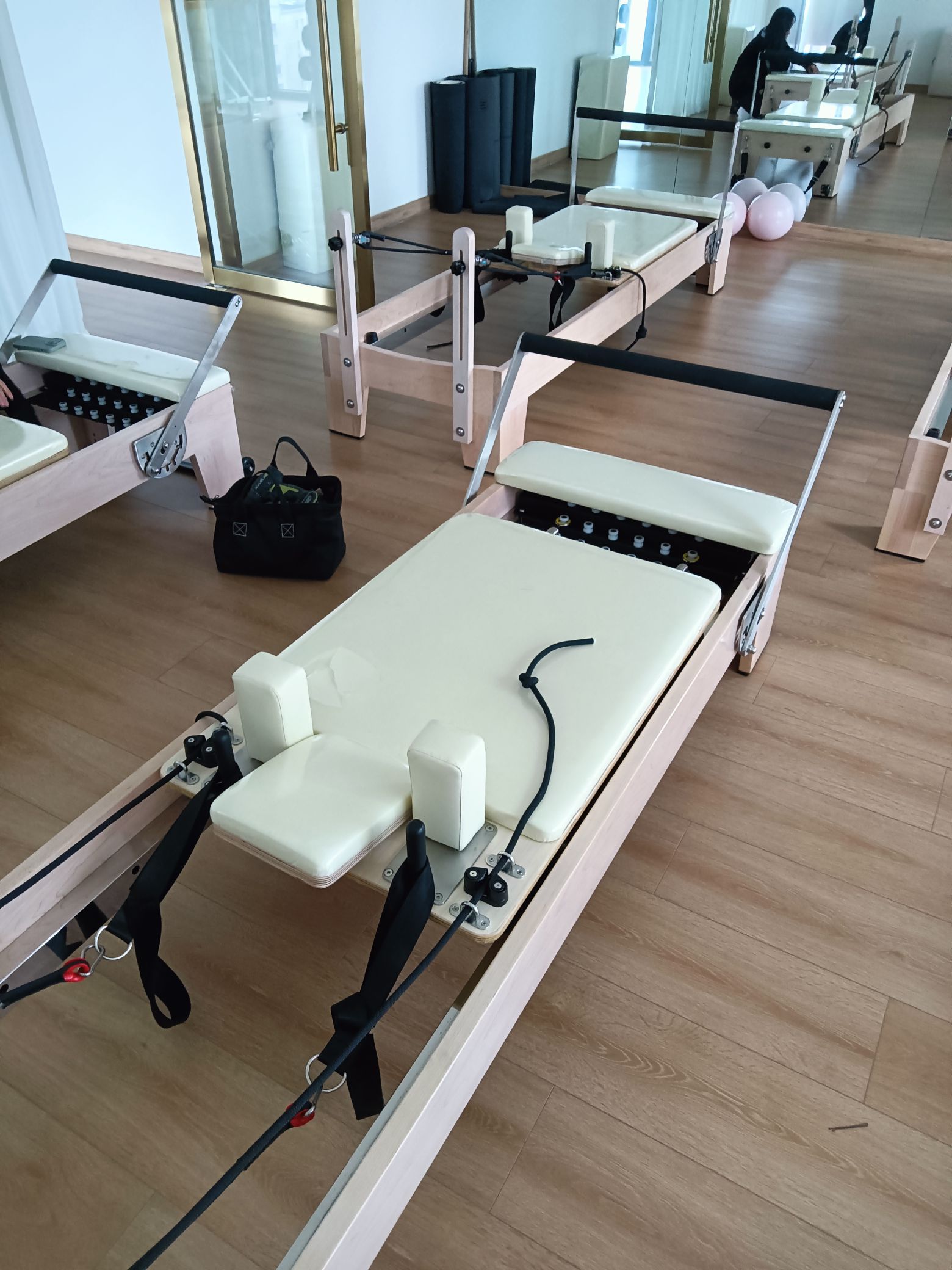
The footbar is the most frequently adjusted component — its position determines carriage starting position and hip flexion angle. Different brands offer varying levels of adjustment precision.
Balanced Body's Revo Footbar/Spring Bar system features 5 carriage stop positions, allowing the carriage to start from different positions:
·Hole 1 (closest to footbar end) : Under 5'0" (152cm) — short users, requiring increased hip / knee flexion
·Hole 2: 5'0"–5'2" (152–157cm) — shorter-medium height
·Hole 3: 5'5"–5'9" (165–175cm) — medium height (most common)
·Hole 4: 5'9"–6'0" (175–183cm) — medium-tall height
Hole 5 (furthest from footbar end) : Over 6'0" (183cm) — tall users, or those with limited hip / knee flexion
Balanced Body's Infinity Footbar provides 32 horizontal adjustment positions, covering nearly all user heights. The adjustment principle: when the carriage is fully pushed out for leg exercises, the user's hip flexion angle should be slightly less than 90 degrees. Tall users should select positions that move the footbar further from the shoulder rests; shorter users should select positions that bring it closer.
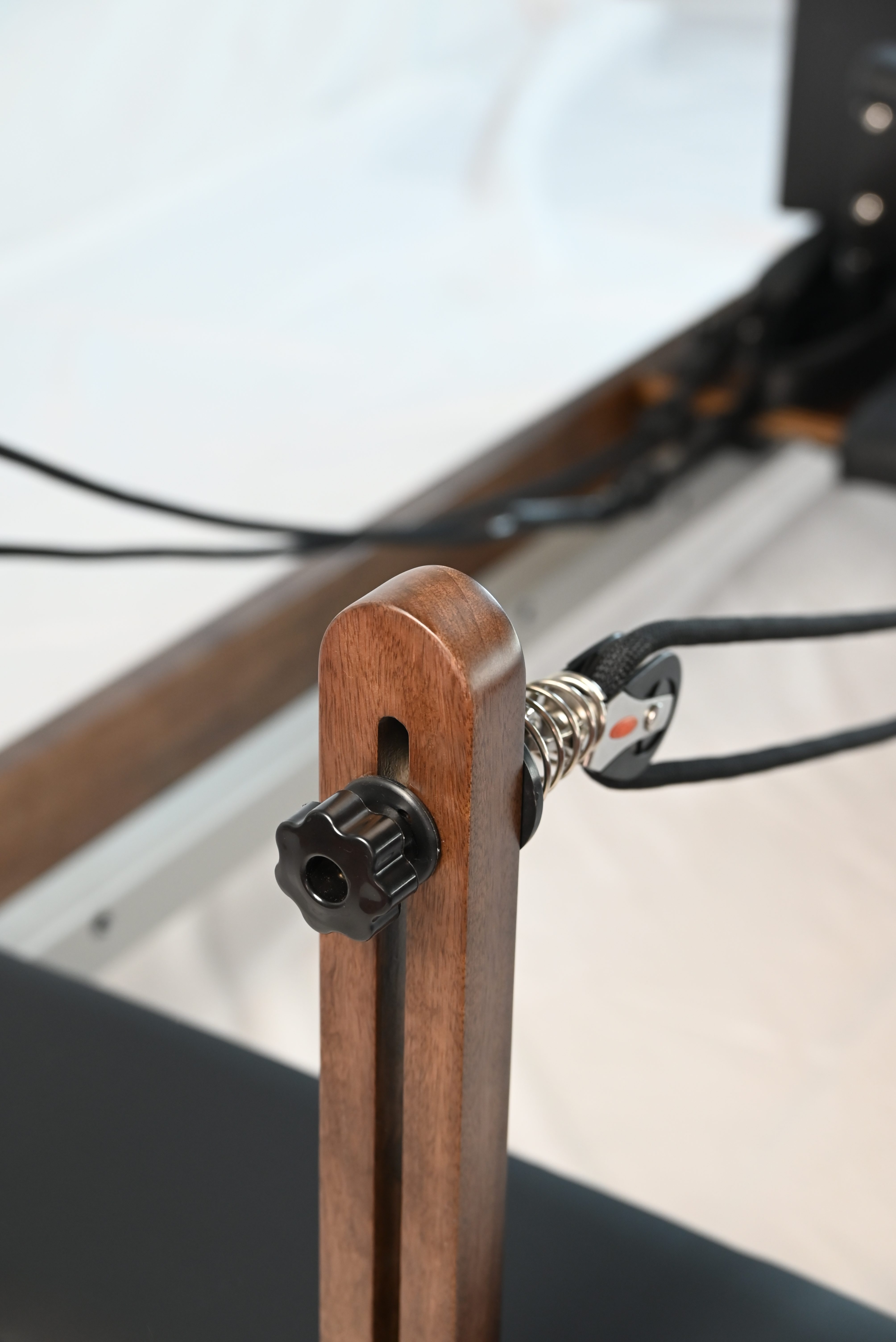
For standard footbars (non-adjustable carriage start) , users can change footbar height by placing the support rod in different slots. The Revo Footbar has 3 height slots — the high position shortens the distance between shoulder rests and footbar, suitable for shorter users.
III. Shoulder Rest and Headrest Adjustment
Shoulder rests serve not only as support but as "spatial cues" — helping users keep shoulder blades down and avoid shrugging. For shorter users, shoulder rests may be too far apart, preventing stable shoulder placement.
Personal Hour recommends the following for users under 5'0" (152cm):
·Add or modify padding on shoulder rests to reduce the distance between them, matching narrower shoulder width
·Adjust the fore-aft position of shoulder rests so shoulders rest naturally against them, not "reaching" or being "crowded"
Headrest adjustment similarly affects cervical spine alignment. Balanced Body's Studio Reformer offers three headrest positions:
·Low (flat) : Suitable for users with relatively flat thoracic spines and shallow ribs — used for leg exercises and any supine work
·Medium: The most common setting
·High: Suitable for users with forward head posture or deeper ribs, helping achieve proper cervical alignment
Instructor Tip: If headrest positions are still uncomfortable, add a folded towel to increase thickness or use it in place of the headrest to fine-tune height.
IV. Overall Reformer Height Adjustment
For Reformer floor height: Align-Pilates offers leg extension accessories for C-Series Reformers, raising the bed to 42cm. This is suitable for:
·Users who have difficulty bending down or standing up (e.g., seniors, rehab clients)
·Those wanting to perform mat-based or off-Reformer exercises at a higher elevation
Balanced Body Allegro Reformer offers optional legs to raise the bed from 17cm to the standard 36cm height.
V. Summary
Height adaptation on Pilates equipment doesn't end with "buying the right bed" — it requires systematic adjustment of multiple components. Here's a quick checklist for different user heights:
For short users (under 5'3"/160cm) :
·Choose 80"/203cm Reformer length
·Set carriage start to hole closest to footbar end
·Set footbar to high position (shortens distance to shoulder rests)
·Use high headrest position
·Add padding to shoulder rests if too wide
For average-height users (5'5"-5'11"/165-180cm) :
·Choose 86"/218cm length (most versatile)
·Use carriage holes 3-4
·Use medium headrest position
For tall users (over 6'2"/188cm) :
·Choose 89"/226cm or extended-length model
·Set carriage start to hole furthest from footbar end
·Ensure carriage travel is sufficient for full-body stretches