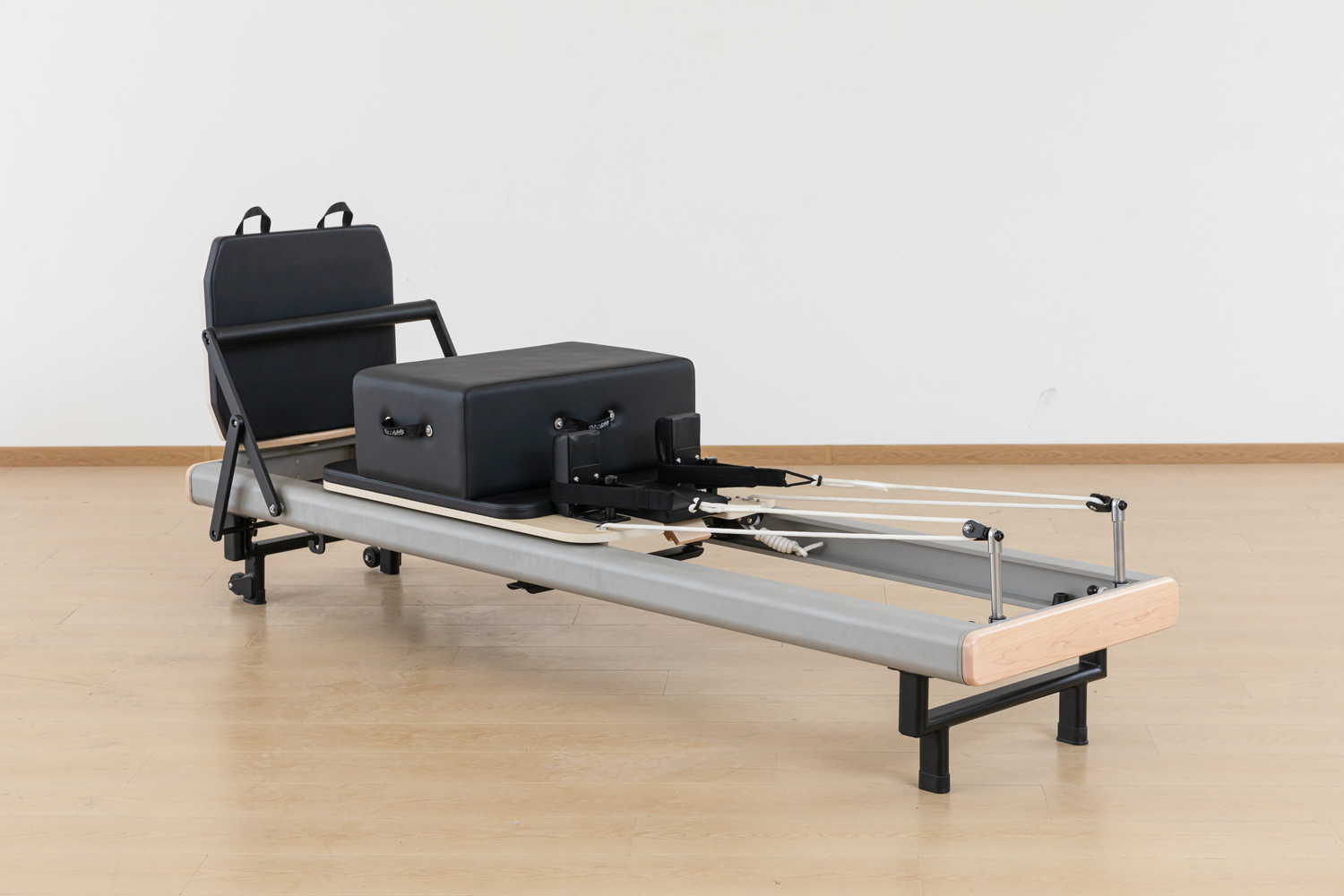
All-in-One Pilates Bed: Full Body Training Without Extra Gear

Walk into any Pilates studio, and you'll see a pile of accessories next to every Reformer — boxes, jumpboards, resistance bands, small balls… For home users, this "buy the machine, then buy all the add-ons" model is both space-consuming and budget-draining.
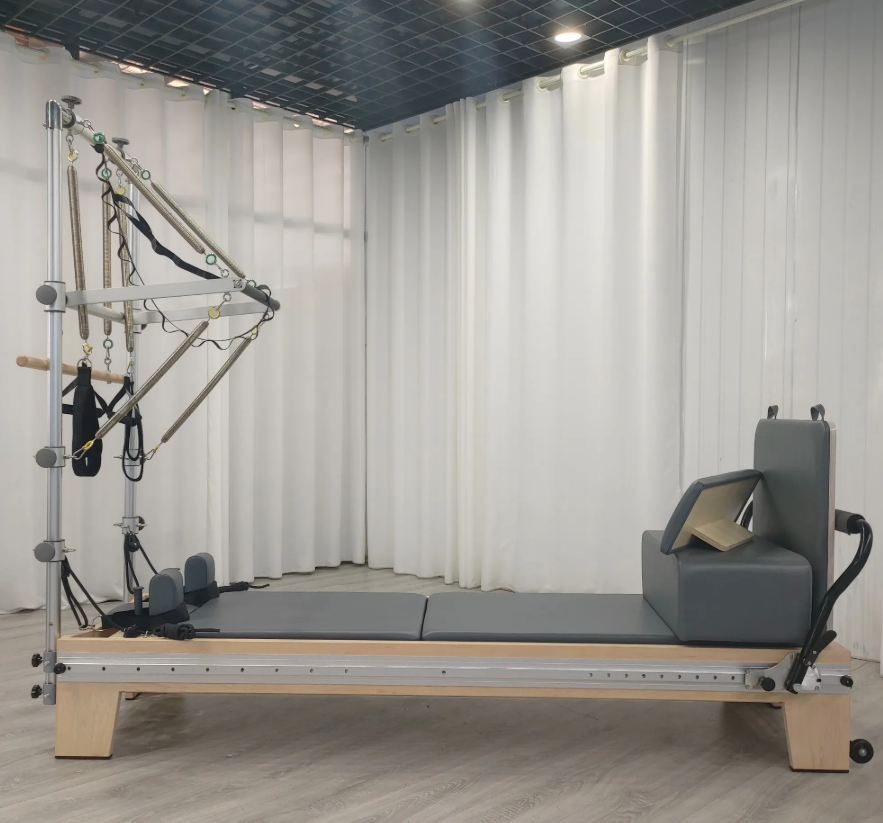
The all-in-one Pilates bed is designed to cover as many training scenarios as possible with a single machine. By integrating multiple functional modules, it allows users to complete everything from basic stretching to high-intensity cardio without purchasing additional accessories.
I. What Is an All-in-One Pilates Bed?
The core concept of an all-in-one Pilates bed is "functional integration." It's not just a Reformer — it's a comprehensive training platform that combines multiple exercise modes into one machine.
A true all-in-one bed typically includes the following features:
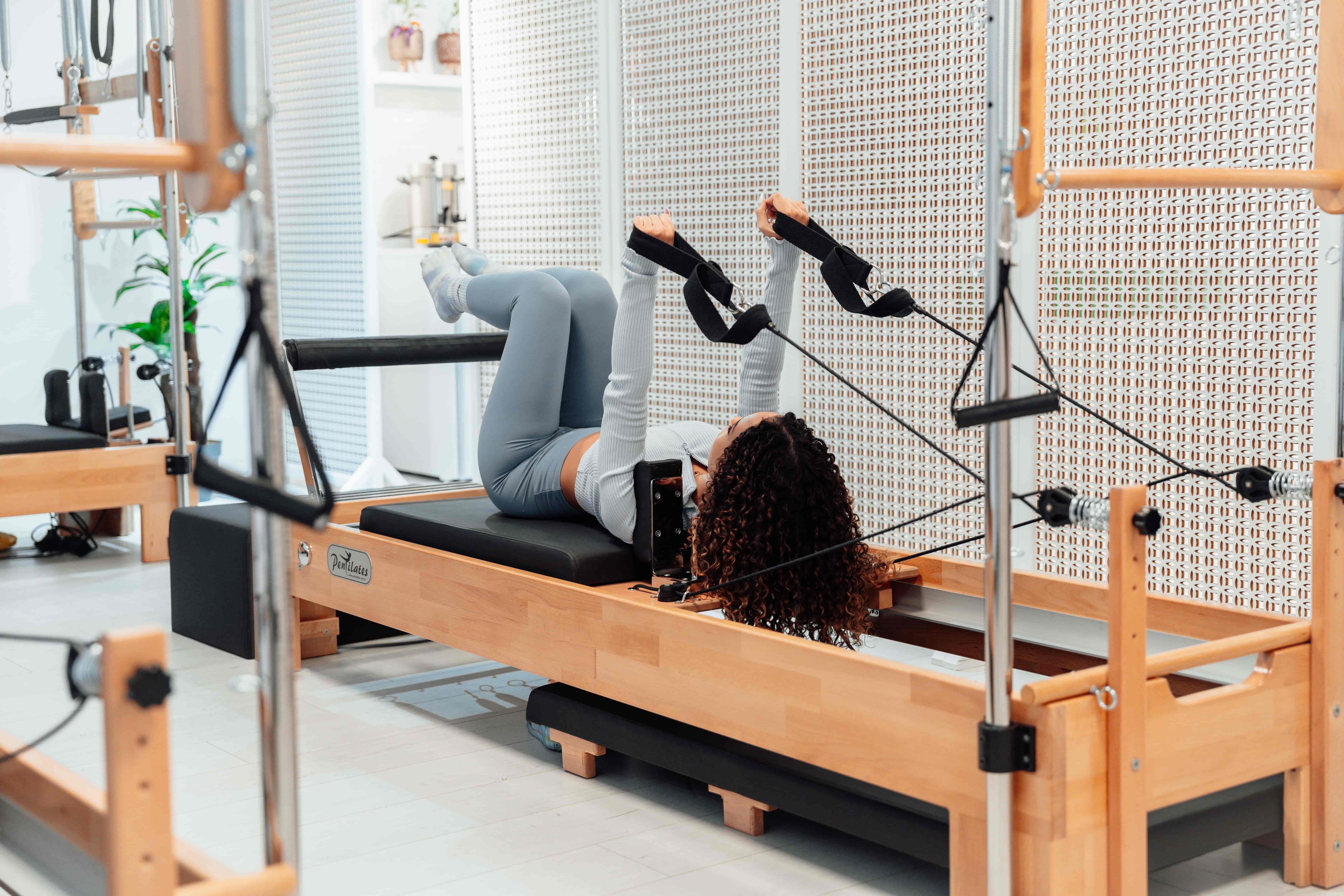
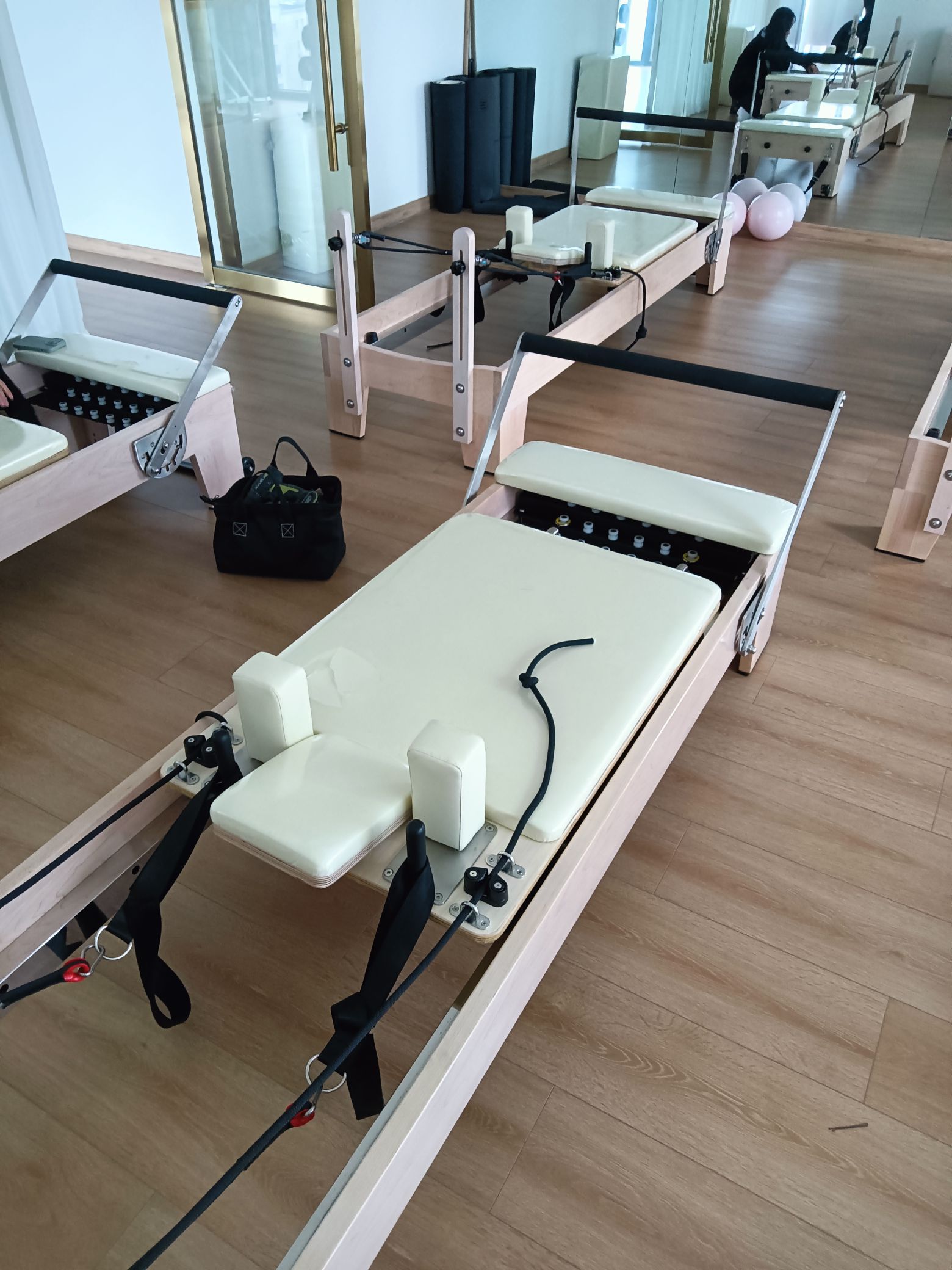
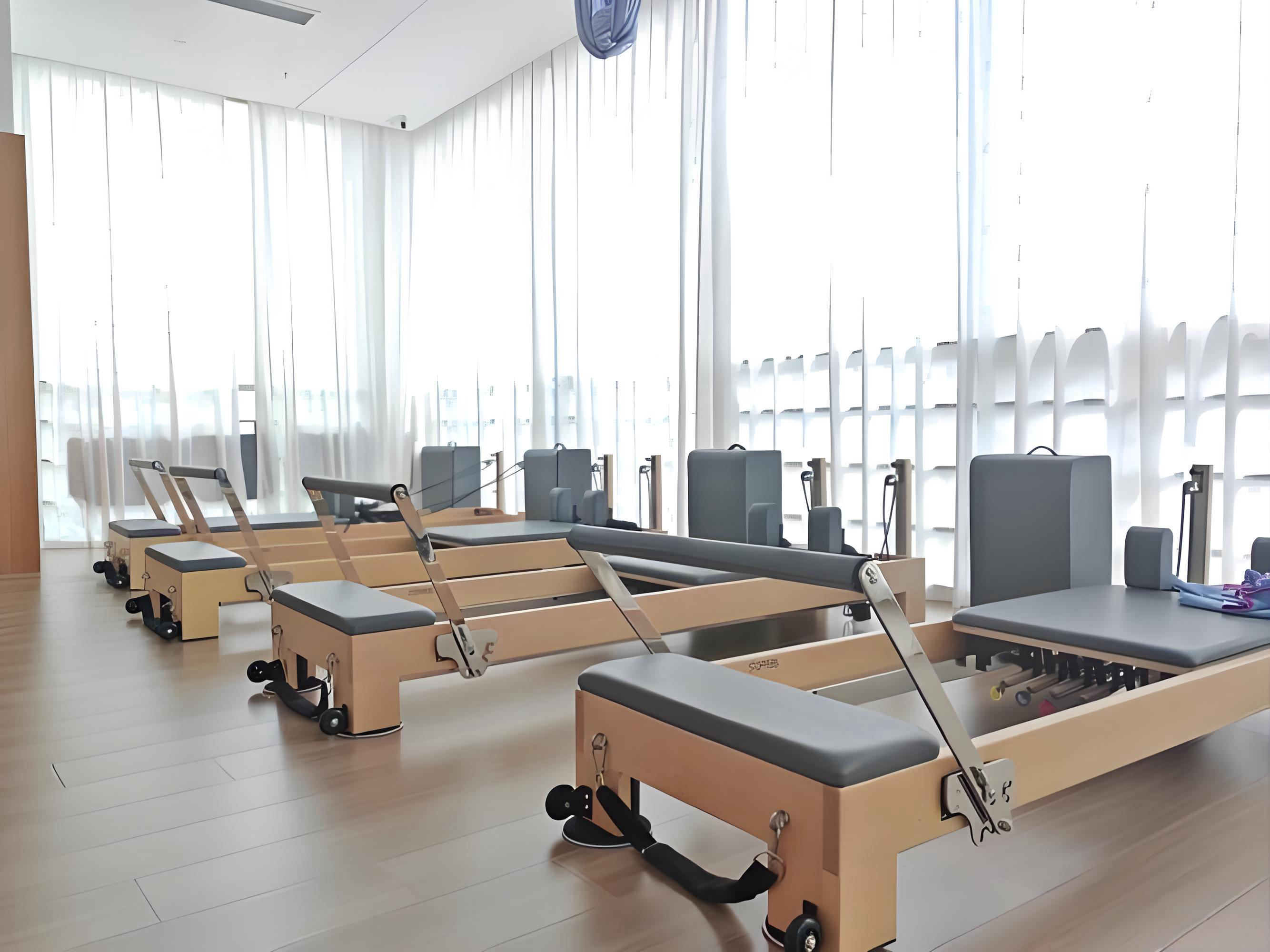
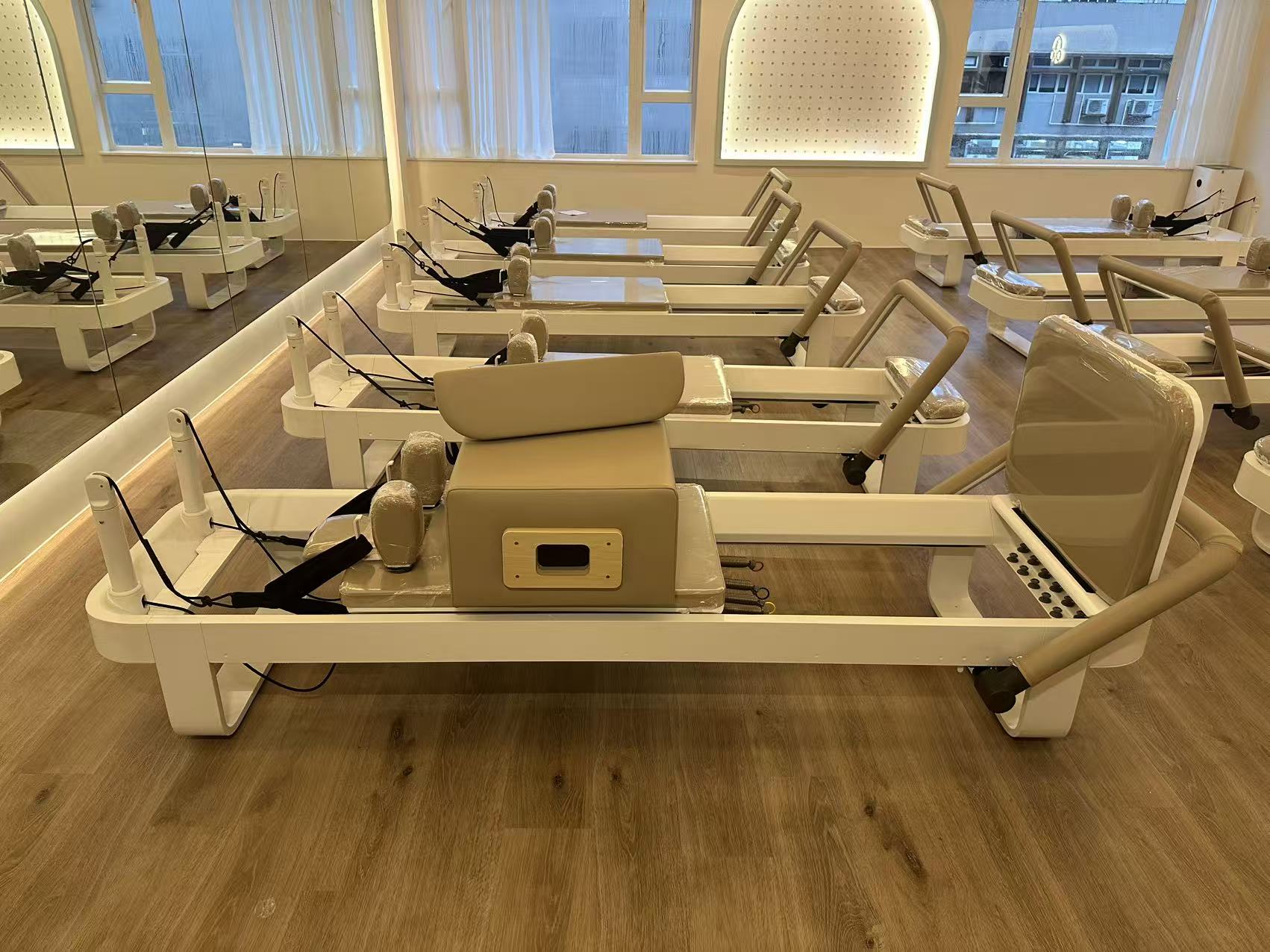
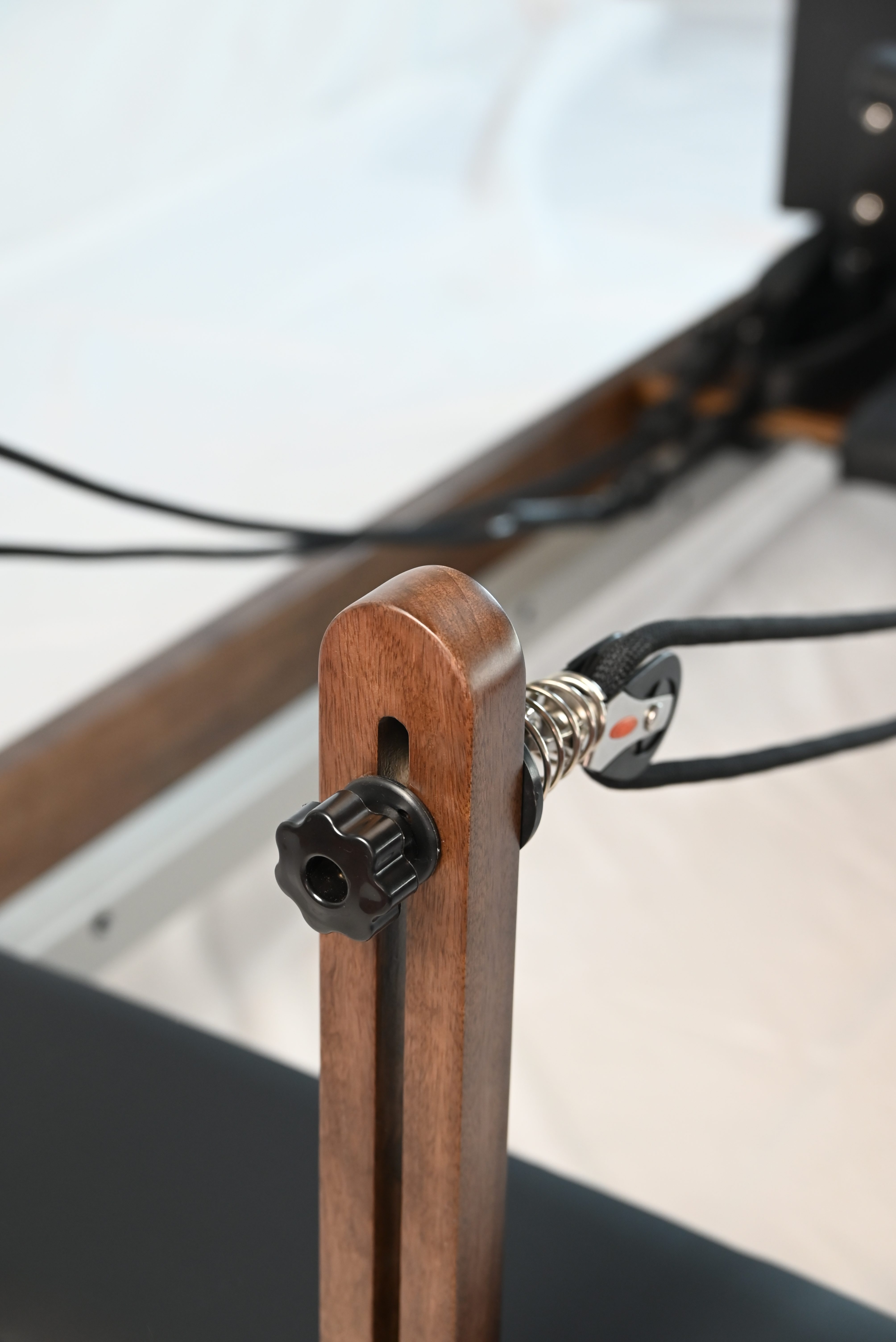
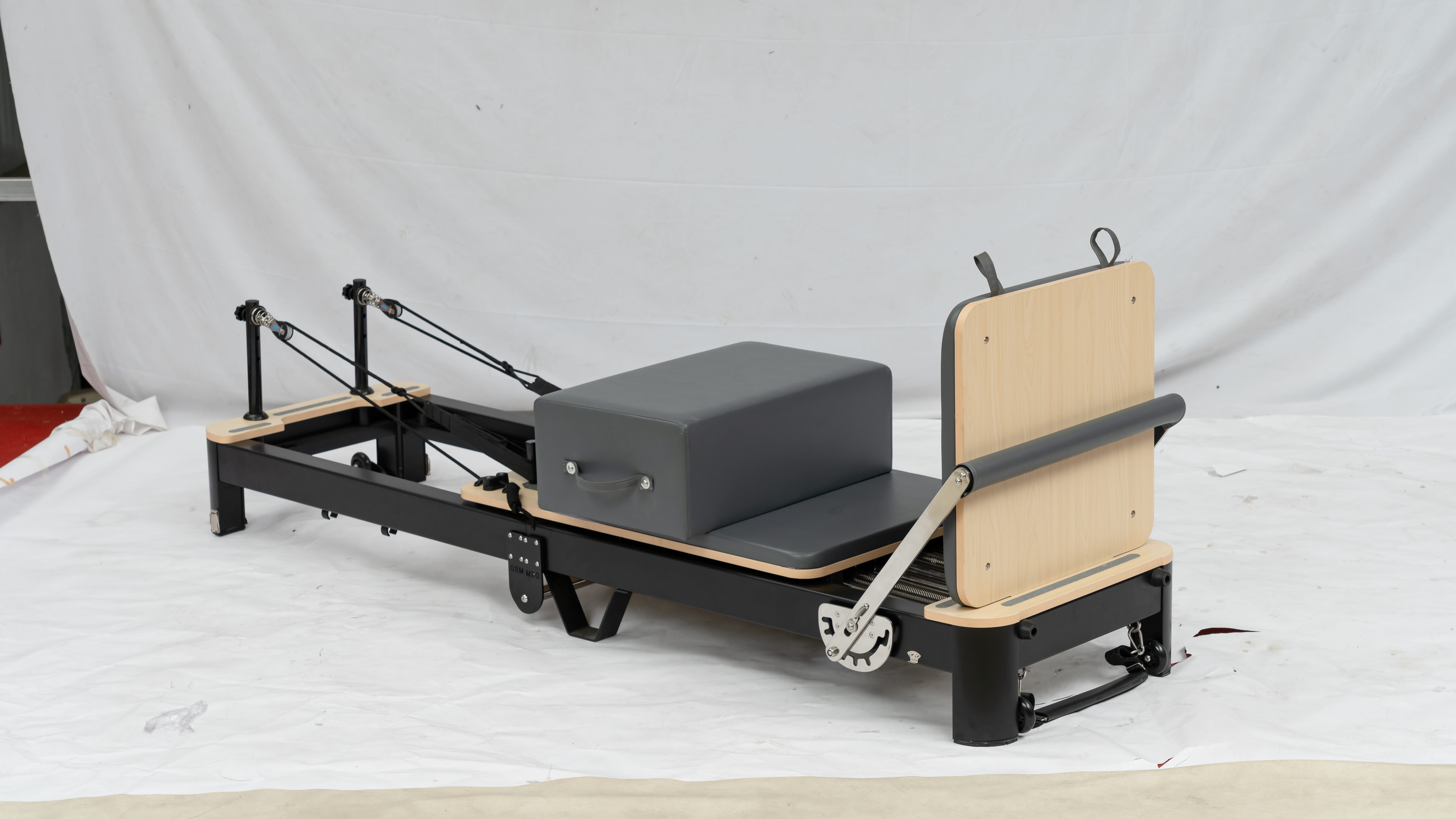
The Reformer Core: Carriage, spring resistance system, shoulder rests, headrest, footbar — all the standard Reformer components. This is the foundation of all training.
Jumpboard Function: A detachable or flipable foot platform converts the machine into a low-impact cardio training station. Users can perform jumps, squats, and other plyometric exercises for cardiovascular conditioning and lower body strength.
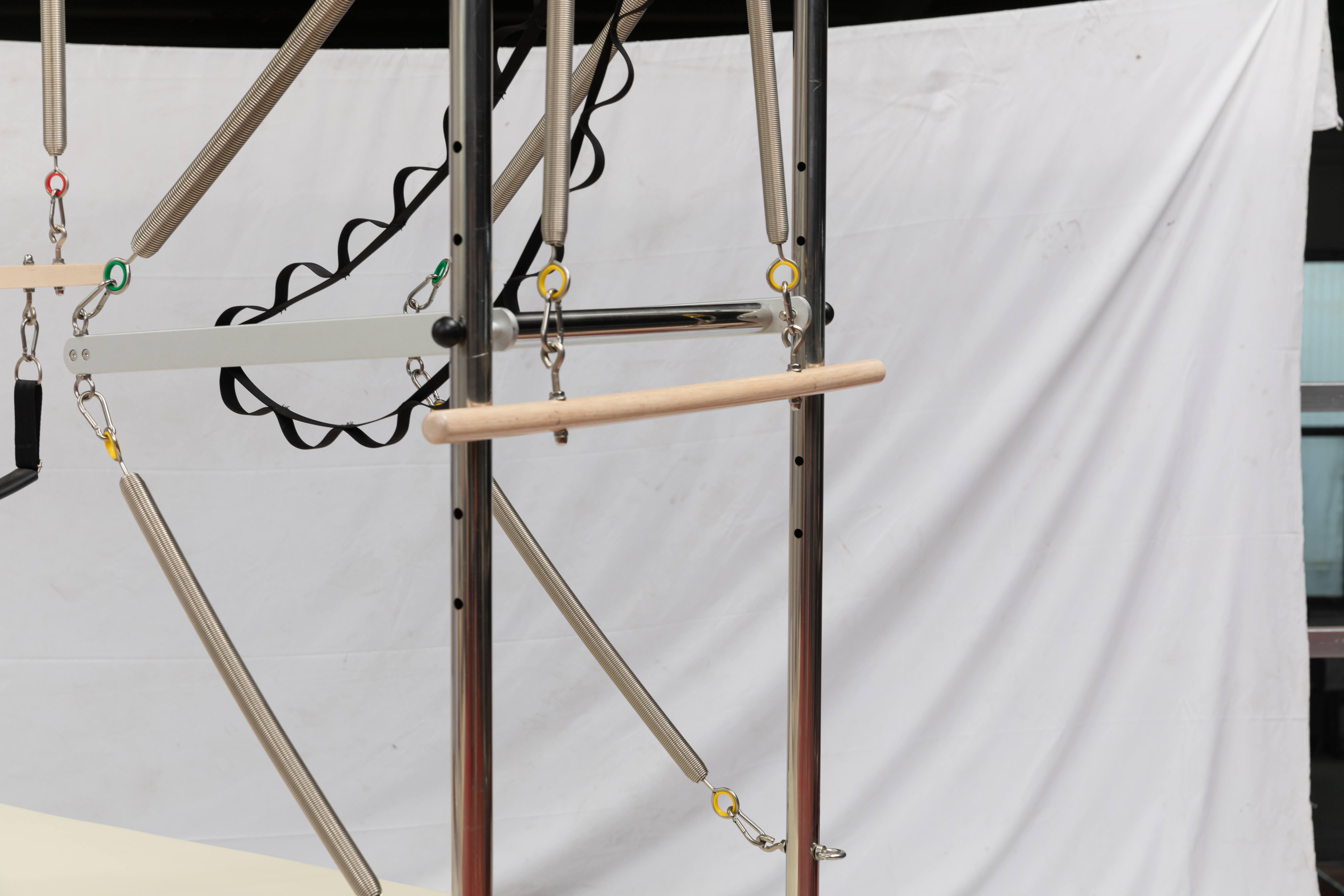
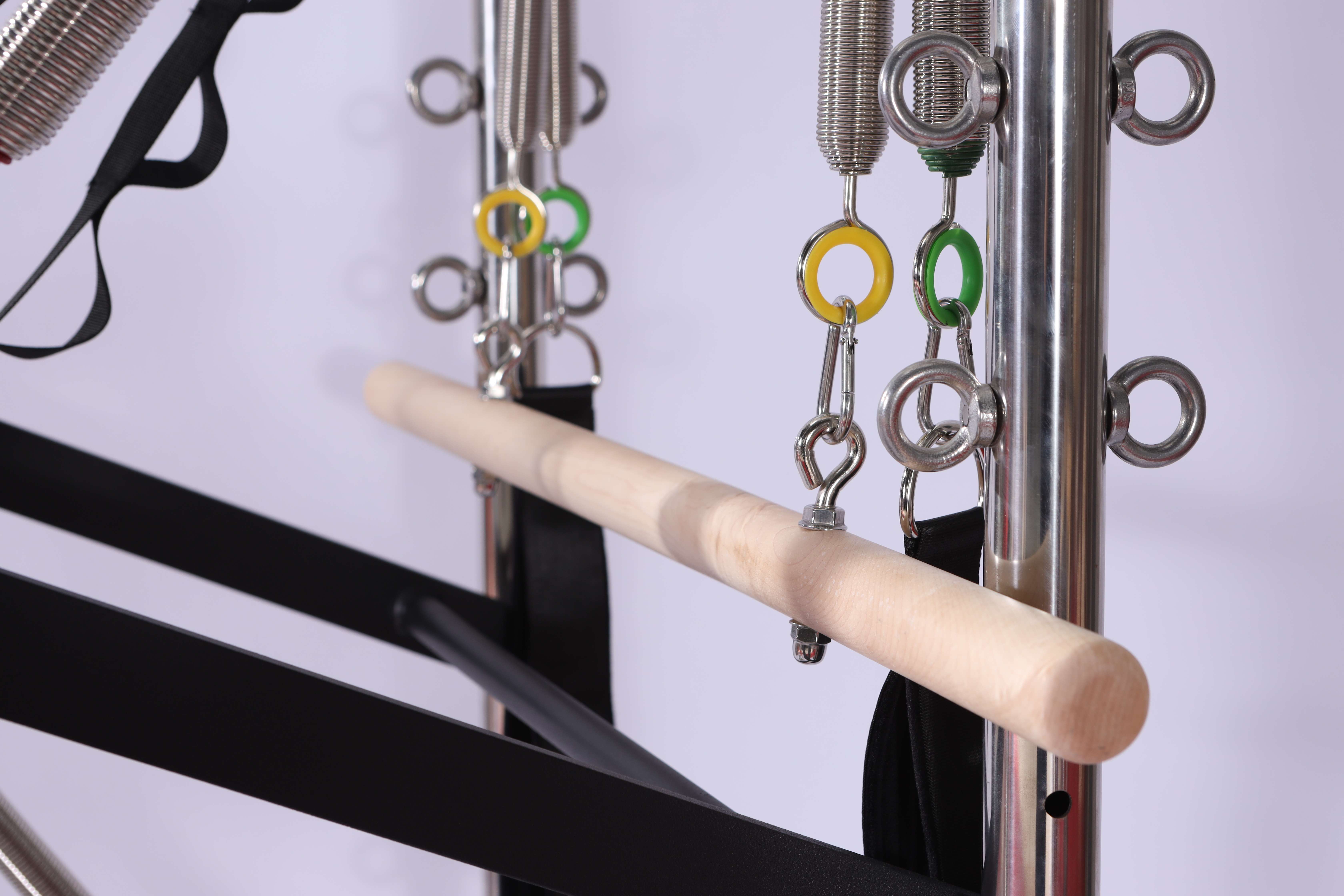
Tower/Pulley System: A vertical frame and pulley system attached to one end expands the machine's capabilities with rope-based exercises. Users can perform seated rows, standing pushes/pulls, and shoulder/back exercises that would otherwise require separate equipment.
Integrated Accessory Storage: Springs, ropes, straps, boxes, and other accessories have designated storage positions, preventing loose parts from getting lost.
Some premium all-in-one beds can support over 26 different Pilates and strength training movements, combining Pilates apparatus and strength equipment into one.
II. What Problems Does an All-in-One Bed Solve?
Space Constraints: Buying a Reformer, jumpboard, tower, and accessories separately requires significant storage space. An all-in-one bed integrates these functions into a single machine that folds down to a compact footprint. Users report that vertical folding models "take up almost no space when stored, and can be moved easily even by one person".
Cost Efficiency: Integrated design means you don't pay separately for each function. A fully-featured all-in-one bed typically costs less than the combined price of "Reformer + jumpboard + tower + accessories."
Learning Curve: Choosing and using accessories is itself a learning process — how to attach the jumpboard, where to place the box, which spring combinations to use. An all-in-one bed keeps accessories attached to the machine, so users simply switch between preset modes.
III. Limitations of All-in-One Beds
Integrated design comes with trade-offs:
Less Depth Than Dedicated Equipment: While an all-in-one bed's tower function is sufficient for daily use, it may fall short in pulley travel, resistance precision, and exercise variety compared to a dedicated Cadillac or standalone tower. Advanced practitioners may find it "not enough".
Portability Constraints: More integrated functions mean a heavier machine. A 3-in-1 training bed can weigh up to 180kg net. This is a significant burden if you need to move or store it frequently.
Reduced Customization Flexibility: An all-in-one bed's functional modules are fixed. Users can't "add whatever they want" like with a modular system. If a particular function isn't useful, it can't be removed either.
IV. Who Is an All-in-One Bed For?
Home users with limited space but comprehensive needs: If you don't have a dedicated gym but want jumpboard, tower, and other extensions beyond the core Reformer, an all-in-one bed offers the highest space efficiency.
Users who want a "one-and-done" purchase: If you want to avoid the hassle of "buy the machine, then buy accessories, then upgrade the machine," an all-in-one bed gets you there in one step.
Multi-user households: Different family members may have different training preferences — some like jumpboard cardio, others prefer rope stretching. An all-in-one bed accommodates diverse needs.
V. Three Key Factors When Buying an All-in-One Bed
Confirm the integration method: Is the jumpboard flipable or removable? Is the tower fixed or foldable? These details determine usability. A foldable tower saves more space during storage.
Check the Reformer's core performance: Don't let "multi-function" overshadow "basic function." Carriage smoothness, spring force linearity, and noise levels — these core quality factors that determine training experience shouldn't be ignored just because the machine has many features.
Assess actual accessory usage: Some all-in-one beds come with features you may never use. Think carefully about what functions you actually need — don't pay extra for features that will just gather dust.
Summary: The all-in-one Pilates bed is ideal for home users who have limited space but don't want to compromise on functionality. By integrating Reformer, jumpboard, tower, and accessories into one machine, it solves the problem of "buying the bed and then buying all the extras." When shopping, focus on whether the Reformer's core performance is solid and whether the integrated functions truly match your training needs. A well-designed all-in-one bed can genuinely deliver "full-body training without extra gear."