Complete Breakdown of Pilates Reformer Parts & Their Functions
For many users, the Reformer looks like a sliding bed with a few springs. But understanding the name, location, and function of each component improves training effectiveness and helps with equipment maintenance, quality assessment, and troubleshooting. This article systematically breaks down every component of the Reformer, from core parts to accessories, explaining each one's role.
I. Carriage System
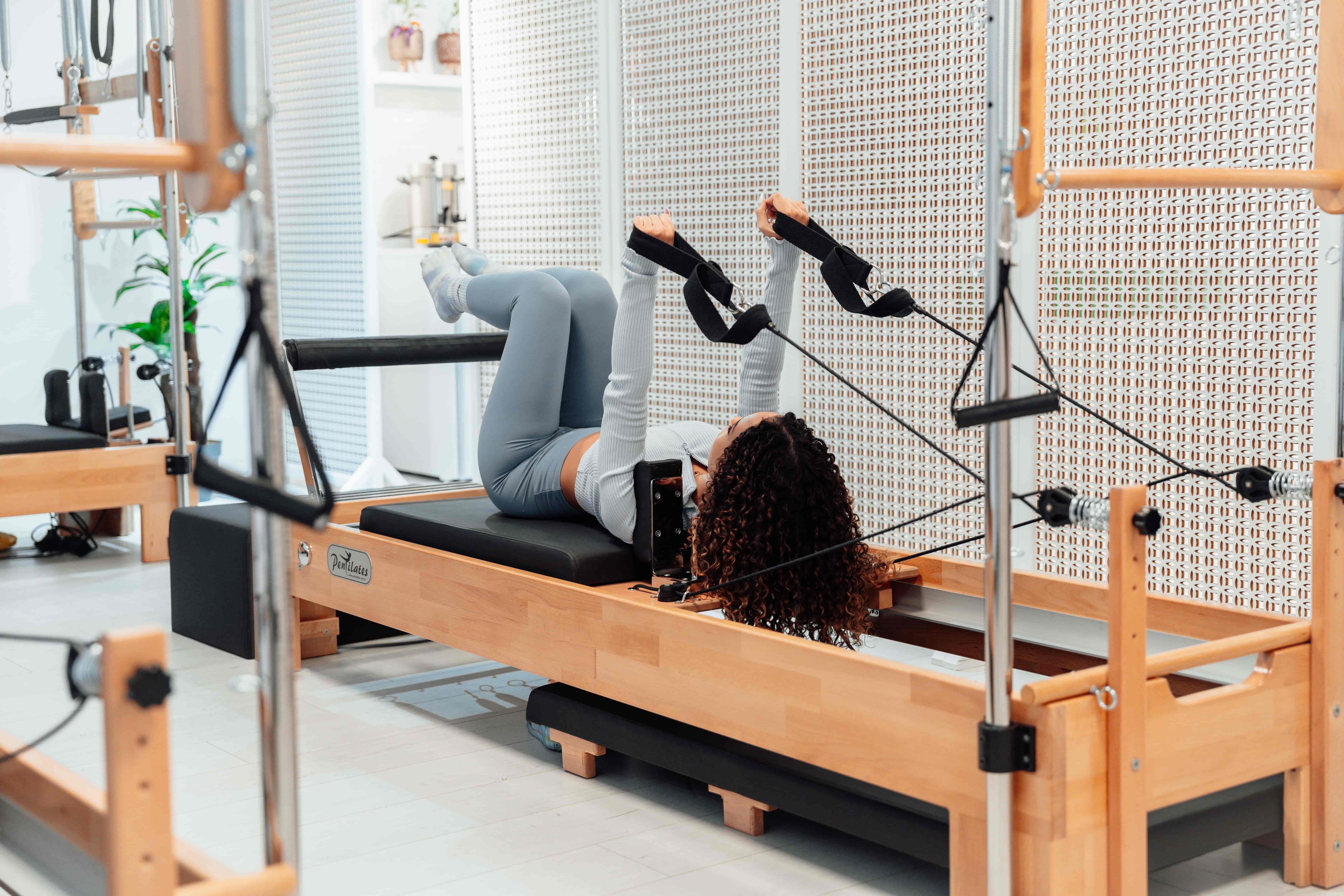
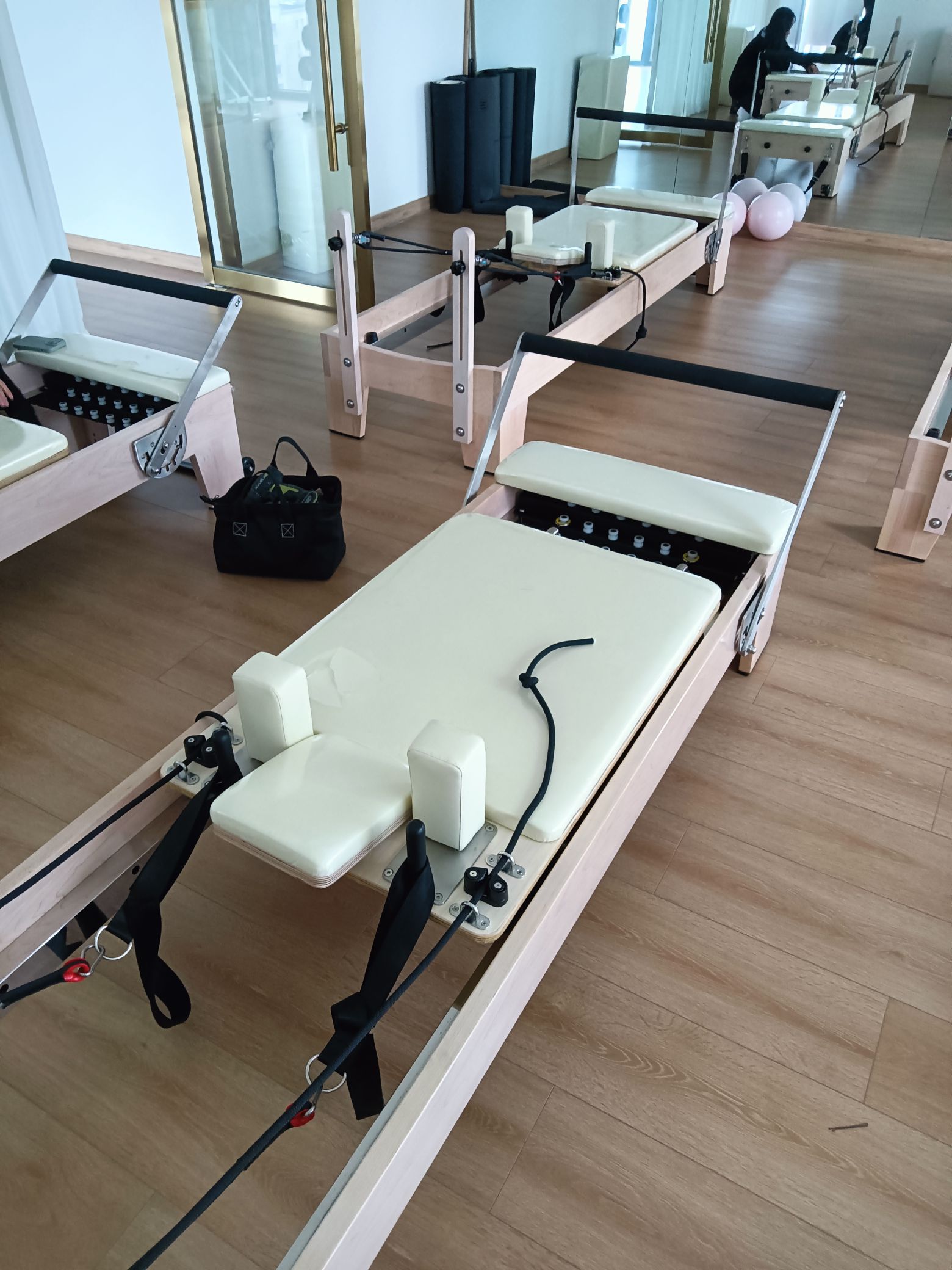
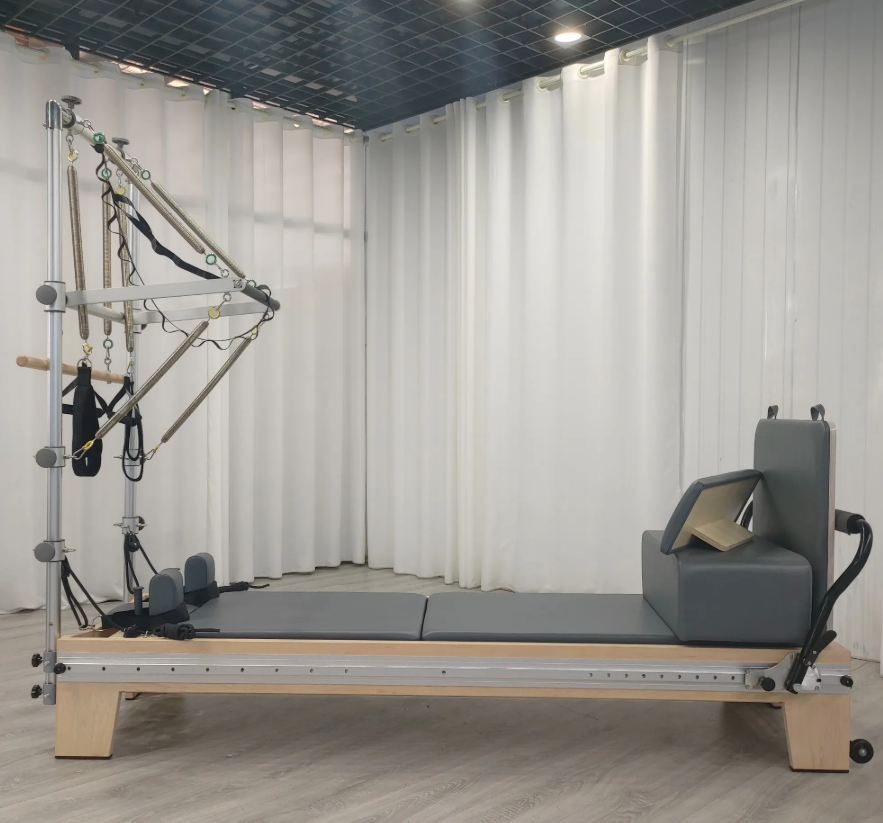
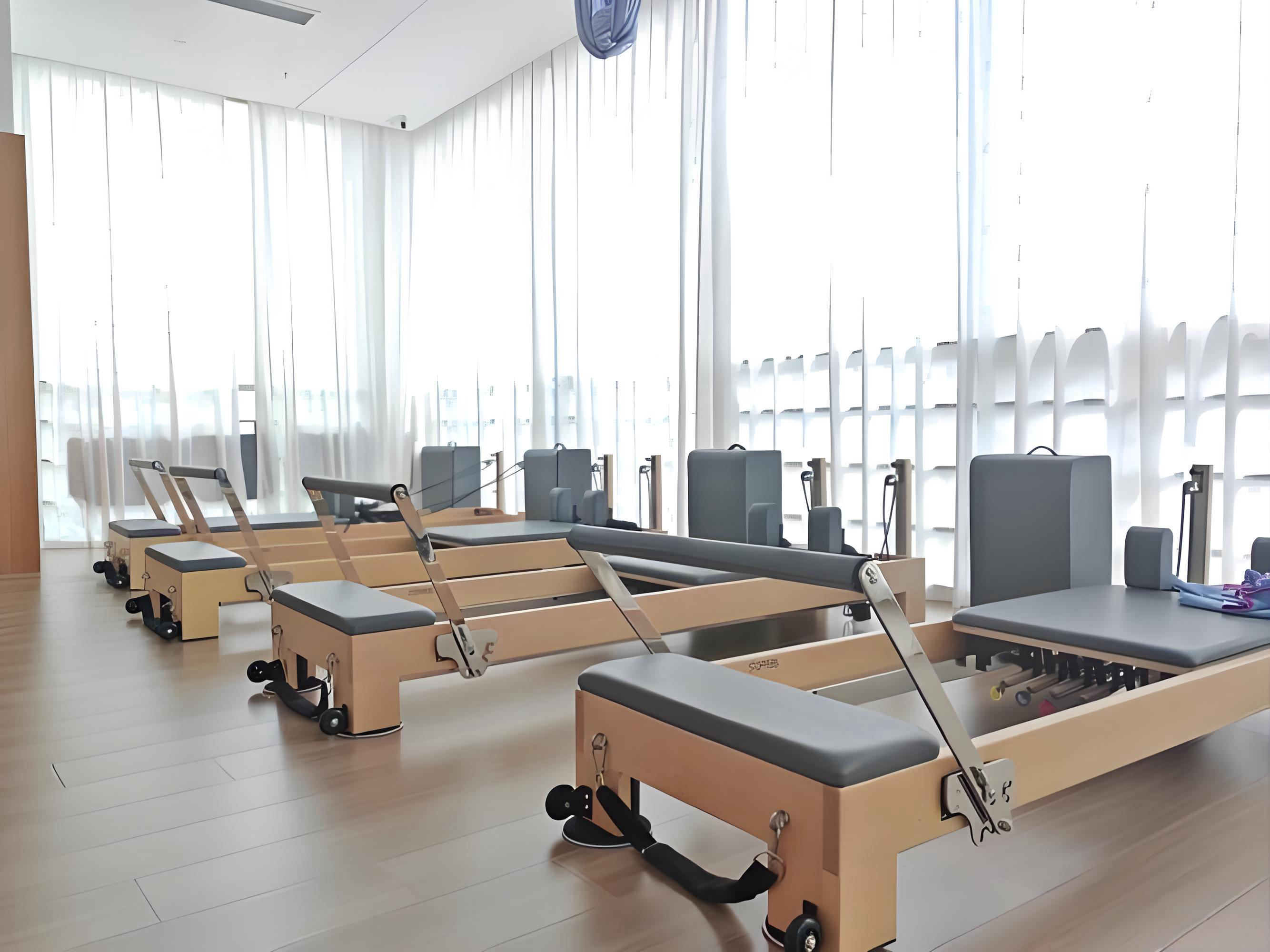
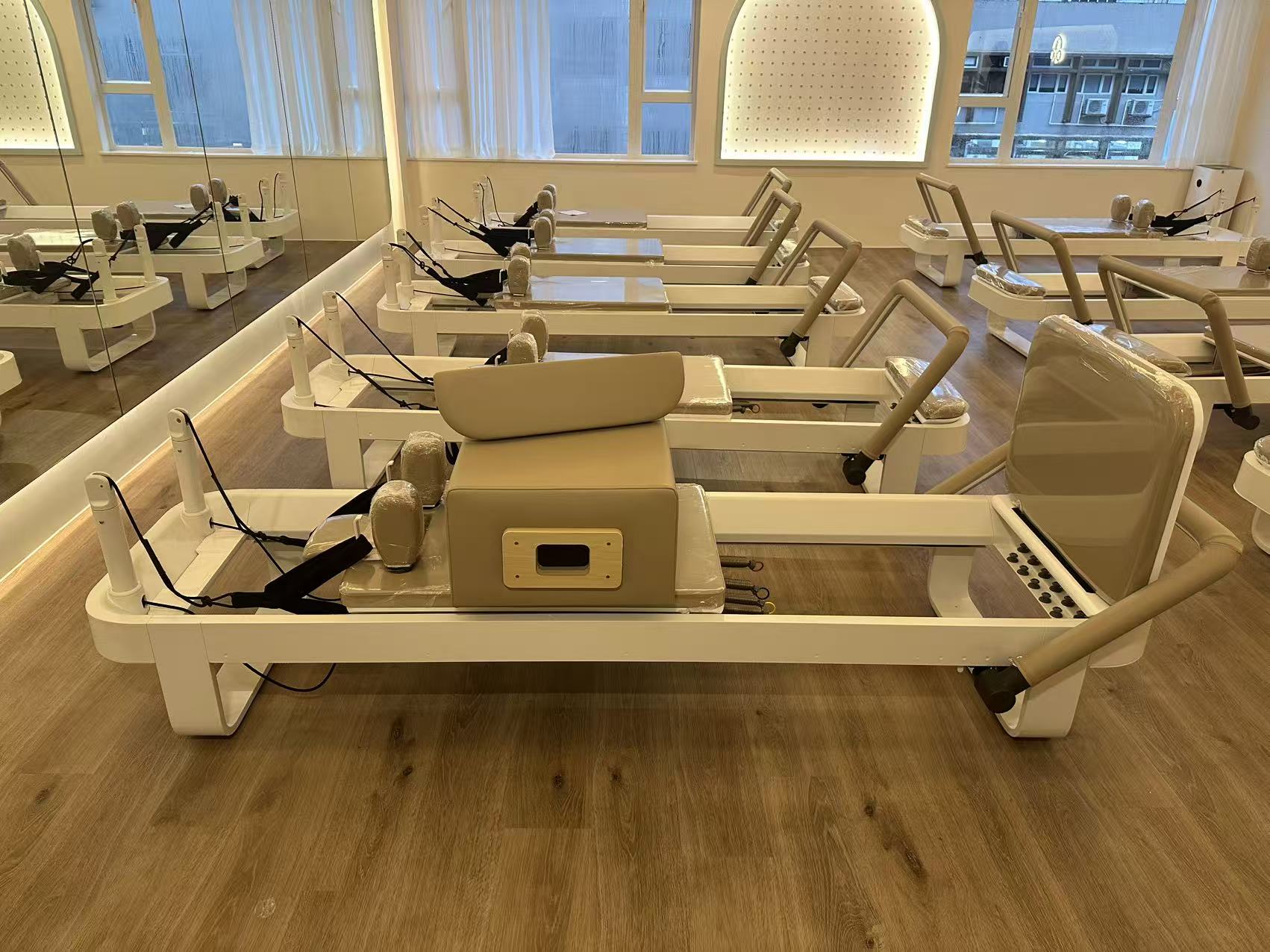
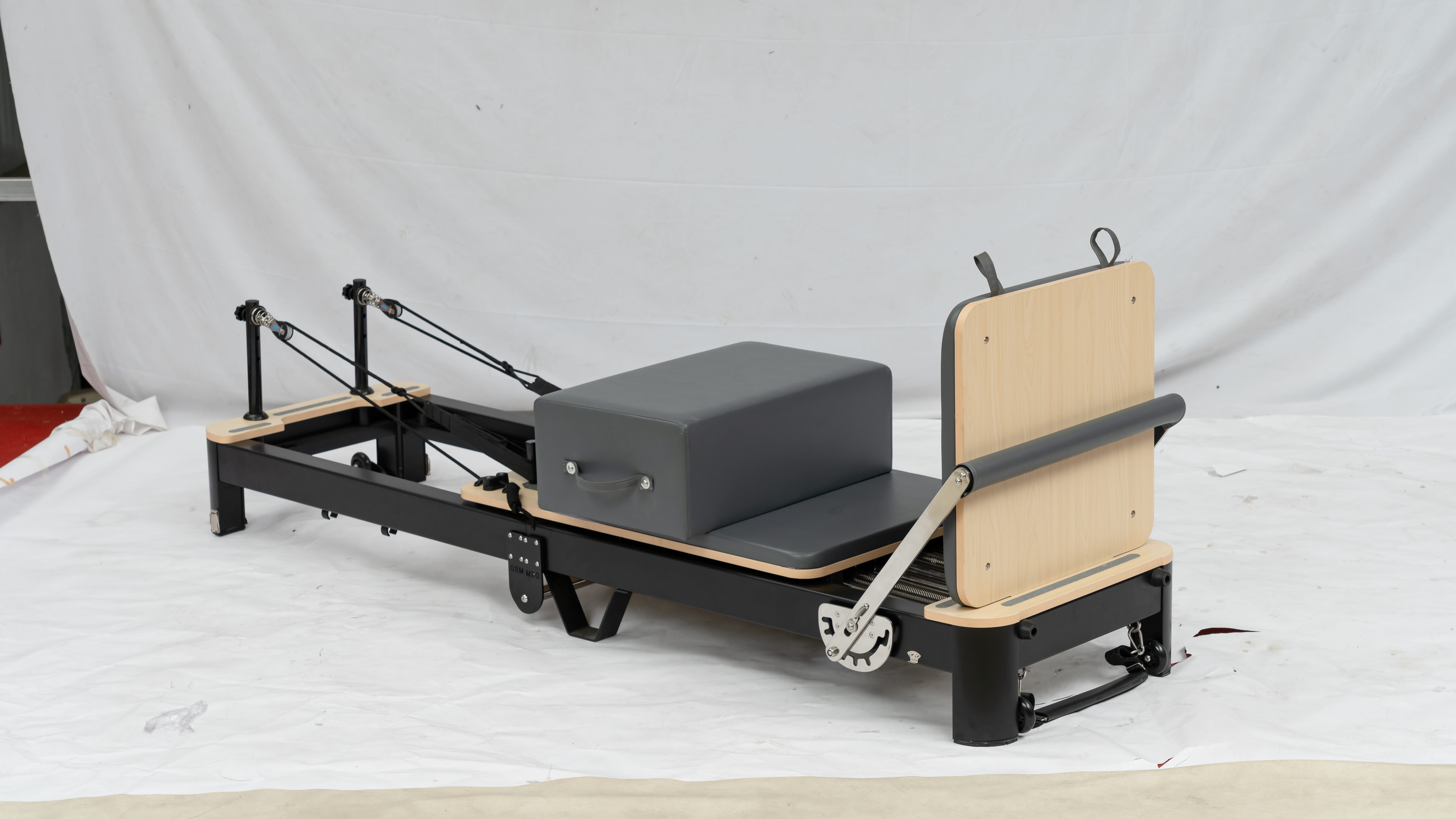
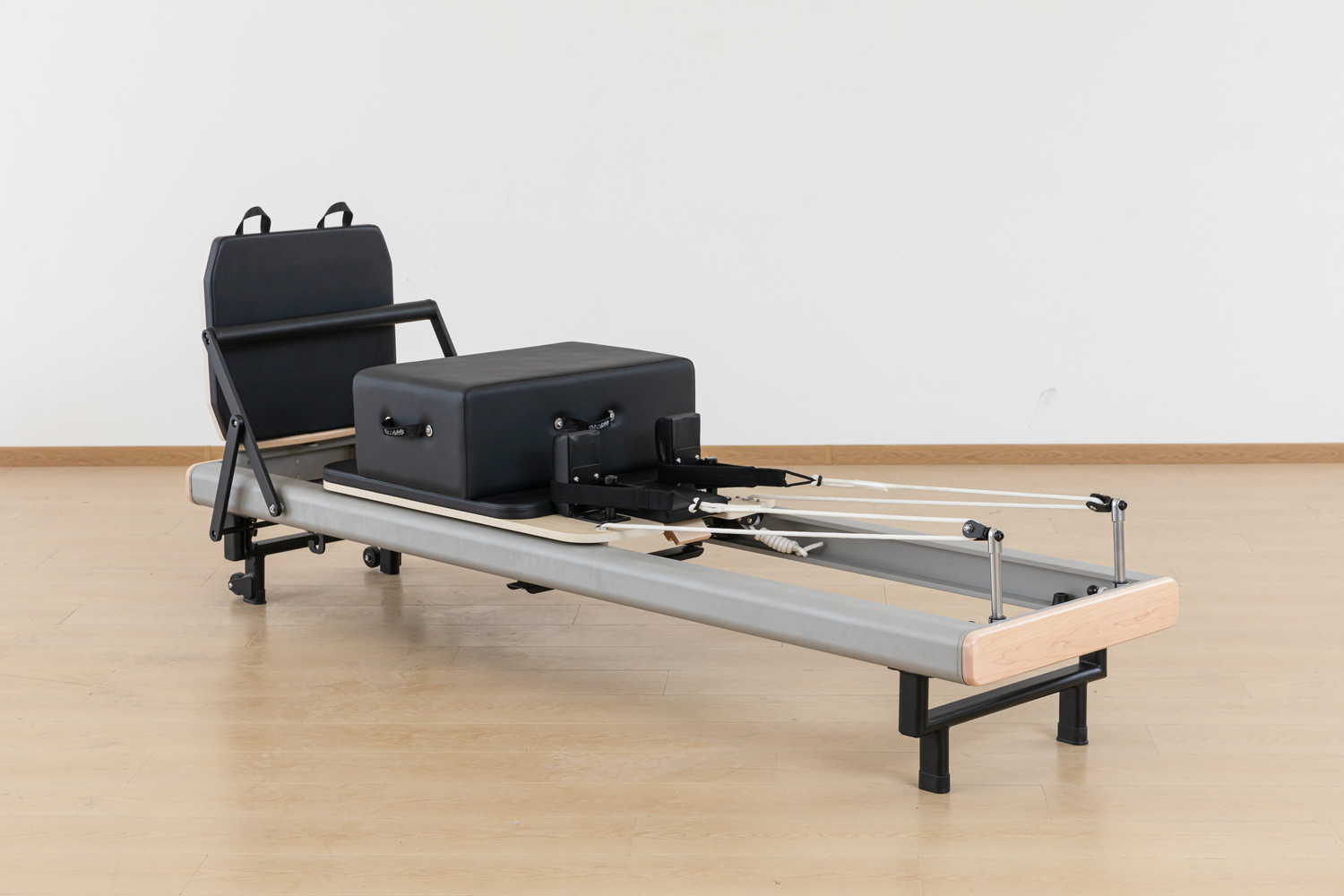
Carriage: The movable platform on which you lie, equipped with upholstered cushioning. It's the carrier for all dynamic sliding movements. The surface is covered with foam and leather for comfortable support. The carriage typically has adjustable shoulder rest holes on both sides.
Shoulder Rests: Located at the front end of the carriage (head end), paired to anchor the shoulders during supine exercises, preventing the body from sliding down during carriage movement. Shoulder rests should be quickly adjustable to fit different user heights.
Headrest: Positioned between the shoulder rests, supporting the head and neck during supine and seated exercises. The angle is typically adjustable to accommodate different neck positions for various movements.
Footbar: A metal bar spanning the frame near the carriage's front end, providing foot support during supine or seated exercises. It typically has multiple height positions to fit different heights and starting positions.
Straps/Ropes: The rope or webbing system connecting the carriage and frame, transmitting resistance through the pulley system. Hand or foot straps expand the Reformer's functional range by enabling upper and lower body pulling exercises.
Spring Bar: The metal bar at the bottom of the carriage's front end that holds one end of the springs. Changing springs involves hooking or unhooking them from this bar. The distribution and number of springs on this bar determine the current resistance configuration.
II. Resistance System
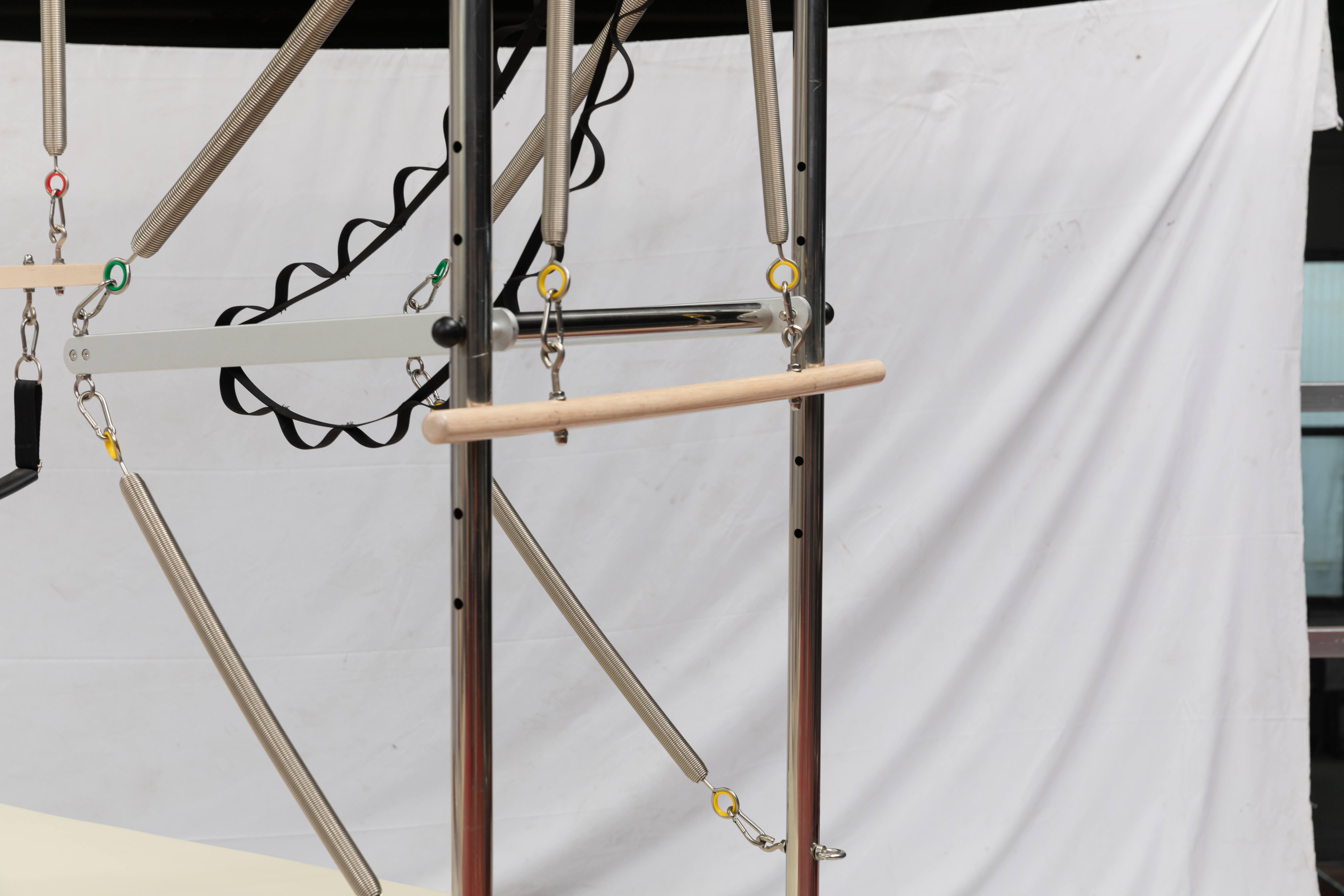
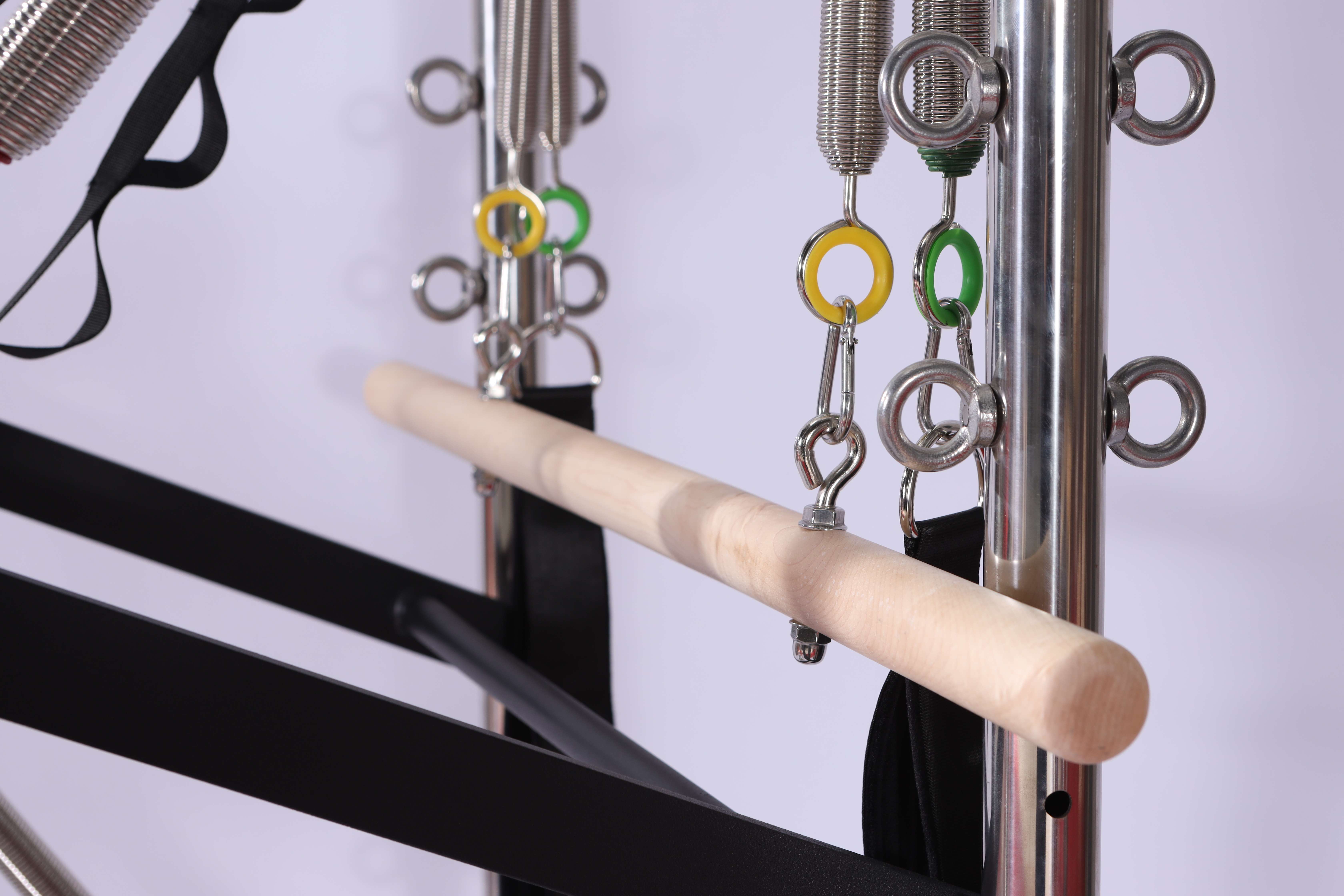
Springs: The power source of the Reformer. Each spring is coiled from high-carbon steel or music wire, heat-treated for stable tension. Different spring colors represent different resistance levels, and combinations create multiple resistance profiles. Spring lifespan depends on usage frequency and maintenance — typically replaced every two years in commercial environments.
Spring Hooks: Located at the carriage bottom and the frame's rear end to secure both ends of each spring. The heat treatment of the hook area determines fracture resistance in this stress concentration zone. Inspect hooks for smooth, burr-free surfaces when purchasing to avoid abnormal wear.
Spring Selection Logic: Light springs (typically yellow or light-colored) for arms, shoulders, and warm-ups; medium springs for lower body work and regular exercises; heavy springs (typically red or blue) for strength training and high-intensity movements.
III. Frame and Rails
Main Frame: The skeleton of the Reformer, bearing the weight of all components and movement loads. Quality frames use thickened carbon steel, aviation-grade aluminum, or imported North American hardwoods (maple/oak). Frame stability directly affects carriage smoothness and safety.
Rails: The tracks on both sides of the frame along which the carriage slides. Rail surfaces must be smooth, wear-resistant, and highly parallel. Home-grade equipment may use standard carbon steel rails; commercial-grade uses anodized aluminum or chrome-plated rails for long-term smoothness and quietness.
End Stops: Mounted at both rail ends to prevent the carriage from sliding off the track. They are important safety devices that should be inspected regularly.
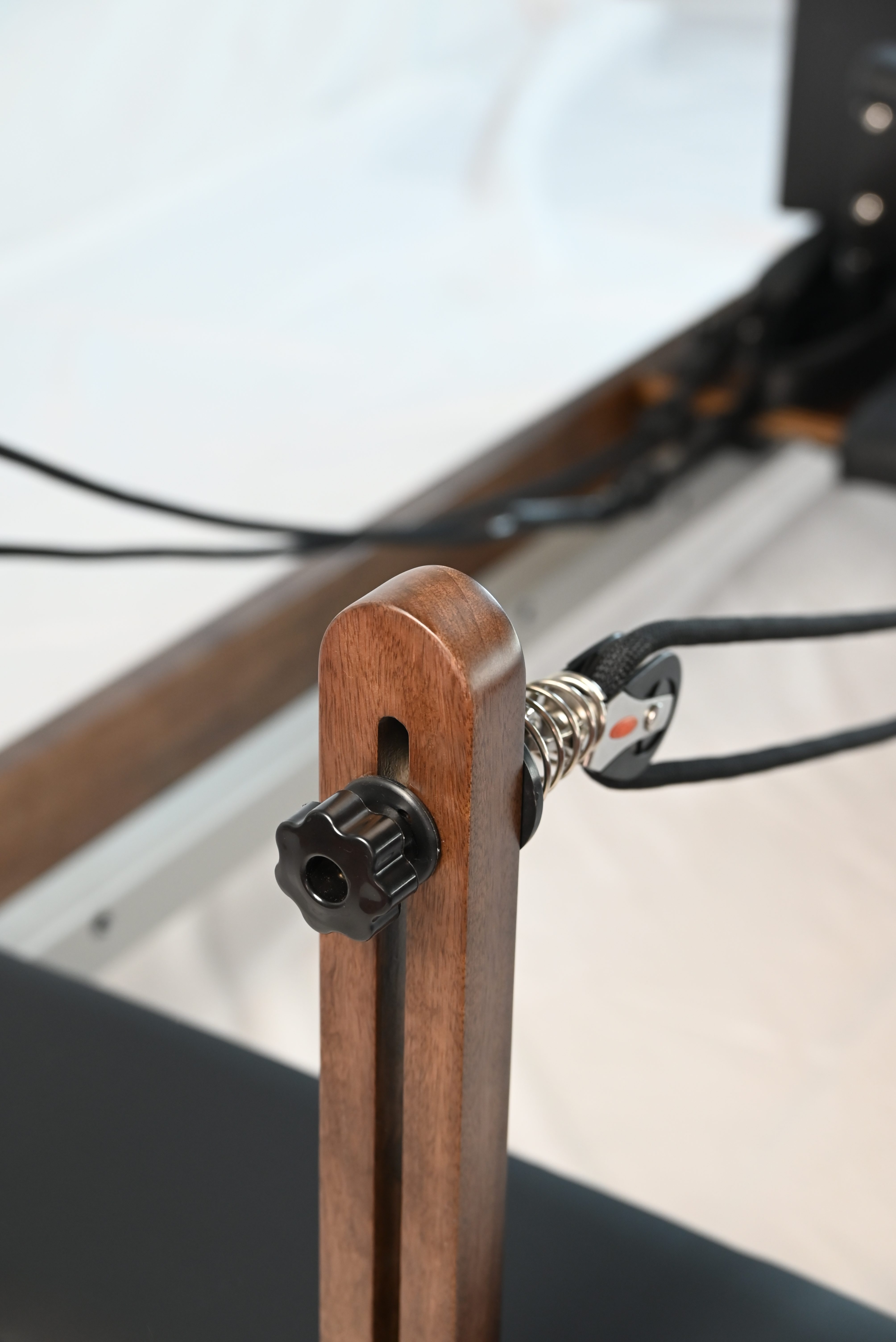
Adjustment Holes: Located on both sides of the frame for inserting adjustment pins of shoulder rests and headrests, enabling quick position adjustments.
Non-Slip Feet: Located at the four corners of the frame base, ensuring stability on the floor. Commercial equipment requires good anti-slip performance even on smooth floors or tiles.
IV. Pulley and Rope System
Pulleys: Located at the frame's front end (near the footbar), changing rope direction to transmit pulling force from straps to the spring system. High-quality pulleys feature sealed bearings or POM (engineering plastic) for low friction, low noise, and long life.
Ropes/Straps: The medium transmitting force between the user and the spring system. Users pull against the straps to resist spring tension, completing upper body, lower body, and full-body exercises. Straps must have sufficient tensile strength and abrasion resistance.
Handles/Foot Loops: Located at strap ends for hand grip or foot placement. Different action requirements may call for different handle types (loop handles, D-ring handles) or foot loops.
V. Upholstery and Comfort Components
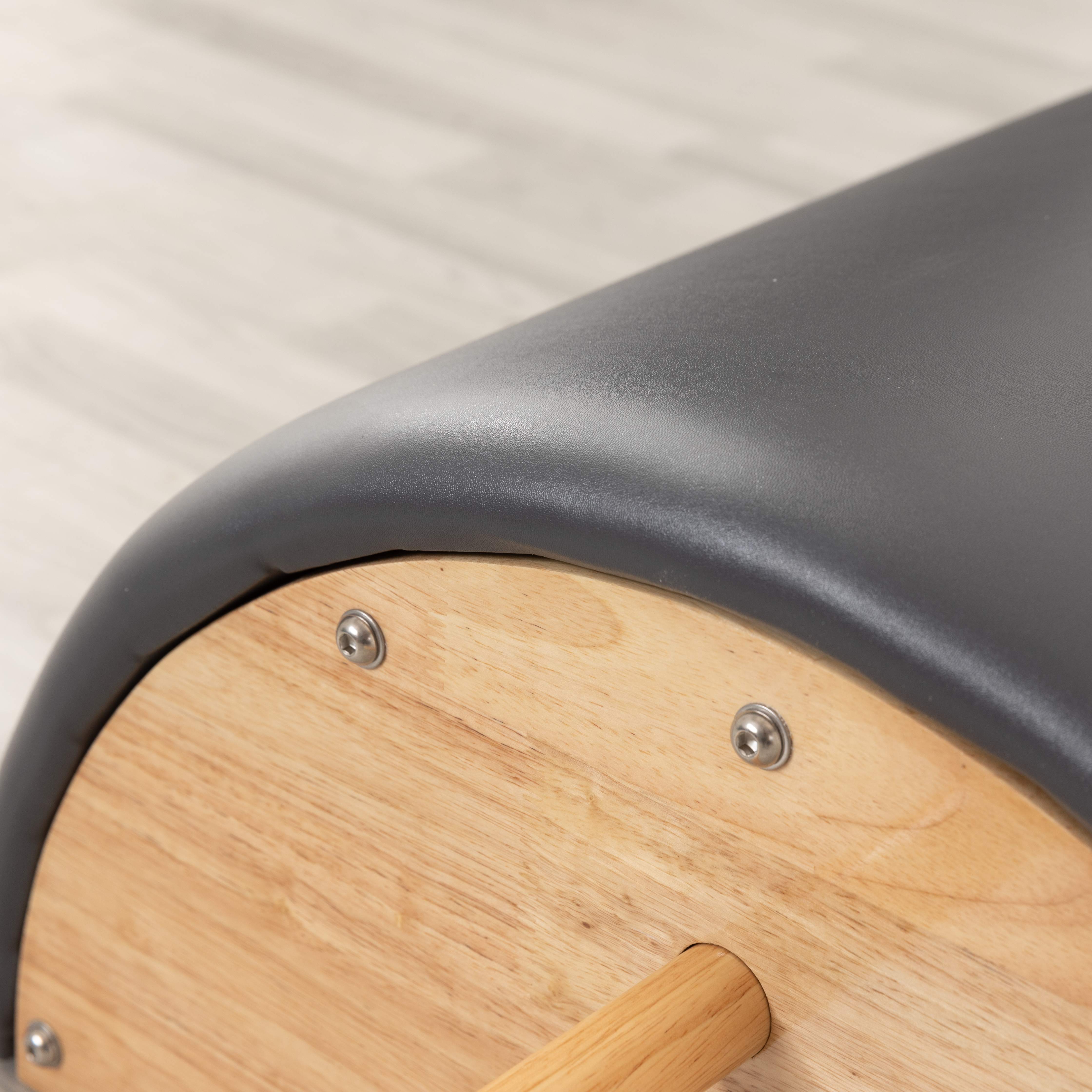
Carriage Upholstery: Covers the carriage surface, consisting of foam and leather, providing comfortable support when lying down. Commercial-grade uses high-density foam (≥45kg/m³) and high-wear PU leather (Martindale ≥50,000 cycles) to prevent sagging and cracking over time.
Shoulder Rest Upholstery: Covers the shoulder rest surface, reducing pressure between shoulders and hard plastic. Softness directly affects shoulder comfort.
Headrest Upholstery: Covers the headrest surface, cushioning the head and neck. Headrest angle and height should be adjustable to fit different exercises and user heights.
VI. Accessories and Extensions
Jumpboard: A foot platform mounted at the frame's front end, providing low-impact cardio training through spring resistance. Users perform jumps, squats, and other exercises on the jumpboard for cardiovascular conditioning and lower body strength.
Box: A movable platform placed on the carriage to elevate the body, creating new movement angles. Commonly used in classical Pilates as support for seated or supine exercises.
Tower: A vertical structure mounted at the frame's rear end, equipped with springs and rope systems, adding suspension training capabilities. The tower enables more standing, kneeling, and suspension-based exercises.
Summary: Every component of the Reformer has a clear function — the carriage supports the body, springs provide resistance, rails guide direction, shoulder rests anchor position, and straps transmit force. Understanding these components' names and roles helps you follow instructor cues more precisely and makes you more confident in equipment selection, maintenance, and troubleshooting. A quality Reformer is the result of precise coordination among these components — any quality defect in any part affects the overall training experience.