How to Tell High-Quality Pilates Equipment From Inferior Copies

In the Pilates equipment market, visually identical products often differ dramatically in quality. A copycat Reformer may look just like the real thing, but the experience is entirely different — rough sliding, uneven spring resistance, and a wobbly frame. Worse, structural flaws in inferior copies can lead to safety hazards during use.
This article provides a systematic framework for identifying the critical differences between "looks like" and "actually performs."
I. Welding and Frame Craftsmanship: The Most Visible Quality Divide
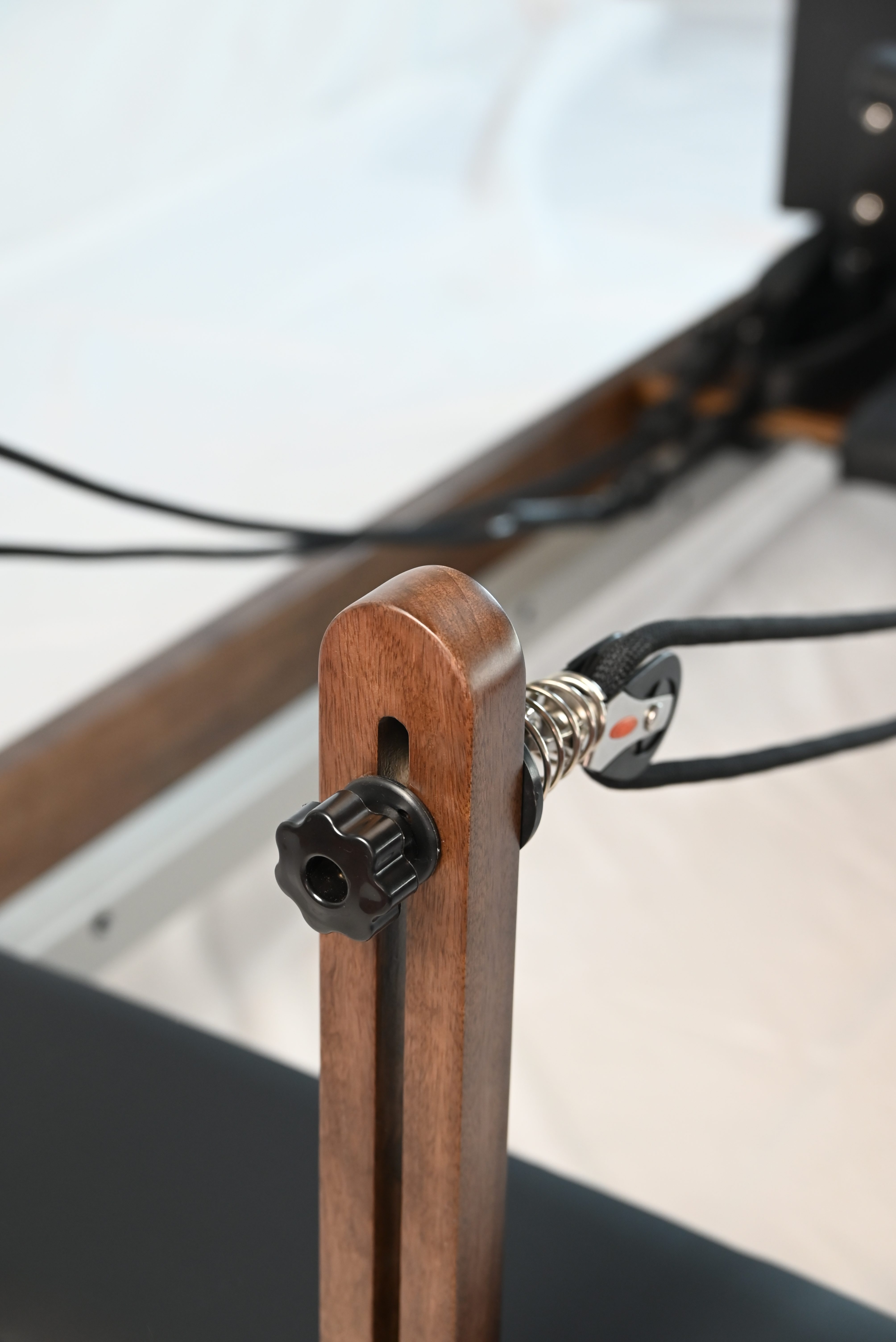
Weld quality is the first window into equipment quality. High-quality equipment features uniform, smooth welds with continuous fish-scale patterns — no porosity, cracks, or spatter. Frame joints are tight and solid. When you shake the frame, the entire machine feels rigid and stable.
Inferior copies have rough, uneven welds with visible porosity or spatter. More seriously, critical load-bearing welds may have cold shuts — visible joint marks and burrs. When shaken, the frame feels loose and may even produce metal-on-metal scraping sounds.
Practical check: Press on various frame sections to feel for elastic deformation. High-quality equipment shows almost no deformation under load; copies may bend or wobble noticeably.
II. Glide Quality: The Feel That Can't Be Faked
Glide quality is the hardest part for copies to replicate. High-quality equipment glides like silk — smooth, with no sticking or step-like resistance. In a quiet environment, there's almost no additional friction or impact noise beyond the natural sound of springs stretching. Resistance remains consistent throughout the entire travel range.
Inferior copies often show noticeable graininess or uneven resistance. The carriage may "clunk" at certain positions, or wobble due to poor wheel-to-rail tolerances. Noise-wise, copies often produce metal scraping or wheel clattering sounds.
Practical check: Sit on the carriage and glide slowly from one end of the rails to the other, feeling for resistance changes throughout. Repeat several times, noting whether every glide feels consistent.
III. Spring System: Quality Differences in the Power Source
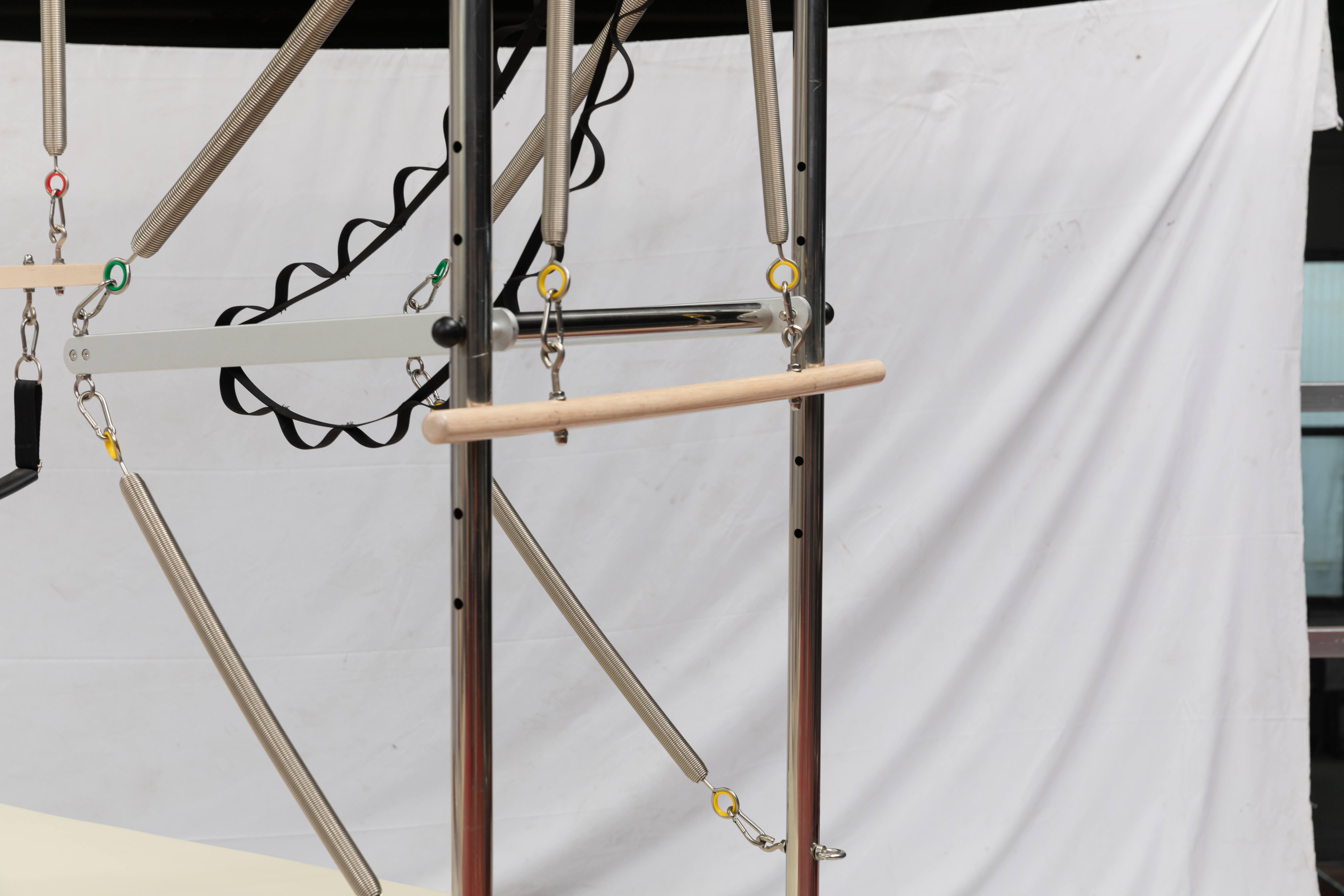
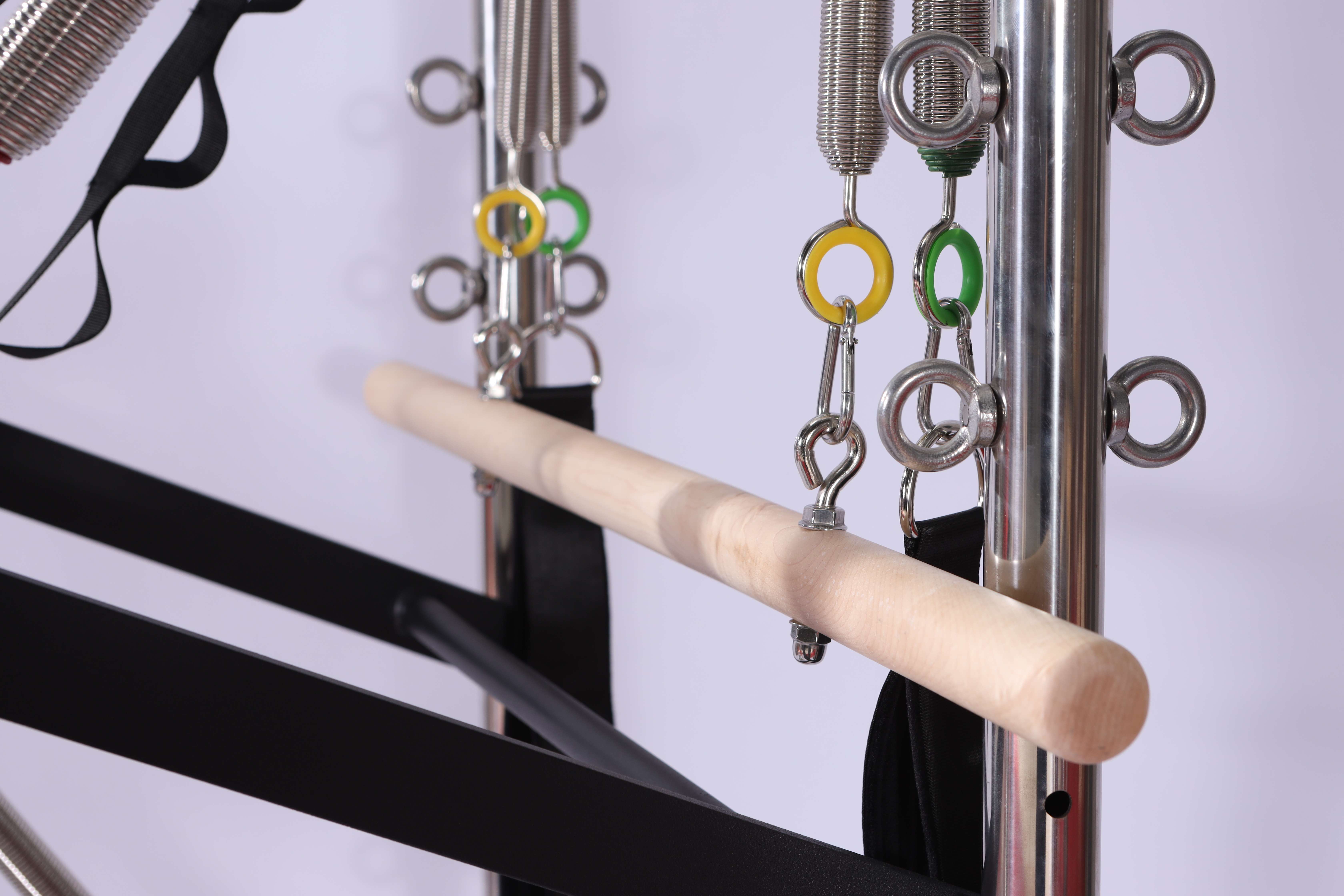
High-quality Pilates equipment uses high-carbon steel or music wire cold-coiled springs with rigorous heat treatment to eliminate residual stress. Springs have high force consistency — noticeable differences between spring positions are minimal. Force degradation is slow, maintaining consistent performance over thousands of stretches. Hook areas are reinforced with no deformation or wear.
Inferior copies typically use standard carbon steel springs with inadequate or missing heat treatment. Force consistency is poor — different positions on the same machine feel noticeably different. After some use, certain springs may show significant force loss. Hooks may show deformation, wear, or even fatigue cracks.
Practical check: Compare the feel of springs in different positions on the same machine. High-quality equipment shows minimal position-to-position variation.
IV. Upholstery and Leather: Details Reveal the Truth
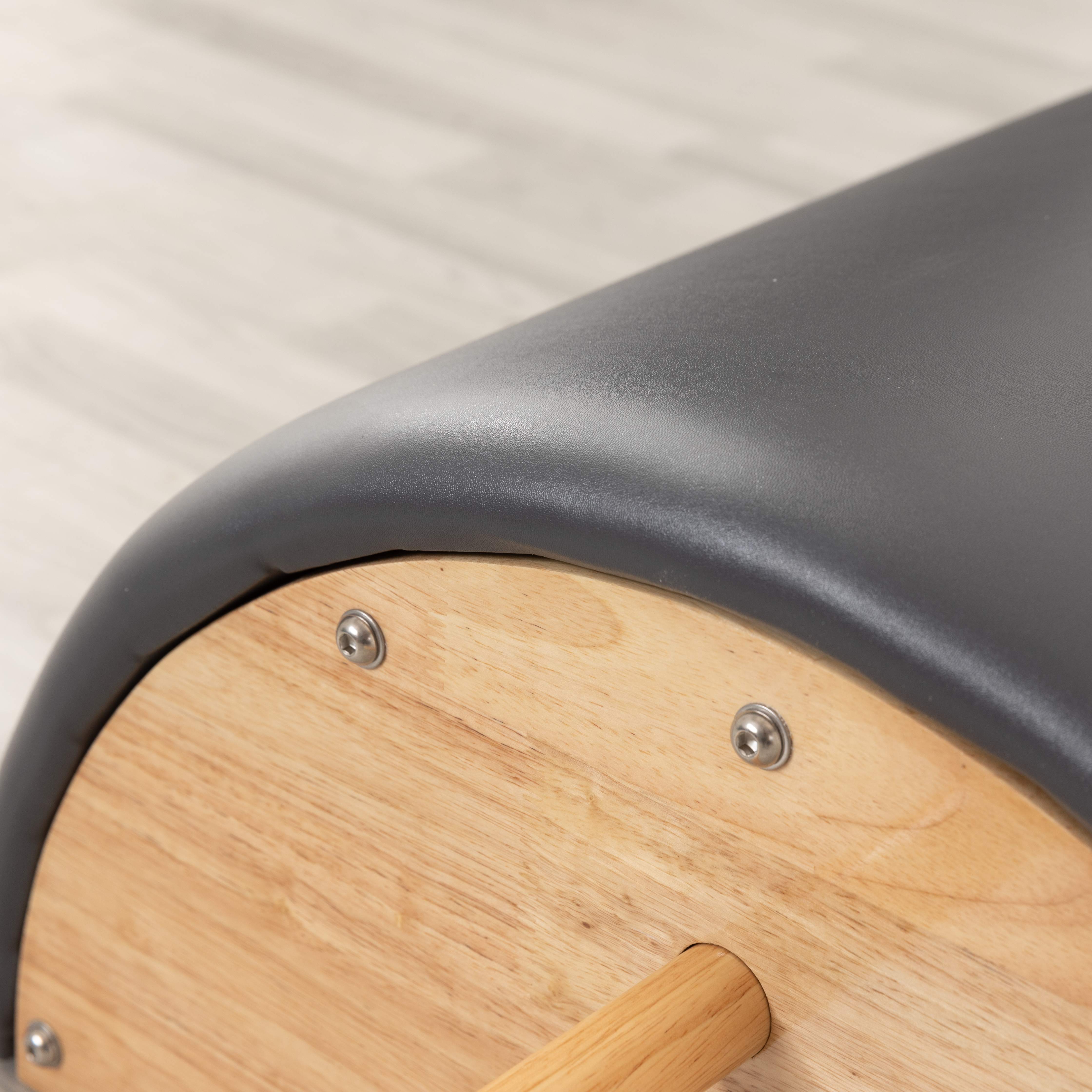
High-quality equipment features smooth leather with natural texture — no bubbles or wrinkles. Critical stress seams are double-stitched with even, uniform stitching — no skipped stitches or loose threads. Foam density is high (≥45kg/m³) with quick rebound and minimal indentation. Leather is tightly bonded to foam with no looseness or hollow spots.
Inferior copies may use thin PVC with orange peel texture or color variation. Seams are often single-stitched with crooked stitch lines prone to tearing. Foam density is low, leaving deep indentations that rebound slowly. Leather may feel loose from foam, with incomplete edge wrapping.
Practical check: Press on upholstery surfaces — observe rebound speed and indentation depth. Gently push leather edges to check wrap integrity.
V. Labels and Certification: The Overlooked "ID Card"
High-quality equipment clearly displays brand, model, maximum load capacity, and production information on frames, nameplates, or packaging. Labels are printed clearly and securely affixed. Equipment may include CE, ISO 9001, and other certification marks, plus serial or batch numbers for traceability.
Inferior copies may have blurry, poorly printed labels or incomplete information. Some copies lack brand markings or serial numbers entirely. Others use names slightly different from established brands to mislead consumers.
Practical check: Inspect all labels and nameplates — confirm information is complete and legible. Where possible, verify serial numbers through official brand websites or authorized channels.
VI. Price and Source: Unusually Low Pricing Is a Warning Sign
If a "commercial-grade" Reformer costs less than one-third the price of the genuine product, it is almost certainly a copy. High-quality equipment pricing reflects material costs, craftsmanship investment, and quality control expenses.
The purchase channel matters too. Buying through official brand channels or authorized dealers minimizes the risk of purchasing copies. Non-official channels — unauthorized web stores, second-hand marketplaces — have unclear product provenance and higher risk.
Practical check: Compare prices across multiple channels to understand market range. Treat "too good to be true" pricing with caution — ask sellers for authorization documentation or product source information.
VII. Brand History and User Reputation
Brands with long-term market presence have products that have been tested by time. Check professional review sites, industry forums, and social media for real-world feedback. If a "brand" is nearly unknown in the industry, or if user reviews are full of "received but can't use" complaints, it's a warning sign.
Summary: Distinguishing high-quality Pilates equipment from inferior copies comes down to four actions: look, feel, listen, and check — look at weld quality, upholstery, and labels; feel the smoothness of the glide and stability of the frame; listen for noise during gliding; and check brand provenance, certification, and user reputation. A machine that passes inspection on all four dimensions is worth serious consideration. Any one dimension with obvious issues means you're paying for something that "looks like" the real thing but won't deliver.